Lot No. LOT-5572 · offered November 13, 2026
Crop EconomicsLot sheet
U.S. Peanut Output Falls 31% as Drought Cuts Southeast Yields
U.S. peanut production is down 31 percent, with Georgia cut to 1.27 million tons, Alabama to 194,000 tons and Florida to 220,000 tons after drought-hit yields.
Market notes
- U.S. peanut production is down 31 percent this year.
- Georgia yield estimate cut from 4,050 to 3,850 lb/ac; production falls from 1.83M to 1.27M tons.
- Alabama yield cut from 3,000 to 2,800 lb/ac on 139,000 acres; production down to 194,000 tons from 326,000.
- Florida yield cut from 3,700 to 3,500 lb/ac; production down to 220,000 tons from 320,000.
- Report credits lack of rain and a poor growing season in the Southeast.
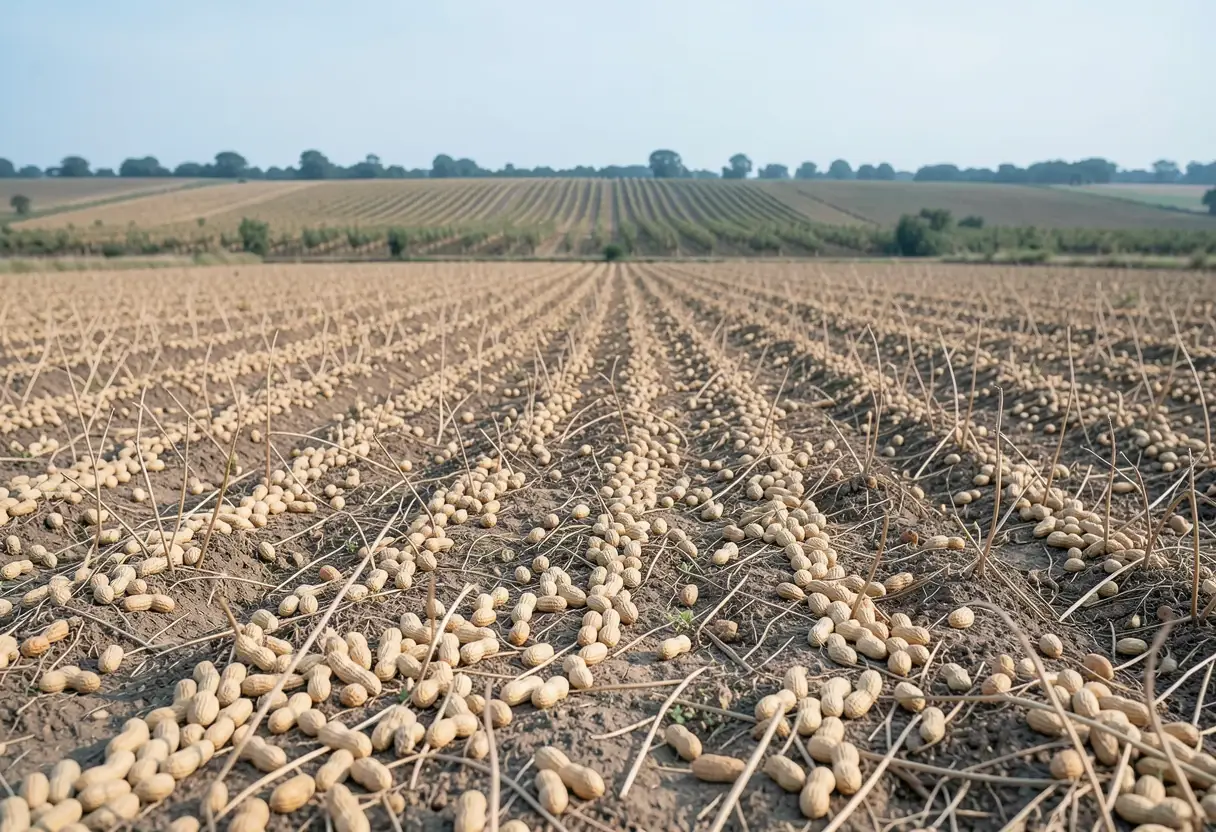
U.S. peanut production is down 31 percent this year, and the revised state-level numbers show how sharply the Southeast absorbed the loss. In a November 13 report for Southeast AgNet, Tyron Spearman walked through the updated figures, and every major producing state in the region took a cut from the October estimates.
What do the revised numbers show?
Alabama harvested 139,000 acres of peanuts this year. The state's average yield estimate has fallen from 3,000 pounds per acre in October to 2,800 pounds per acre in the latest figures. The production consequence is large: Alabama is now expected to yield about 194,000 tons, against 326,000 tons last year.
Florida tells the same story. Its estimated yield dropped from 3,700 pounds per acre in the October report to 3,500 pounds per acre. Total Florida production is now projected at roughly 220,000 tons, compared with 320,000 tons a year ago.
Georgia, the country's dominant peanut producer, carries the biggest weight in the national total. The state planted 660,000 acres and had been estimated at 4,050 pounds per acre. That number has been cut to 3,850 pounds per acre, putting expected production at 1.27 million tons instead of last year's 1.83 million tons.
- National production: down 31 percent year over year.
- Alabama: 2,800 lb/ac, down from 3,000; 194,000 tons vs. 326,000 last year.
- Florida: 3,500 lb/ac, down from 3,700; 220,000 tons vs. 320,000 last year.
- Georgia: 3,850 lb/ac, down from 4,050; 1.27 million tons vs. 1.83 million last year.
The plain takeaway: every state in the core peanut belt saw both its yield forecast and its production total revised downward.
Why did the crop shrink?
Spearman attributed the declines to a lack of rain and a poor growing season across the Southeast. The national 31 percent drop concentrates the damage in the region, where drought conditions eroded yields on established acreage rather than reducing planted area alone.
It is worth noting what the report does not address. There are no figures yet on how the smaller crop has moved contract prices, shellers' offers, or input-cost coverage per acre, and no word on whether quality factors such as grade or kernel size suffered alongside yield. The numbers cited are also production forecasts and revised estimates, not final harvested and weighed results, so further adjustments remain possible as the season closes out.
That distinction matters for growers reading the report. A yield estimate of 3,850 pounds per acre in Georgia is a projection built from survey data within a defined reporting window; the settled figure that determines payments and marketing positions can differ from it.
The concrete loss, though, is already large on paper: Georgia alone is projected to produce roughly 560,000 fewer tons than last year, and the three Southeast states together account for a shortfall on the order of 800,000 tons.
How the tighter supply works through buyer contracts and crush demand will be the number to watch as final harvested results replace these forecasts.
via southeastagnet.com (Source)
More from Olivia Hart
Show full bio
News editor covering technology and product news in Agribusiness coverage for industry professionals at Agribusiness Wire.
517 articles
Also in the yard
- USDA trims corn to 15.9 billion bushels, lifts soybeans to record
- USDA Lifts 2026 Corn Outlook to 16.034 Billion Bushels
- USDA Pegs 2026 Sunflower Crop at 2.3 Billion Pounds, Down 1%
- USDA Cuts U.S. Corn Crop 141 Million Bushels, Lifts Soybeans
- Arkansas Rice Lands at 167 Bushels Per Acre as Heat Cuts Yield