Lot No. LOT-7205 · offered September 29, 2026
Commodity MarketsLot sheet
U.S. Grain Markets Mixed as Soybeans Recover From Tariff Sell-Off
U.S. grain markets closed mixed as soybeans recovered part of the ground lost in a tariff-driven sell-off, with the oilseed complex leading any stabilization in export-sensitive prices.
Market notes
- U.S. grain markets turned mixed in the latest session.
- Soybeans recovered from a tariff-driven sell-off.
- The soybean complex is the most export-sensitive part of the U.S. grain board, making it the focal point of tariff-related price pressure.
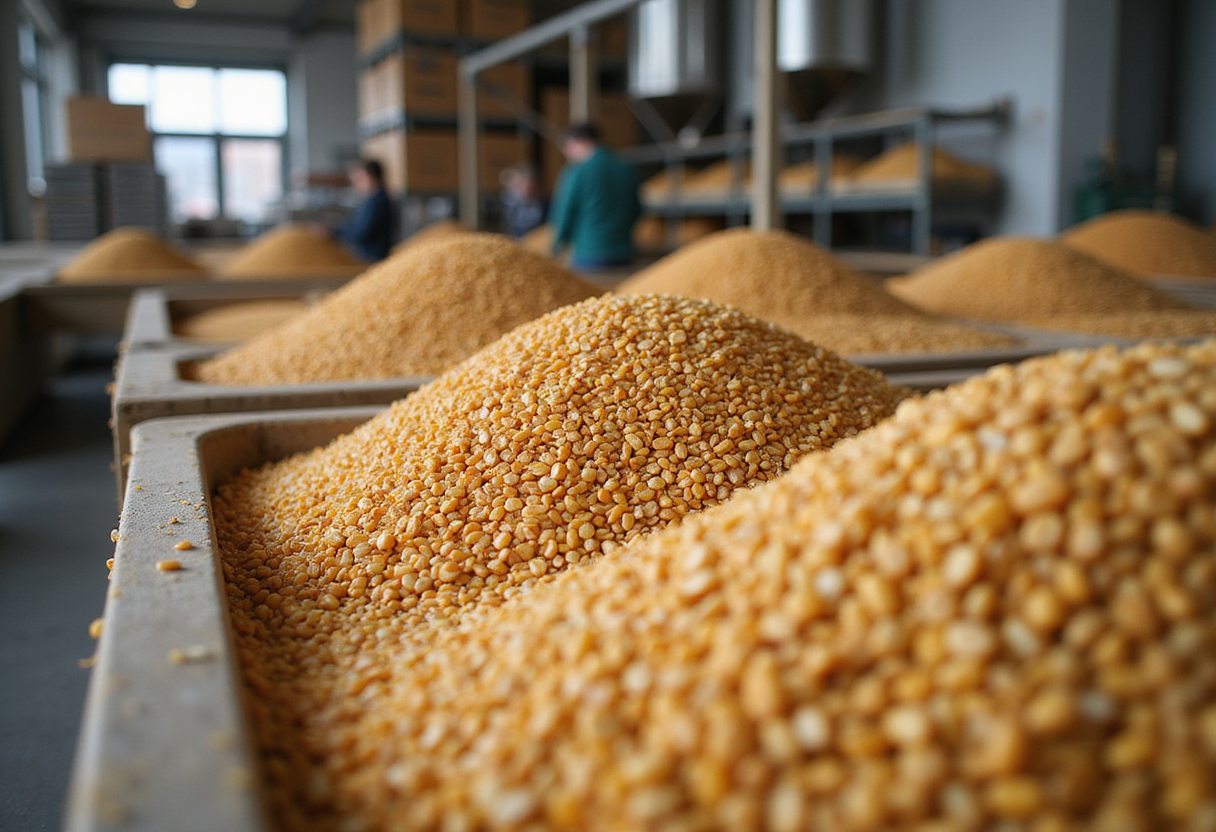
U.S. grain markets closed mixed, with soybeans recovering part of the losses triggered by a tariff-driven sell-off, according to agrolatam.com.
The recovery marks a shift in direction for the oilseed complex, which had borne the brunt of trade-policy pressure across recent sessions. Soybeans, the most export-sensitive of the major U.S. row crops, had sold off as tariff headlines weighed on expectations for overseas demand. The latest turn leaves the complex attempting to stabilize after that decline.
Corn and wheat, by contrast, traded without a uniform direction, leaving the broader grain board mixed rather than firmly higher. The divergence underscores how differently the major contracts respond to trade-policy risk: soybeans carry the largest exposure to export flows, and their price action has tracked tariff developments more closely than the other grains.
For growers, the swings matter directly at the elevator. Soybean basis and cash bids have moved with the futures board through the sell-off and the subsequent recovery, and the episode illustrates how quickly policy headlines can translate into changed selling opportunities for producers holding old-crop or new-crop inventory. Volatility of this kind complicates hedging decisions and the timing of incremental sales, particularly for operations with tight working-capital margins.
The pattern also fits the recent history of U.S. soybean trade. Tariff disputes have repeatedly hit the oilseed complex harder than corn or wheat, because soybean export demand is concentrated in a small number of major buyers. When tariff risk rises, soybean futures and basis tend to weaken first and furthest; when that pressure eases, the complex often leads any rebound.
Whether the current recovery holds depends on how tariff policy develops from here. Traders will watch upcoming sessions for confirmation that the bounce has follow-through rather than serving as a brief retracement within a larger downtrend. Export announcements, buyer purchasing patterns, and any official policy statements will shape the next leg of the move.
For now, the market signal is a mixed grain board with a recovering soybean complex — a tentative rebound from tariff-driven pressure that remains vulnerable to the next policy headline.
via Google News: Grain prices (Source)
More from Rebecca Stone
Show full bio
Market editor covering industry trends and analytics at Agribusiness Wire.
135 articles