Lot No. LOT-7759 · offered September 29, 2026
Commodity MarketsLot sheet
Soybeans Rebound on Fund Buying as Corn Drifts Lower
Soybean futures rose on fund and technical buying, recovering part of recent losses as traders bet China's state-owned firms keep buying U.S. beans despite a 10% tariff.
Market notes
- Soybean futures closed higher on fund and technical buying, recovering part of their recent decline.
- China's 10% import tariff on U.S. soybeans blocks private firms but not state-owned companies from buying.
- The U.S. soybean harvest is progressing in line with the average pace, while corn drifted lower in the same session.
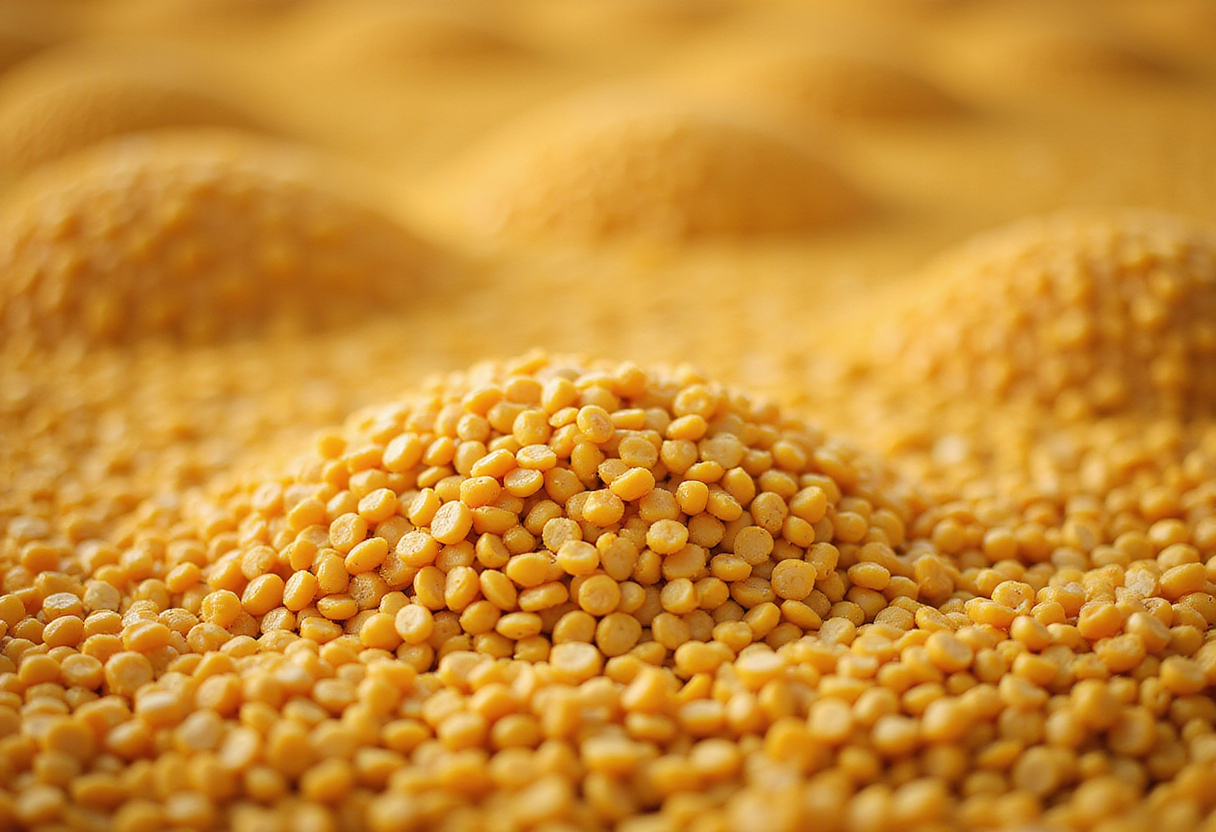
Soybean futures closed higher on fund and technical buying, clawing back part of the recent slide as traders held onto expectations for continued Chinese demand.
The rebound matters for growers watching basis and margins after weeks of pressure in the soybean pit. Beans recovered a portion of recent losses in a session driven less by fresh fundamentals and more by positioning: funds stepped in on the buy side, and technical signals turned supportive enough to lift the contract.
The demand story behind the buying centers on China. Beijing's 10% import tariff on U.S. soybeans remains in place, a legacy of the trade dispute that reshaped global oilseed flows. But the tariff's practical effect is narrower than the headline suggests. It blocks private Chinese companies from purchasing U.S. beans, while state-owned firms can still buy — a distinction that has kept a floor under U.S. export expectations and, by extension, under futures.
That policy nuance is the key variable for U.S. merchandisers and basis levels in the weeks ahead. If state-owned enterprises continue to step into the market, exporters in Gulf and Pacific Northwest positions retain a demand outlet even with the tariff intact. If those purchases slow, the fund-led rebound could run out of fundamental support.
On the supply side, the U.S. soybean harvest is running in line with the average pace, according to the condition reporting. Growers are bringing in a crop that shows no dramatic deviation from normal timing, which limits the kind of harvest-delay premium that sometimes buoys basis in late-season markets.
Condition reports and harvest progress figures should be read as snapshots, not final tallies. Harvested results — actual yield counts from the combine and certified weights at the elevator — will tell the margin story for 2024 crop planning. Until then, in-line progress argues for a market trading demand rather than supply surprises.
Corn drifted lower in the same session, moving opposite to beans and widening the soybean-to-corn price ratio in the process. That shift carries planting-implication weight for growers already running 2025 acreage math. A richer ratio historically nudges marginal acres toward beans, though input costs, fertilizer pricing for corn, and crop insurance guarantees all factor into that decision alongside the board.
For input makers and retailers, the session's split performance is a reminder that crop mix decisions remain fluid. Fertilizer demand tied to corn acres could soften if the ratio holds, while soybean seed and inoculant demand would firm correspondingly.
The wheat market's absence from the day's strength kept the focus squarely on the row-crop complex, where the corn-soybean divergence did the work of price discovery.
Traders will watch the next rounds of export sales data for confirmation that Chinese state-owned firms are, in fact, following through on U.S. bean purchases. Fund buying can lift a market for a session; only confirmed export business sustains it.
via Brownfield Ag News (Source)
More from Grace Kim
Show full bio
Correspondent covering industry trends and analytics at Agribusiness Wire.
159 articles
Also in the yard
- Soybeans Dive as China Keeps 10% Import Tariff in Place
- Soybeans Slide to Four-Month Lows as Trade Deal Excludes Crop
- China's 10 Percent Soybean Tariff Persists After Talks
- China Pledges Bigger Domestic Grain Push, Leaves US Soybeans Out of Tariff Relief
- Soybeans Lead Grain Losses as China Tariff Deal Excludes Beans