Lot No. LOT-6254 · offered October 9, 2026
Commodity MarketsLot sheet
Up to 80% of Russian grain terminal capacity could restart quickly — Reuters
Up to 80% of Russian grain terminal capacity could restart quickly, per a Reuters report carried by UkrAgroConsult. The readiness figure leaves separate questions on sanctions, insurance and buyer compliance open.
Market notes
- Up to 80% of Russian grain terminal capacity could restart quickly, according to a Reuters report carried by UkrAgroConsult
- Russia lifted record wheat crops in 2022 and again in 2023, yet weekly export pace has run below pre-war benchmarks
- Reuters did not specify in the headline version whether the 80% reflects a Reuters survey, industry self-assessment or auditor's tally
- Black Sea and Azov terminals at Novorossiysk, Taman, Kavkaz and Astrakhan account for the bulk of Russia's deep-water grain load-out capability
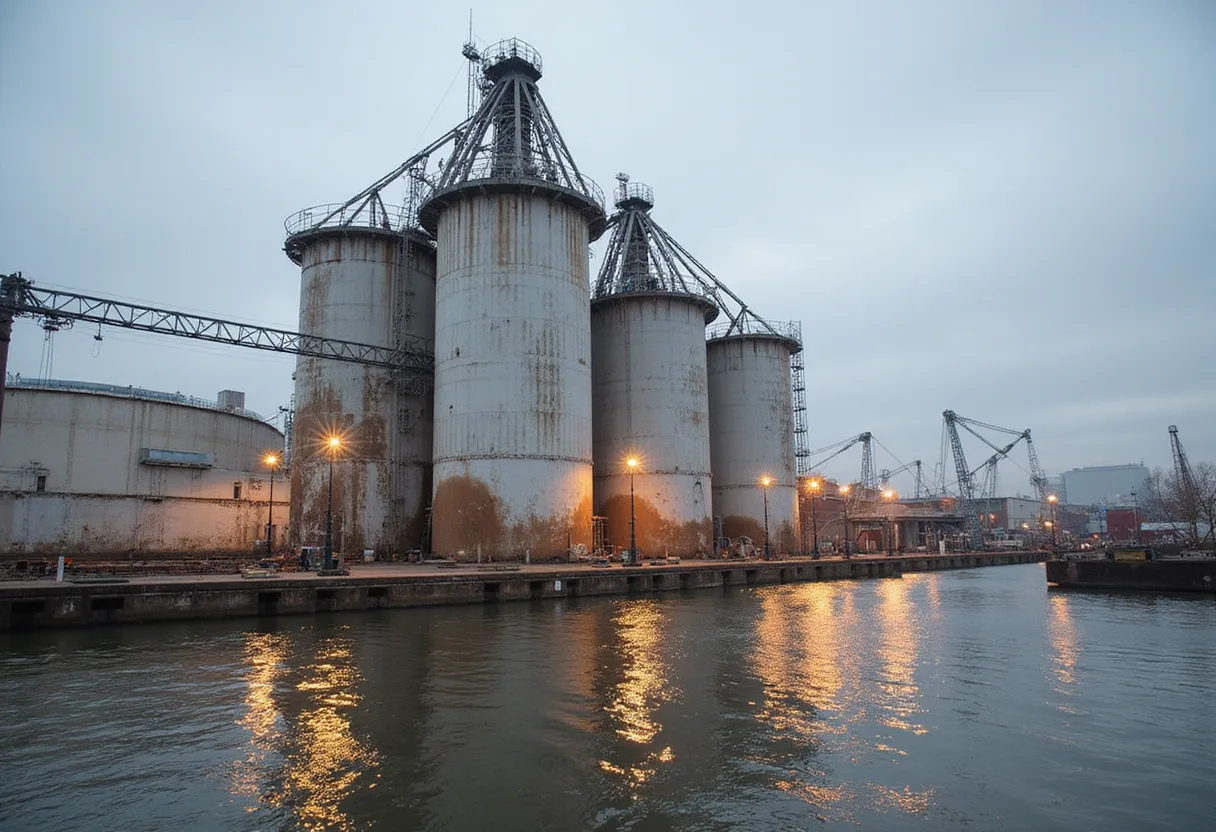
A Reuters report carried by the Kyiv-based consultancy UkrAgroConsult puts the share of Russian grain terminal capacity that could come back online "quickly" at up to 80%, a figure that, if realised, would tighten the link between physical infrastructure and Russia's grain-export ceiling.
The headline reproduces the Reuters framing: terminal readiness, not the absence of grain stocks, has been the binding constraint on the country's wheat and barley outgo since the war in Ukraine reshaped Black Sea logistics, insurance and counterparty screening. Russia lifted a record wheat crop in 2022 and topped it again in 2023, yet weekly export pace has run below pre-war benchmarks for most weeks since.
Black Sea and Azov terminals — clustered around Novorossiysk, Taman and Kavkaz, with secondary capacity at Astrakhan on the Caspian — collectively account for the bulk of Russia's deep-water grain load-out capability. Reuters did not specify in the headline version which facilities the 80% readiness figure covers, whether it reflects a Reuters survey, an industry self-assessment or an auditor's tally, or what threshold of days-to-operations the word "quickly" implies. UkrAgroConsult, which circulated the Reuters item on its news feed, did not add methodology.
What the 80% figure does not say
The capacity number is a physical-readiness indicator, separate from the policy and finance questions that have held Russian wheat loadings below nameplate since 2022:
- Sanctions compliance and secondary-sanctions exposure for shipowners and banks
- War-risk insurance pricing for the Black Sea and Sea of Azov
- Counterparty willingness among Middle East, North African and South Asian buyers to handle Russian-origin cargoes on extended credit terms
A terminal can run four-fifths of pre-war turns per day only if vessels show up, financing clears and buyers accept the documentation.
Why basis traders are watching
For Black Sea wheat fob quotes, the Reuters headline matters because physical readiness is the precondition for any acceleration in load-out tempo. The market signal would show up first in fob-Novorossiysk wheat flat price and in the spread between Russian wheat and competing EU, Ukrainian and U.S. offers into Egypt's GASC tenders and Saudi Arabia's SAGO bookings.
For U.S. wheat growers, the margin question is whether a higher Russian run-rate pulls CBOT wheat lower or simply absorbs the demand that other origins would otherwise have captured. Chicago wheat futures have spent most of the past 18 months in a sideways range, with the upper bound set by terminal pace on the Black Sea.
What to watch next
The headline does not say whether the 80% is being matched by actual loadings. Sovecon's weekly export tally, USDA FAS export sales data, and the next round of Egyptian and Saudi tenders will reveal whether the capacity figure translates into physical wheat on vessel at Black Sea berths in the coming weeks.
via Google News: Grain prices (Source)
More from Olivia Hart
Show full bio
News editor covering technology and product news in Agribusiness coverage for industry professionals at Agribusiness Wire.
420 articles
Also in the yard
- Russian Grain Interventions to Cover Only 20% of Export Shortfall
- Ukraine farm exports could fall 54% as attacks disrupt shipments
- Russia or Ukraine: Who Really Disrupts Global Food Supply?
- Baltic, Caspian Routes Offset Only 25% of Russia's Black Sea Grain Losses
- Ukrainian farmers losing planting incentives as world grain demand persists