Lot No. LOT-6956 · offered September 28, 2026
Trade & ExportsLot sheet
Baltic, Caspian Routes Offset Only 25% of Russia's Black Sea Grain Losses
Baltic and Caspian corridors cover only a quarter of Russia's lost Black Sea grain exports, UkrAgroConsult says, pressuring inland basis and tightening global wheat availability.
Market notes
- Baltic and Caspian routes offset only 25% of Russia's grain export losses through Black Sea ports, per UkrAgroConsult
- Roughly three-quarters of lost Black Sea volumes lack an alternative outlet under current infrastructure
- The 25% figure is a logistics assessment, not a harvested-result or crop-condition number
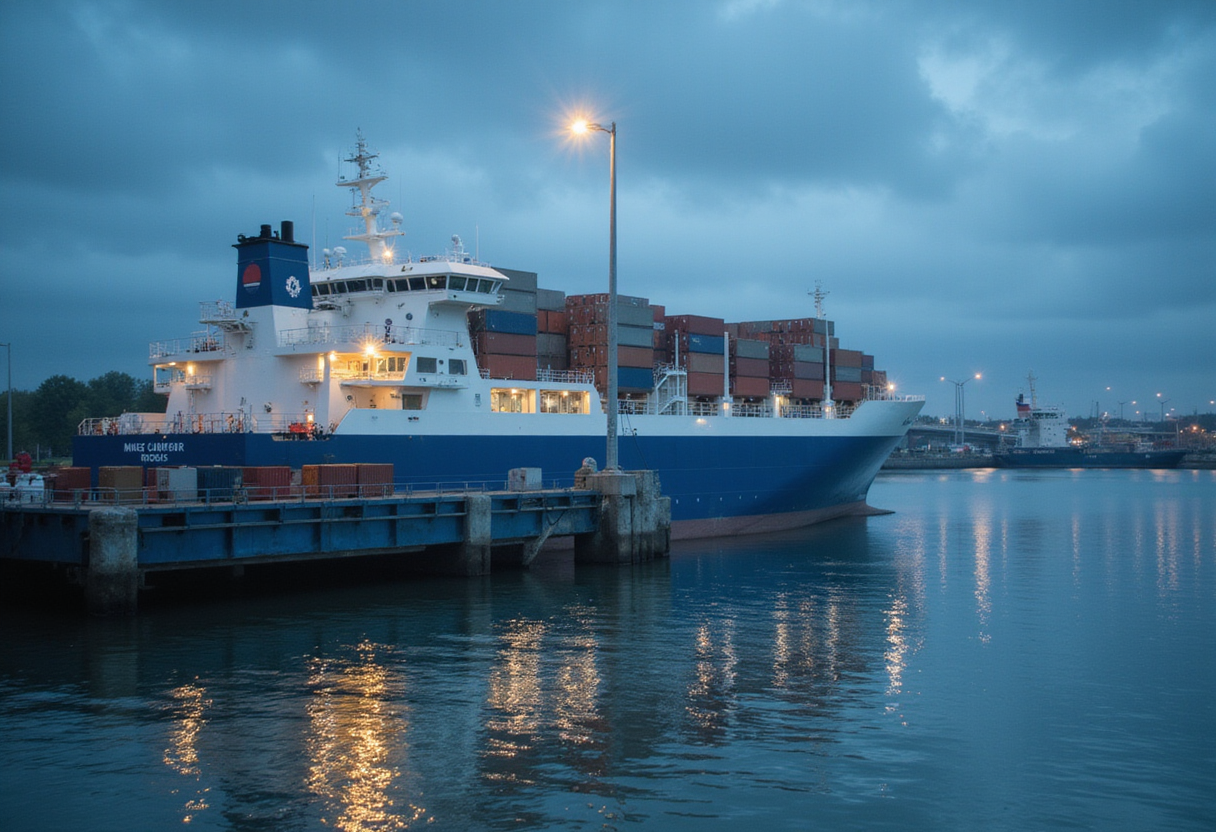
Alternative export corridors through the Baltic and Caspian Seas are compensating for only 25% of the grain export volumes Russia has lost through its Black Sea ports, according to analysis from the Kyiv-based consultancy UkrAgroConsult.
The figure frames a hard arithmetic problem for Russian grain trade logistics. When Black Sea shipments fall away, the rail and port infrastructure feeding the Baltic and Caspian routes can absorb barely a quarter of the displaced tonnage. The remaining three-quarters of lost volumes have no ready alternative outlet under current infrastructure constraints.
For Russian growers and exporters, the gap translates directly into weaker effective demand at inland elevators. Grain that cannot move to port builds stocks in origin regions, pressuring domestic prices and widening the effective basis discount for producers far from the remaining functioning corridors. Elevator operators and traders serving the Baltic and Caspian terminals, by contrast, gain a logistics premium, because capacity rather than supply becomes the binding constraint on those routes.
The pattern also carries implications for global buyers. Russia ranks among the world's top wheat exporters, and any sustained compression of its seaborne shipments tightens availability in import markets from North Africa to the Middle East and Southeast Asia. Importers dependent on Russian origin have already had to re-tender, diversify suppliers, and pay higher freight for longer routes when Black Sea flows falter. A 75% uncompensated loss on the affected volumes is the scale of disruption that shifts trade flows rather than merely trimming them.
UkrAgroConsult's estimate is a logistics assessment rather than a harvest result. It measures the ratio between volumes re-routed through the alternative corridors and volumes lost through Black Sea channels. Readers should treat it as a point-in-time calculation tied to a specific reporting window and set of port throughput data; the consultancy has not published, in the material reviewed here, a month-by-month breakdown of the underlying flows or a projection of how the ratio might evolve as infrastructure investment on the Baltic and Caspian routes proceeds.
The economics of closing that gap are not trivial. Raising the compensation ratio above 25% would require expanded rail car availability, added elevator capacity on the new corridors, and deeper draft or faster turnaround at Baltic and Caspian terminals — capital commitments with multi-year lead times. Until that capacity arrives, each interruption to Black Sea loading will continue to knock out roughly four times more export volume than the alternative routes can pick up.
UkrAgroConsult's next updates on corridor throughput will indicate whether the 25% offset is a temporary reading or the structural ceiling for Russia's re-routed grain exports.
via Google News: Grain prices (Source)
More from Grace Kim
Show full bio
Correspondent covering industry trends and analytics at Agribusiness Wire.
159 articles
Also in the yard
- Russian Grain Flows Shift to Baltic Ports, Wheat Markets Face New Risks
- Ukraine Eyes Baltic Ports for Grain Exports, Mirroring Russian Route
- Russia Could Restore 80% of Black Sea Grain Exports If Attacks Halt
- Black Sea Wheat Flows to Asia Nearly Halted as Prices Hit 3.5-Year High
- Ukraine Could Move Up to 20 Million Tons of Grain via Baltic Ports