Lot No. LOT-8549 · offered September 29, 2026
Commodity MarketsLot sheet
Soybeans Lead Grain Losses as China Tariff Deal Excludes Beans
Nov soybeans dropped 30 3/4 cents to below $13 after the U.S.-China deal excluded beans from 10% tariff cuts. Funds record long liquidated; corn broke $5.25 support. Traders now await USDA stocks data.
Market notes
- Nov soybeans fell 30 3/4 cents to below $13; China's tariff-cut deal covered $30 billion of non-strategic goods but excluded soybeans from the 10% reciprocal tariff reduction
- Funds are record long over 265,000 soybean contracts and 414,000 corn contracts; China re-committed to buying 25 MMT of soybeans annually for three years
- December corn fell 5 1/4 cents to $5.23, breaking $5.25-$5.26 support; USDA Quarterly Stocks and Small Grains Summary due Wednesday; steer cash averaged $220.67 with slaughter at a record-low 484,000 head
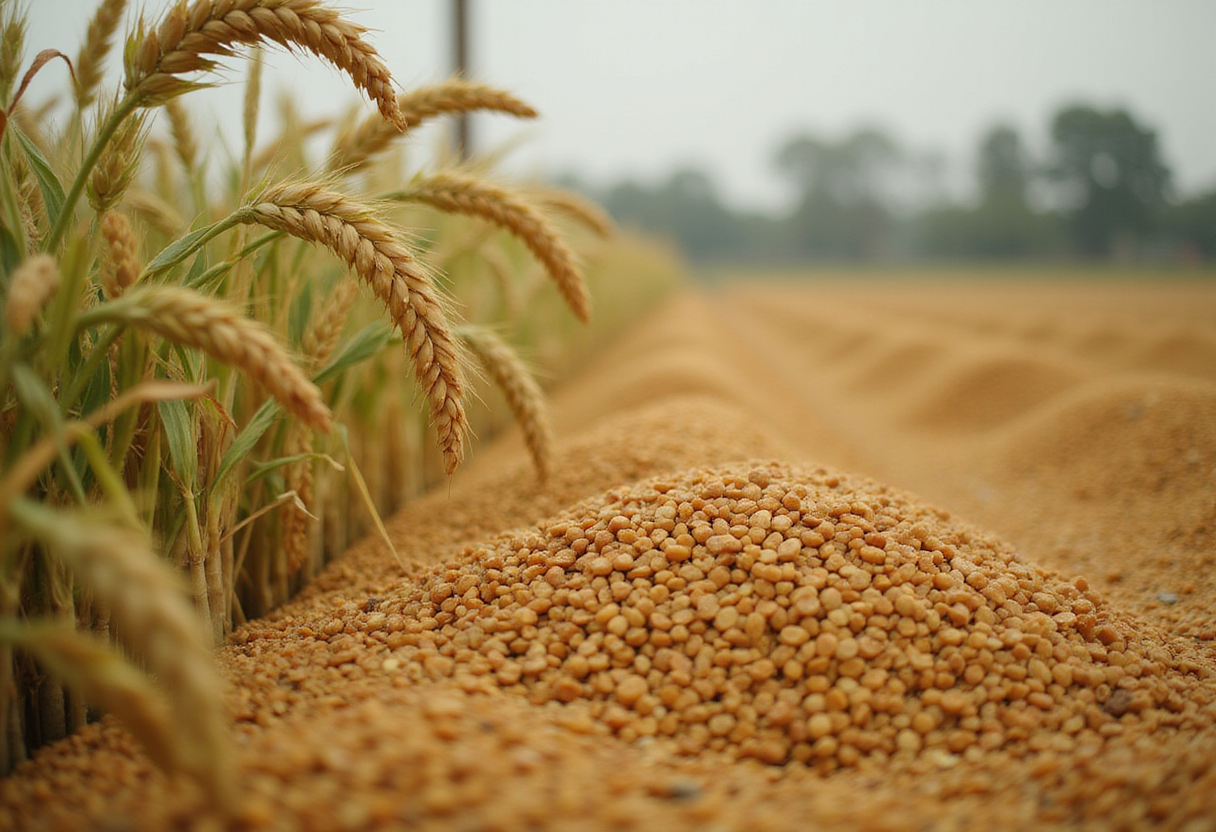
November soybeans fell 30 3/4 cents and closed below $13 on Monday, leading broad losses across grain and livestock futures after the U.S.-China summit excluded soybeans from tariff cuts.
The two governments announced duty reductions on $30 billion of non-strategic goods — part of a broader package cutting tariffs on $60 billion in Chinese imports — but soybeans did not make the list for the 10% reciprocal tariff reduction. Chip Nellinger of Blue Reef Agri-Marketing said the omission disappointed traders who had expected Beijing to relax the tariff and let private firms import U.S. beans.
"That doesn't mean they won't continue to buy. They agreed to buy the same amount. In fact, they also agreed to it for another two years," Nellinger said. "So all told, I don't really see anything wildly bearish out of the results of the trade agreement."
He believes China deliberately left soybeans off the tariff-cut list to preserve leverage in future negotiations. The commitment matters more than who executes the purchases, he argues, because China has re-committed to buying 25 million metric tons of soybeans annually for the next three years and has so far fulfilled that promise. The agreement, however, lacked detail on the $17 billion of pro-rated agricultural purchases outside soybeans.
"China's not going to dictate ahead of time what they're going to take and when. They're not going to play that card so easily," Nellinger said. Expecting Beijing to publish a purchase schedule, he added, "was a head scratcher."
Fund liquidation compounds the drop. With funds record long — more than 265,000 contracts in the soybean complex and 414,000 in corn, near record — Monday's disappointment triggered profit-taking ahead of month-end and quarter-end. Nellinger sees initial soybean support near $12.80-$12.90. "If you get below there we could take another leg lower to $12.50 on the November," he said, though he sees no fundamental reason to trade under that level.
December corn fell 5 1/4 cents to $5.23, breaking chart support at $5.25-$5.26. China did commit to cutting corn tariffs by 10%, but the lack of clarity on actual corn purchases weighed on prices. Nellinger pegs the next corn support at $5.15, with a chart gap between roughly $4.85 and $4.90. He thinks a slide toward $5 would be tough to sustain. "Seems to be a massive amount of pent-up buying underneath this market from end users that didn't catch lower prices a couple months back," he said.
Harvest pressure and basis signals. Rain continues to slow harvest in the Western Corn Belt and Central Plains, while the rest of the Midwest makes progress. Cash markets already reflect the delay: crushers that have run out of soybeans are pushing basis sharply higher around processing plants. If wet weather persists into the first half of October, Nellinger expects futures to price it in quickly. Farmer selling pressure may be lighter than usual, though, because producers have more of this crop sold ahead than in any of the last four or five years.
Traders now turn to Wednesday's USDA Quarterly Stocks Report and Small Grains Summary. Pre-report estimates sit near 1.9 billion bushels for corn and around 325 million bushels for soybeans, roughly in line with the last old-crop carryout figures. Nellinger cautions that quarterly stocks reports are hard to peg and open to a shock at the extremes.
Wheat, cattle and hogs. Wheat followed corn and beans lower, pressured further by a higher dollar, poor exports and rains across drought-stricken hard red winter wheat areas of the Southern Plains — moisture Nellinger calls potentially yield-supportive for the newly planted crop.
Live and feeder cattle fell on risk-off selling and lower cash. The steer cash average came in at $220.67, down $1.20 on the week, while ICE raids slowed slaughter to a record-low 484,000 head, handing leverage to packers with excess capacity. Nellinger thinks the market is past the worst of that disruption.
Lean hogs declined for a second session despite a constructive USDA Hogs and Pigs Report showing inventory down 1.5% year over year. The market is oversold with funds near record short, but Nellinger notes the third and fourth quarters rarely favor hog prices, creating a seasonal headwind.
Looking ahead, the market will watch daily USDA flash-sale announcements for proof of Chinese corn and wheat purchases — evidence that, in Nellinger's view, would quickly put a floor under both markets.
via assets.farmjournal.com (Original)
More from Marcus Bennett
Show full bio
Senior reporter covering marketplaces and e-commerce at Agribusiness Wire.
127 articles