Lot No. LOT-8105 · offered September 29, 2026
Precision Agriculture & AgTechLot sheet
Precision Ag Funding Hit $668M in 2025 as Weeding Robots Draw Top Capital
Precision ag drew $668M across 37 equity rounds in 2025. Weeding robots led with $180M-plus as labour costs, falling hardware prices and EU compliance rules drive adoption.
Market notes
- $668M raised across 37 precision ag equity rounds in 2025; autonomous weeding companies captured over $180M (~27%), led by Ecorobotix's $105M Series D in October.
- Field robot build costs fell 70–80% in six years: a ~$450,000 system in 2019 now costs under $120,000, enabling per-acre subscription pricing.
- The iGrow report tracked a record 14 M&A deals, including John Deere's purchases of Sentera and GUSS Automation, CNH's acquisition of Advanced Farm's assets, KKR's take-private of Topcon, and Taylor Farms buying FarmWise.
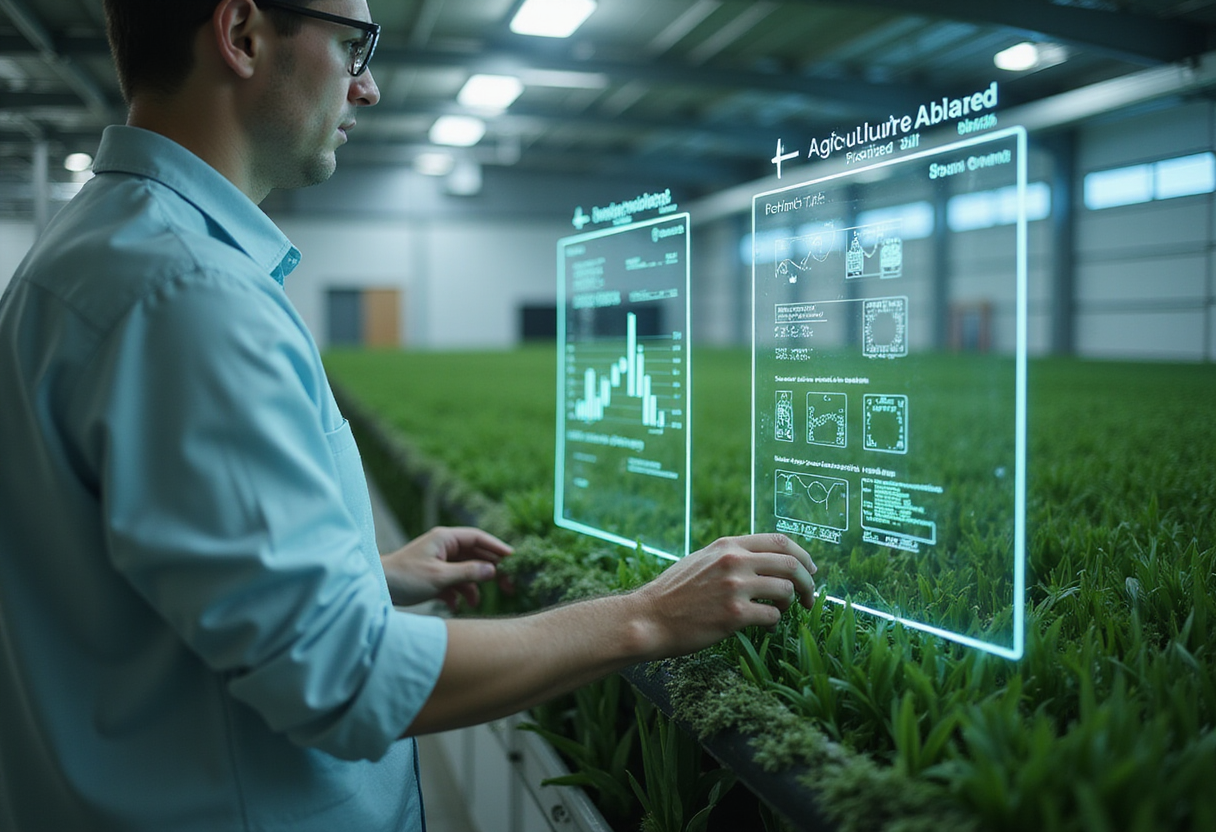
Precision agriculture companies raised $668 million across 37 equity funding rounds in 2025, with autonomous weeding robots capturing more than $180 million — roughly 27% of all tracked capital — according to iGrow Intelligence's 2025 Precision Agriculture Intelligence Report. The figures exclude undisclosed rounds, so actual deployment was likely higher.
The investment rationale across the largest deals consistently references labour cost and availability rather than technology potential alone. That driver is quantifiable. The U.S. H-2A temporary agricultural worker programme certified around 385,000 positions in FY2024, up from roughly 94,000 in 2010, yet those workers still cover only about 15% of crop farm employment. The national Adverse Effect Wage Rate averaged $18.12 per hour in 2024 — $19.97 in California, above $20 in Hawaii — with projected increases averaging around 4.5% for 2025. Eurostat data shows a 19.1% cumulative decline in European agricultural labour volume since 2015, while South Korea's agricultural employment is falling 5–6% annually.
Where the money went
Ecorobotix, the Swiss weeding-robot maker, closed a $105 million Series D in October — the largest single precision ag robotics round globally for the year. Carbon Robotics raised $20 million, Bonsai Robotics closed $15 million, and TRIC Robotics secured $5.5 million at Seed stage. On the software side, FBN raised $50 million in a Series G, Orchard Robotics closed $22 million in a Series A, and Ceres AI secured $13 million in a bridge round.
Capital concentrated at the ends of the stage spectrum. Four Series C and D deals accounted for 47% of all tracked capital, while Seed activity stayed active. Series A and B companies — those moving from pilots to commercial scale — faced what the report calls a "middle squeeze." October 2025 was the busiest single month, with $180 million deployed across eight rounds, coinciding with pre-Agritechnica announcements and the Ecorobotix close; October and December together represented about 43% of the year's tracked capital.
OEMs buy capability, not roadmaps
The report tracked 14 M&A transactions — a record — involving three distinct buyer types. John Deere acquired Sentera, an aerial imagery and AI agronomic analysis firm, in May, and GUSS Automation, maker of autonomous orchard sprayers, in August. CNH Industrial bought Advanced Farm's IP and assets, covering autonomous harvest robotics for specialty crops, in April. The pattern extends back to Deere's purchases of Blue River Technology in 2017 and Bear Flag Robotics in 2021: OEMs acquiring specific technology layers rather than building them in-house.
The buyer universe widened beyond equipment manufacturers. KKR's take-private of Topcon marked the first major private equity entry into precision ag at that scale, and Taylor Farms — a fresh produce company — acquired FarmWise for its autonomous weeding capability. Bonsai Robotics acquired Farm-ng, a modular robotic tool developer, which the report identifies as the first documented case of a well-funded precision ag startup using M&A to accelerate its platform roadmap.
Hardware costs reshape the economics
The cost of building a field robot has fallen 70–80% over six years, driven by cheaper machine vision, edge computing, and LiDAR sensors. A robotic system that cost roughly $450,000 to build in 2019 can now be built for under $120,000. That decline has enabled per-acre subscription and outcome-based pricing models better suited to how farm businesses manage capital expenditure — a meaningful shift from the capital-purchase model that dominated the earlier adoption cycle.
Patent activity backs the hardware trend. Variable Rate Application ranked as the second-largest named sub-segment by filing volume, with 2,144 applications in 2024. AI and machine learning accounted for 989 precision ag patent filings in 2024 — likely an undercount, since many farm AI patents use functional language that keyword searches miss; iGrow Intelligence relies on Cooperative Patent Classification codes instead.
Compliance becomes a commercial driver
Regulatory requirements absent from earlier precision ag conversations now create field-level data demand. The EU Deforestation Regulation requires proof of zero deforestation since December 2020 for high-risk commodities, with farm polygon coordinates for plots over 4 hectares and a December 2026 deadline. The EU's Corporate Sustainability Reporting Directive mandates field-level data on fertiliser use, fuel consumption, and methane to quantify Scope 3 emissions. In the U.S., the USDA Climate-Smart Commodities programme requires quarterly field-level reports and approved MMRV protocols — effectively tying grant eligibility to precision ag data infrastructure.
The report frames auditability as the emerging competitive differentiator in data platforms — whether field data is accurate, traceable, and meets regulatory standards — creating a tier of premium pricing distinct from the general farm efficiency market.
Barriers persist, but shift
Upfront cost, rural connectivity, and farmer training remain the three main barriers. CNH Industrial's 2025 integration of Starlink satellite connectivity into its Case IH, New Holland, and STEYR lines addresses the connectivity gap directly rather than waiting for terrestrial infrastructure. On training, 2025 leadership appointments skewed toward commercial and customer success hires — evidence that distribution and farmer adoption, not technology development, are the binding constraints.
A less visible risk is software commoditisation. AI development tools let well-resourced competitors replicate standard features quickly, and the report warns that companies relying on software architecture alone may see those advantages narrow over the next two to three years. Durable positions appear to rest on proprietary multi-season field data and regulatory auditability.
Geographically, North America generated 147 of 252 tracked ecosystem events (58%), with the U.S. accounting for 136. Europe logged 60, Asia 38. France hosted the highest-quality M&A by median news weight, including ISAGRI's acquisition of Sencrop and Hiphen's purchase of Aurea Imaging's drone phenotyping business. South Korea posted a 43.1% precision ag patent grant rate, nearly matching U.S. absolute granted output at a fraction of the filing volume.
For 2026–2028, the report's base case projects autonomous weeding robots reaching commercial scale in the U.S. and Europe by end-2026, software commoditisation becoming visible to investors by mid-2027, and OEM strategic M&A resuming as equipment demand recovers. The downside case — faster commoditisation and constrained OEM balance sheets through 2026 — would delay the acquisition cycle many Series A and B founders are counting on.
via claas.com (Original)
More from Rebecca Stone
Show full bio
Market editor covering industry trends and analytics at Agribusiness Wire.
135 articles
Also in the yard
- Precision Agriculture's Green Claims Lack Evidence, Researchers Say
- Precision Ag Adds $118,000 Per 1,000 Acres, AEM Study Finds
- New U.S. Bill Aims to Push AI Onto Farms Most Growers Still Ignore
- Bipartisan Bill Targets Precision Agriculture Gaps in Nebraska, Colorado
- European Startups Push Precision Agriculture Into the Mainstream