Lot No. LOT-5755 · offered September 29, 2026
Precision Agriculture & AgTechLot sheet
US-China AI Talks Put Precision Agriculture Supply Chains in Play
AI governance lands on the Trump-Xi agenda in Washington next week, and chip rules could ripple into the cost and availability of precision agriculture technology.
Market notes
- The U.S. and China will put AI governance on the agenda of a planned Trump-Xi meeting in Washington next week.
- U.S. restrictions limit China's access to the most advanced AI chips, while Chinese developers push lower-cost, open-source AI models internationally.
- Neither government has announced an agriculture-specific AI agreement tied to the meeting, leaving agtech implications prospective.
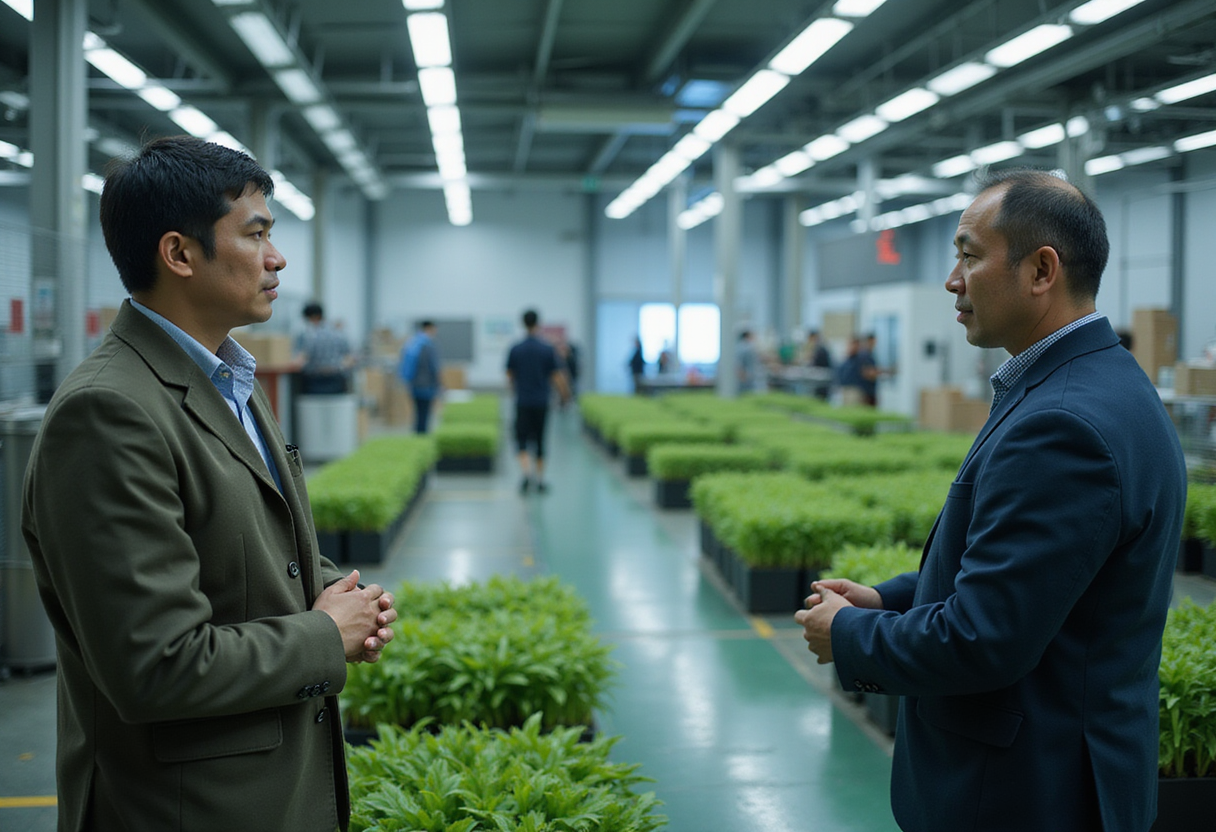
The United States and China will put artificial intelligence governance on the agenda of a planned Trump-Xi meeting in Washington next week, and the outcome could reach well beyond Silicon Valley into the technology stack that U.S. farmers, cooperatives and agribusinesses increasingly depend on.
The connection to agriculture runs through the supply chain. Advanced processors, cloud computing capacity and AI models now sit inside digital farming systems — computer vision for crop monitoring, autonomous machinery, robotics, yield forecasting and predictive analytics that inform farm decision-making. Any shift in the rules governing semiconductors, AI models, cybersecurity and data flows could shape how agtech companies design products, where they source computing power, and how quickly new tools reach commercial availability for producers.
That matters for farm margins. Precision agriculture investment decisions already hinge on commodity prices, input costs and interest rates. Chip restrictions or disrupted technology flows would add another variable to the cost and availability of the equipment and software layered into data-intensive farm management.
Washington and Beijing remain far apart on fundamentals. The United States has maintained restrictions limiting China's access to the world's most advanced AI chips, while Chinese developers have expanded lower-cost and open-source AI models internationally. Within the U.S. government and among technology executives, the debate continues over how to preserve America's technological edge while building safeguards against AI risks. That tension could steer investment, infrastructure decisions and the pace at which AI-dependent technologies deploy across industries, agriculture among them.
For now, the implications remain prospective. Neither government has announced an agriculture-specific AI agreement tied to the upcoming meeting, and it is uncertain whether Washington and Beijing will reach any broader accord at all. No condition report here — nothing harvested yet.
What U.S. producers should watch is what follows the meeting. Rules on chips, AI model access and data governance that emerge from this competition could eventually determine the price curve and availability of precision agriculture technology, giving growers and co-ops one more factor to weigh when timing capital spending on autonomous equipment, sensing platforms and analytics subscriptions.
via localhost (Original)
More from Marcus Bennett
Show full bio
Senior reporter covering marketplaces and e-commerce at Agribusiness Wire.
127 articles
Also in the yard
- House Bill Targets Farm AI Gap as 75% of Farmers Skip the Technology
- New U.S. Bill Aims to Push AI Onto Farms Most Growers Still Ignore
- U.S. and Argentine Farmers Split on AI's Value to Agriculture
- AI Offers Promise for Agriculture, but Smallholders Risk Being Left Behind
- China Hits Milestone in Advanced Agricultural Machinery