Lot No. LOT-5964 · offered November 2, 2026
Agricultural PolicyLot sheet
Opinion: $8 billion diesel aid could fund farm resilience
Policy leaders argue USDA could use $8 billion in diesel relief to buy measurable soil, carbon and water outcomes through a new federal farm outcomes bank.
Market notes
- President Trump announced $8 billion in diesel relief using Commodity Credit Corporation funds.
- Government spending is estimated at just under one-third of net farm income this year.
- EQIP, CSP and RCPP spending totaled a combined $3 billion in 2025.
- Wisconsin phosphorus abatement cost $54.47 per pound under EQIP and $35.18 through the state trading market.
- Lake Erie goals require $40 million-$65 million more annually in Michigan and $170 million-$250 million more in Ohio.
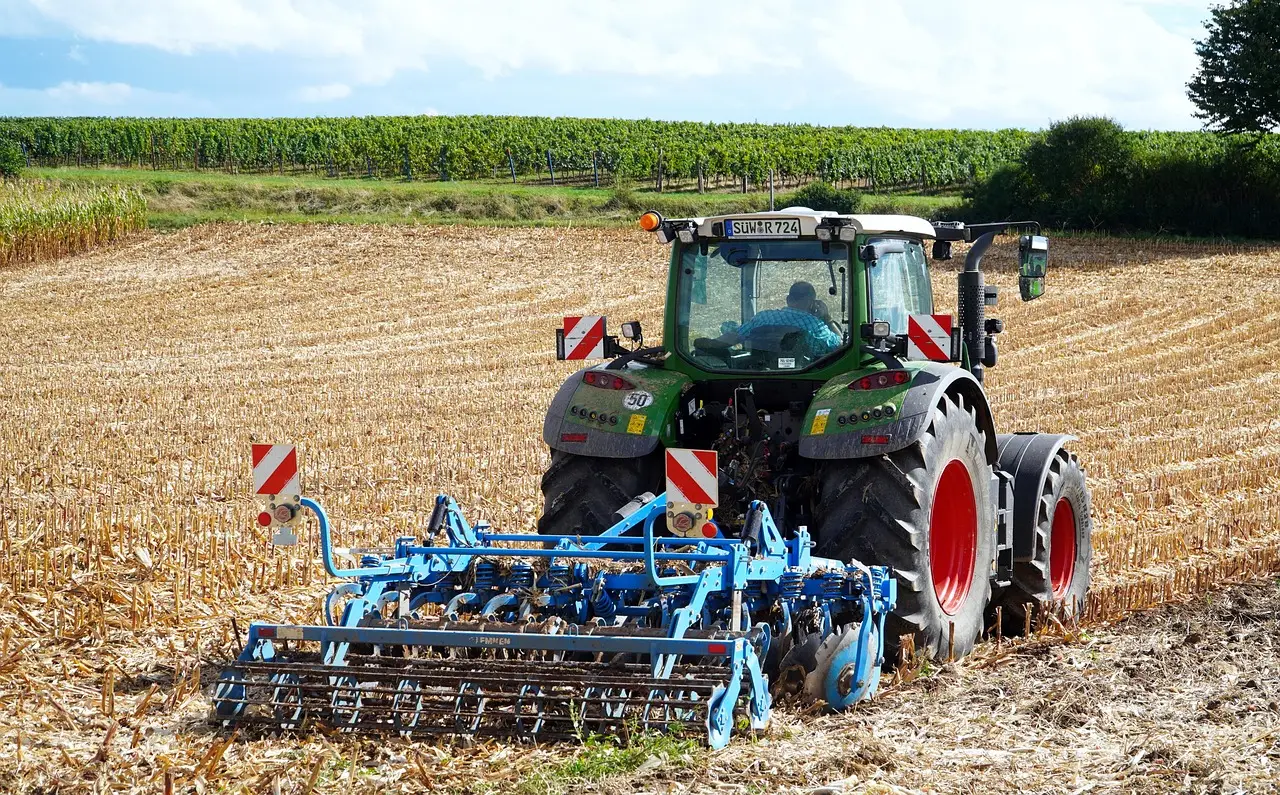
By Nathan Brooks
President Trump announced $8 billion last Monday in taxpayer-funded diesel relief for farmers, more than twice the $3 billion spent by the three largest conservation programs in 2025.
The administration is drawing the money from the Commodity Credit Corporation, a flexible vehicle created during the Great Depression and used to support farm income in various ways for nearly a century.
Congress did not directly authorize the diesel payments; the administration is using CCC's broad authority. Trump invoked the same mechanism during the 2018 trade war to provide direct income support and purchase surplus nuts and berries after trade disruptions hit farmers' markets.
The opinion estimates government spending at just under one-third of net farm income this year. It provides no calculation, baseline or reporting window for that estimate, so it should be checked against final net farm-income data.
Harry Huntley, agriculture policy lead at the Environmental Policy Innovation Center, and Quinn Holland, agriculture policy lead at the American Conservation Coalition, do not dismiss the immediate pain from high diesel prices. They argue, however, that short-term aid does not reduce farmers' long-term dependence on fuel and other costly inputs.
Sen. Chuck Grassley, R-Iowa, said: “The purpose was because of high gas prices, diesel prices, and this is one way of helping farmers. But I can assure you that farmers would prefer to get their money from the marketplace, not from the federal treasury.”
What does $8 billion do now?
The Harvest Fuel Relief Program would provide payments at a time of record-high input prices, but Huntley and Holland argue CCC support can do more than cushion immediate costs. Their proposal, not an announced USDA initiative, is a “National Outcomes Bank.”
Under their plan, USDA would use CCC money to buy environmental outcomes from farmers and resell at least some to corporations seeking supply-chain carbon offsets and local governments trying to meet water-quality permit obligations.
They argue no new legislation would be needed, pointing to CCC's existing authority, the 45Z tax credit and performance-based RCPPs as precedents. Farmers could then earn revenue for soil carbon, water savings and biodiversity credits, commodities the source says buyers purchase internationally by the ton, pound and acre-foot, among other measures.
Farming practices that generate those outcomes can also reduce inputs and field passes, lowering diesel costs.
What does this change for farmers?
Farmers could receive CCC-backed payments for measurable conservation outcomes while some of those outcomes reach corporate and municipal buyers through USDA. The proposal does not guarantee a lower input bill; its farm-income benefit depends on what USDA defines as eligible and how much CCC can buy.
The authors say the structure would strengthen agricultural sovereignty by helping producers build soil and reduce inputs.
Can conservation dollars match the scale?
The Environmental Quality Incentives Program (EQIP), Conservation Stewardship Program (CSP) and Regional Conservation Partnership Program (RCPP) spent a combined $3 billion in 2025, less than half the diesel payment. The opinion does not specify whether that total represents obligations or outlays.
All three consistently receive more requests than available funding, although the opinion provides no dollar measure of unmet requests. An $8 billion outcomes bank could expand conservation, but its reach would depend on the outcomes purchased, eligible practices and buying rules.
An Environmental Policy Innovation Center analysis of six leading practices in Wisconsin found that keeping one pound of phosphorus out of waterways cost $54.47 through EQIP and $35.18 through the state's water-quality trading market. The comparison covers a specific state program and six practices; it does not establish a national savings rate.
A western Lake Erie basin report said farmers in Michigan need $40 million to $65 million more per year, while Ohio needs $170 million to $250 million more, to meet water-quality goals. The authors call those needs a fraction of the diesel relief.
What does better soil health deliver?
Increasing organic matter by 1% translates to roughly 50 tons of carbon dioxide removed from the atmosphere and 25,000 gallons of water-holding capacity per acre, the authors say. Those figures are prospective estimates, not measured gains from a completed USDA program, and the opinion gives no baseline soil condition or measurement protocol.
If realized, greater water-holding capacity would make farms more resilient to drought and could lower input costs through fewer passes and reduced fuel use.
Where should the bank start?
USDA should create the bank as quickly as the administration announced the Harvest Fuel Relief Program, using the same CCC funding source. The first steps are straightforward:
- Define the environmental outcomes USDA will purchase and the geographies from which it will buy them.
- Start with states and localities such as Maryland and Brown County, Texas, where markets for those outcomes already exist.
If USDA follows that path, the $8 billion could shift part of the relief from a one-time payment toward conservation revenue that reduces farmers' future exposure to fuel and other inputs. The payoff will depend on measurable environmental gains and prices farmers can earn without adding costs that erase the benefit.
via usda.gov (Original)
More from Nathan Brooks
Show full bio
Staff writer covering regulation, policy and their impact on Agribusiness coverage for industry professionals at Agribusiness Wire.
525 articles
Also in the yard
- Diesel Costs Strain Southwest Growers Ahead of $8B Aid
- Boozman Seeks $11 Billion Rescission Shift for New Farm Aid
- $6.20 Diesel Squeezes Farmers and Truckers Through Harvest
- Kennedy Tells Farmers Oil, Fertilizer Prices Will Drop in Six Months
- Rollins Signals 'Very Soon' Relief Announcement on Farm Diesel Costs