Lot No. LOT-3928 · offered November 5, 2026
Commodity MarketsLot sheet
Kansas Hay Prices Hold Steady as Tight Supply Meets Costly Freight
Kansas hay prices held steady in the week ended Nov. 1, with dairy alfalfa at $1.20-$1.30 per RFV point as tight supply met rising freight costs. Southwest Kansas alone moved 7,704 tons of grinding alfalfa.
Market notes
- Dairy alfalfa traded uniformly at $1.20-$1.30 per RFV point across all Kansas regions in the week ended Nov. 1.
- Southwest Kansas moved 7,704 tons of grinding alfalfa during Oct. 25-Nov. 1, the largest volume in the state.
- Large round prairie hay in south central Kansas fell $10; nearly all other hay prices held steady.
- Fifth- and sixth-cutting alfalfa went up with initial reports of very good quality ahead of testing.
- Movement slowed as weather and elevated fuel costs raised transportation expenses.
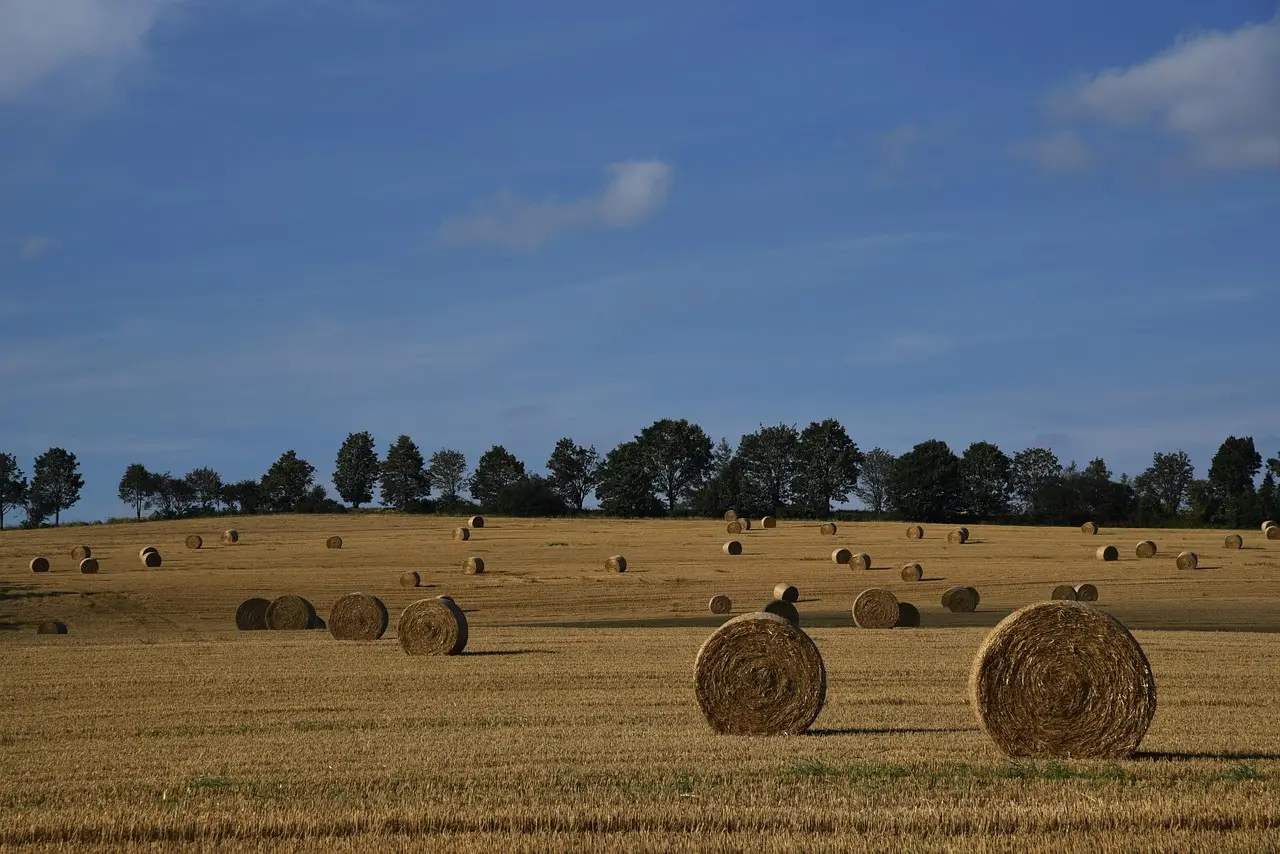
Good stock-cow alfalfa delivered in southwest Kansas held at $285-$295 per ton in the week ended November 1, as tight hay supply collided with weather and elevated fuel costs that slowed movement across the state. The Kansas Department of Agriculture-USDA Market News Service reported the data on November 1. Fifth- and sixth-cutting alfalfa went up, with initial reports indicating very good quality ahead of testing.
Published prices are averages. Actual transactions may fall above or below the ranges reported.
What held steady, and what slipped?
Buyers in every region paid $1.20-$1.30 per point of RFV for dairy alfalfa, a uniform benchmark that spanned the state from the Oklahoma line to the Nebraska border. Nearly all alfalfa and grass hay prices held steady week over week. The exception sat in south central Kansas, where large round prairie hay dropped $10.
Freight costs shaped the trade. Movement slowed because weather conditions and elevated fuel costs made transportation increasingly costly, according to the report. Demand ran moderate to good in most regions. Trade activity stayed slow to moderate, and outright slow in the northwest.
Southwest Kansas: the grinding-alfalfa hub
Southwest Kansas dominated measured volume. During the week of October 25 through November 1, 7,704 tons of grinding alfalfa, 25 tons of dairy alfalfa, and 23 tons of grass hay were reported bought or sold.
Prices in the region:
- Dairy alfalfa: $1.20-$1.30 per RFV point
- Good stock cow alfalfa, delivered: $285-$295 per ton
- Fair/good grinding alfalfa, large round and large square 3x4: $245-$255
- Ground and delivered locally to feedlots and dairies: $265-$275
- Sun-cured alfalfa pellets, 15% and 17% protein: $280-$290
- Bluestem, large square 3x4: $115-$125
- Brome: none reported
South central: heaviest grass-hay volume outside the southwest
South central Kansas moved 7,400 tons of grinding alfalfa, 150 tons of dairy alfalfa, and 709 tons of grass hay in the October 25-November 1 window. That grass tonnage was the second-largest figure in the state.
Good stock cow alfalfa traded at $225-$235. Grinding alfalfa brought $235-$245, with ground and delivered product at $260-$270. Pellets carried a premium here: sun-cured 15% protein pellets at $310-$320, and 17% dehydrated at $355.
Brome spanned a wide spread by package size, from $135-$145 in large rounds to $245-$255 in medium squares 3x3. Horse hay small squares fetched $18-$20 per bale; brome small squares $14. Corn stalks in large rounds sold at $120-$130. Prairie and meadow grass rounds matched that range.
Southeast: the discount market
Southeast Kansas posted the state's lowest grass prices. Bluestem rounds traded at $95-$105, small squares at $7-$8 per bale. Horse hay small squares brought $15. Fair/good grinding alfalfa, large square 3x4, moved at $210-$220. Brome large squares ranged $185-$195. Wheat straw sold at $70-$80 per round and $6 per small square. Volume for the week of October 18-24 totaled 1,680 tons of grass hay, 275 tons of grinding alfalfa, and 175 tons of dairy alfalfa.
North and northwest splits
Northwest Kansas offered the state's only premium-tier quote: Premium/Supreme alfalfa in medium squares 3x3 delivered at $300-$310, with small squares at $12 per bale delivered. Grinding alfalfa, large square, ran $205-$215. No volume figures were reported for the region.
North central and northeast Kansas carried the lowest grinding-alfalfa numbers in the state, at $180-$190 for large rounds, with ground and delivered product at $185-$195. The week of October 25-November 1 saw 628 tons of grinding alfalfa, 200 tons of dairy alfalfa, and 1,061 tons of grass hay change hands there. Sudan rounds sold at $75-$85. Wheat straw ranged from $65-$75 per round to $7 per small square.
What does this change for buyers?
Steady nominal prices mask a real cost shift. Fuel is doing the work that price discovery normally does, widening the effective gap between bale-lot and delivered trade. Feedlots and dairies sourcing ground product locally paid a $20-$30 premium per ton over the baled grinding market in most regions. With forage quality testing still pending on the new fifth- and sixth-cutting supply, the next report will show whether very good quality brings new tonnage forward or whether freight costs keep the market as tight as it traded this week.
via ams.usda.gov (Original)
More from Marcus Bennett
Show full bio
Senior reporter covering regulation, policy and their impact on Agribusiness coverage for industry professionals at Agribusiness Wire.
433 articles
Also in the yard
- Kansas Hay Supplies Tighten as Drought-State Shipments Drain Inventories
- Hay Markets Hold Steady to Firm as Drought Splits High Plains Demand
- USDA Market News Weekly Report Tracks Hay Prices Across High Plains
- Hay Markets Split by Drought and Freight: Premium Alfalfa Gains $20 Per Bale
- USDA Grain Bids Show Firm Wheat Basis, Gulf Corn Slips