Lot No. LOT-4131 · offered September 29, 2026
Commodity MarketsLot sheet
Grain Futures Slide as Weather Premium Fades Despite Softer Crop Ratings
Grain futures slid as weather fears lost their grip on the market, even as weekly U.S. crop condition reports showed corn and soybean ratings deteriorating across key production regions.
Market notes
- Grain prices slid despite weakening U.S. crop condition scores, signaling weather risk premium is draining from the market.
- Condition reports are in-season indicators of visible crop state, not harvested yield results, and markets discounted them this week.
- Fading weather rallies compress farm margins as input costs stay elevated and unpriced bushels face weaker futures prices.
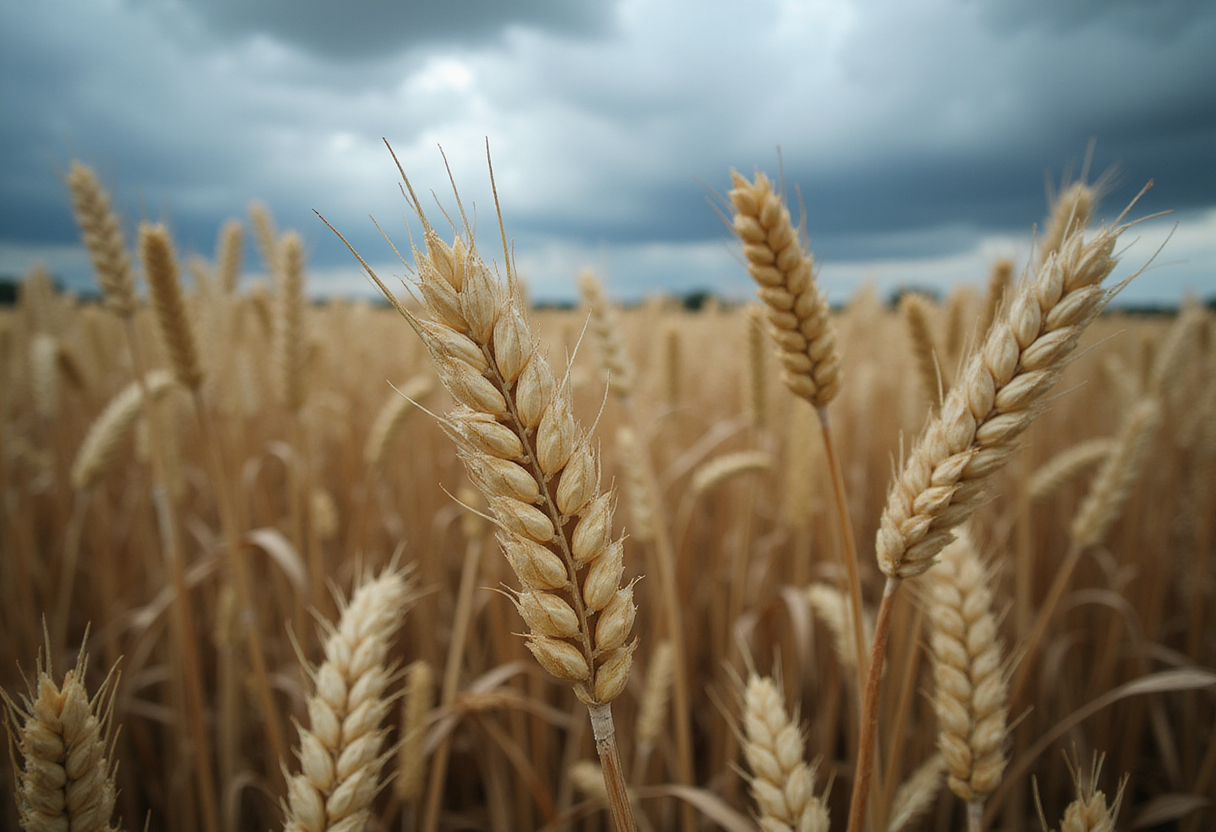
Grain markets slid as weather-driven risk premium drained from corn and soybean prices, even as U.S. crop condition scores deteriorated in the latest weekly assessments.
The move marks a sharp reversal in market logic. For much of the season, traders had bid grain prices higher on concern that heat and moisture stress would cut yields. Those fears are losing their grip. Prices fell even though the condition data — the same weekly field reports growers and analysts use to track crop health — turned weaker, not stronger.
That divergence tells producers something concrete about how the trade is positioning. When prices fall on bearish-sounding agronomy, the market is signaling it has already priced in the crop risk, or that it doubts the condition reports will translate into smaller harvested bushels. Condition scores remain an in-season indicator, not a yield result. They measure the crop's apparent state week to week; final production only becomes a number once combines roll and elevators report actual weights.
For farm margins, the implications are direct. Weather rallies that fade leave growers who priced grain during the scare in a stronger position than those who waited. Every cent of eroded weather premium narrows the gap between market prices and break-even levels at a time when input costs — fertilizer, seed, crop protection and financing — remain elevated. A softer flat price with sticky input bills compresses margin room on unpriced bushels.
The pullback also matters for basis. When futures weaken, basis levels at country elevators often firm as merchandisers adjust cash bids to keep grain flowing. Growers watching cash markets should separate the futures-board decline from what their local buyer actually pays, since the two can move in opposite directions for days at a stretch during a weather-premium unwind.
The development complicates decisions for U.S. corn and soybean producers in particular, the crops at the center of the condition-report deterioration. The tension runs straight through supply expectations: weaker ratings imply potential yield loss, yet the market's refusal to rally on that news implies traders see adequate supply, adequate global competition, or both. Argentina and Brazil — key export competitors tracked closely by AgroLatam's readership across South America — remain part of that supply picture, and any U.S. weather discount that persists strengthens the hand of Southern Hemisphere exporters competing for the same import demand.
It is worth remembering what condition reports are and are not. The weekly U.S. scores aggregate state-level assessments of crop visible condition into percentage categories. They carry no harvest weights, no test results and no final acreage reconciliation. Analysts treat them as directional, and markets this week treated them as insufficient — on their own — to justify holding weather risk premium in the board.
Harvested results will settle the argument. Until then, condition reports remain a forecast-adjacent data point, and forecasts in grain markets carry a well-earned discount. The market's slide suggests traders now want to see tangible evidence — certified bushels, export inspections, revised yield models grounded in field sampling — before they pay up for crop stress.
For growers, the practical read is this: weather rallies built on fear can unwind faster than the fear itself fades. Pricing strategy, basis management and input-cost coverage decisions all hang on that distinction. As the season advances, watch whether condition scores continue to deteriorate, whether futures keep ignoring them, and whether harvest data eventually forces the market to reconcile the gap between what the fields look like and what the board is willing to pay.
The next rounds of condition data and early harvest results will show whether the market's dismissal of crop stress proves prescient or premature.
via Google News: Grain prices (Source)
More from Olivia Hart
Show full bio
News editor covering media and advertising at Agribusiness Wire.
137 articles