Lot No. LOT-4684 · offered September 29, 2026
Commodity MarketsLot sheet
Corn, Soybeans, Wheat Slide as 2026 Harvest Outruns Five-Year Pace
December corn fell for a fifth straight session to $5.3675 as 13% of the crop was harvested by Sept. 20, while wheat export inspections lagged 64% behind last year's pace.
Market notes
- December corn settled at $5.3675/bu., down 6.25¢, its fifth decline in five sessions; 13% of U.S. corn was harvested as of Sept. 20 vs. an 11% five-year average.
- Wheat export inspections totaled 335,253 MT for the week ended Sept. 17, down 29% week over week and 64% below the same week in 2025.
- The White House has said China committed to buying at least 25 million MT of U.S. soybeans in 2026 plus $17 billion annually in additional U.S. farm products.
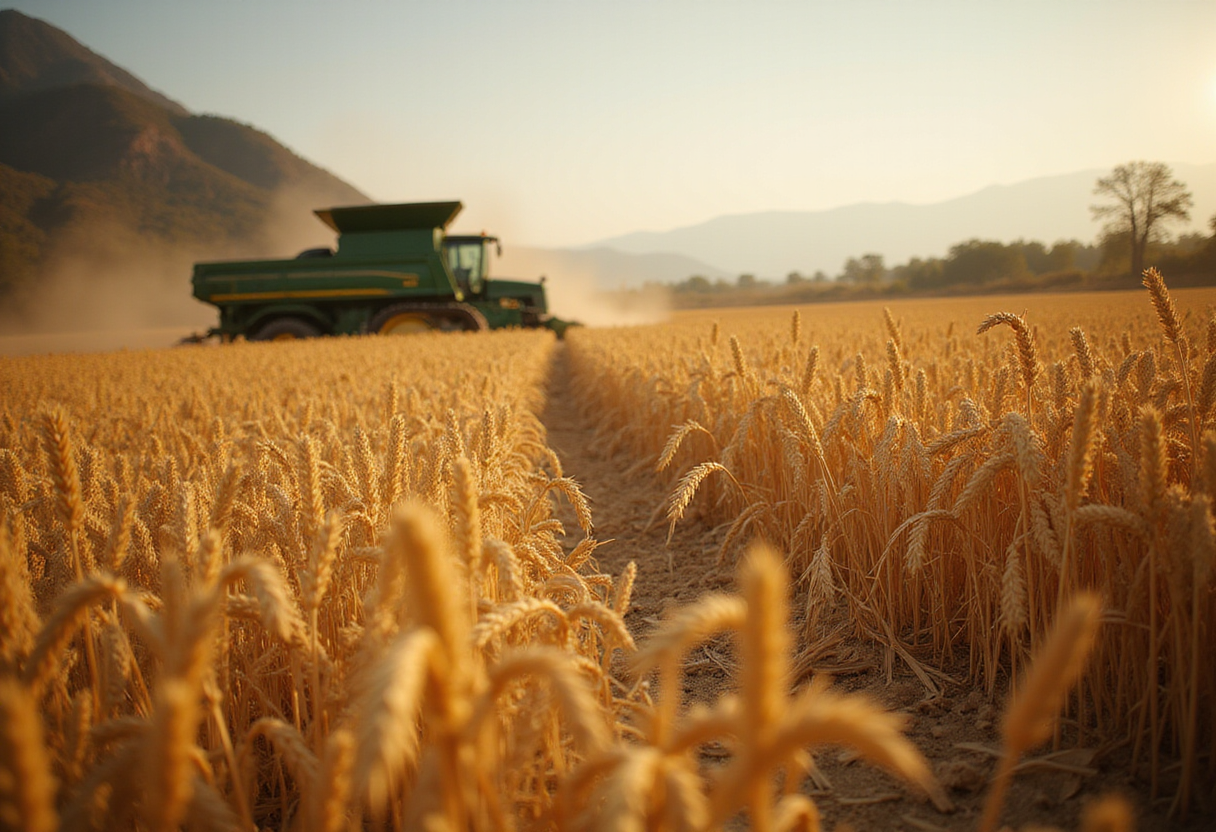
December corn fell 6.25 cents to $5.3675 per bushel on Tuesday, September 22, its fifth decline in five sessions, as the 2026 U.S. harvest advanced ahead of its five-year pace and traders weighed incoming supplies against expectations for Chinese agricultural demand.
November soybeans slipped 2.5 cents to $13.2550, and December SRW wheat dropped 9.5 cents to $7.1725. December HRW wheat fell 13.25 cents to $7.8125, its lowest settlement since August 25, and December spring wheat lost 10.25 cents to $7.36. For farmers, cooperatives and grain merchandisers, the pullback matters because harvest pressure is arriving just as prices remain highly sensitive to export demand, weather and U.S.-China trade developments.
Corn: Harvest Pressure Builds
Corn faced some of the clearest harvest pressure on the board. December futures recorded a fifth straight decline after reaching a three-week closing high on Monday. The national average cash corn price was estimated near $4.915 per bushel, roughly 45 cents below December futures — a wide basis that reflects new-crop supplies moving into commercial channels.
USDA's latest Crop Progress data showed 13% of the U.S. corn crop harvested as of September 20, up from 8% the previous week and ahead of the five-year average of 11%. Recent Midwest rainfall slowed fieldwork in some areas but has not fundamentally changed the supply picture.
Soybeans: Chinese Purchases Limit Downside
Soybeans held closer to recent highs despite Tuesday's decline. November futures finished less than 10 cents below the 2½-year intraday high of $13.3525 reached September 11. The national cash average stood near $12.66 per bushel.
The physical market is now confronting new-crop supplies: USDA reported 12% of U.S. soybeans harvested, compared with 6% one week earlier and a five-year average of 8%. Crop ratings remained relatively stable, with 58% rated good to excellent — reinforcing expectations that substantial supplies will keep moving into the U.S. supply chain in coming weeks.
China remains the major variable for soybean pricing. The White House has previously said China committed to purchasing at least 25 million metric tons of U.S. soybeans during 2026, alongside at least $17 billion annually in additional U.S. agricultural products under a separate 2026 commitment. Recent Chinese purchases are helping limit soybean downside ahead of further bilateral discussions. Stronger export movement can absorb harvest supplies; slower-than-expected buying could leave the domestic market carrying more inventory.
Wheat: Weak Exports, Slow Planting
Wheat carried a different set of pressures. December SRW settled nearly 10% below its September 2 intraday high of $7.95. U.S. export performance remains a concern: wheat export inspections for the week ended September 17 totaled 335,253 metric tons, down 29% from the prior week and 64% below the comparable week in 2025. Disruptions around Black Sea shipping have not automatically translated into stronger U.S. demand, particularly as Russia seeks alternative routes for moving grain into world markets.
Winter wheat planting presents the opposite problem in parts of the Plains. USDA reported only 17% of the crop planted, versus a five-year average of 21%, with Kansas at 10% compared with its 13% average. Dry soils have limited planting progress in key hard red winter wheat territory, though incoming precipitation could improve conditions and allow growers to catch up. Winter wheat emergence stood at 2% against a 4% average. Spring wheat harvest is effectively complete at 96%, matching the five-year pace.
Weather and South American Competition
The outlook cited in the market material pointed to above-normal temperatures across nearly the entire Corn Belt into early October, accompanied by elevated precipitation probabilities across much of the Midwest and Plains. More rainfall could temporarily slow corn and soybean harvest activity, affecting basis levels, grain movement and local elevator logistics. A weather delay, however, does not necessarily remove the broader seasonal pressure created by a large volume of newly harvested grain, making storage capacity, cash-flow needs and marketing strategies increasingly important as combines move deeper into the crop.
Argentina adds another competitive factor. Its 2026/27 corn crop was estimated at 66 million metric tons and soybean production at 53.6 million metric tons — potentially adding substantial South American supplies to an already competitive global market.
What Comes Next
The immediate signal is a market caught between harvest-driven supply pressure and export-driven expectations. Corn and soybean harvests are running ahead of their five-year pace, while wheat faces weak U.S. export movement and expanding global competition. Chinese purchases, Midwest weather and Black Sea logistics could all influence the next move, but producers also face decisions closer to home: basis, storage, input costs, crop insurance positions and cash-flow requirements. The next phase of the 2026 grain market may depend less on crop potential and increasingly on how quickly domestic and international demand can absorb new U.S. supplies.
via localhost (Original)
More from Olivia Hart
Show full bio
News editor covering media and advertising at Agribusiness Wire.
136 articles