Lot No. LOT-5506 · offered November 18, 2026
Precision Agriculture & AgTechLot sheet
Dutch GreenControl Project Targets 25% Cut in Greenhouse Energy Use
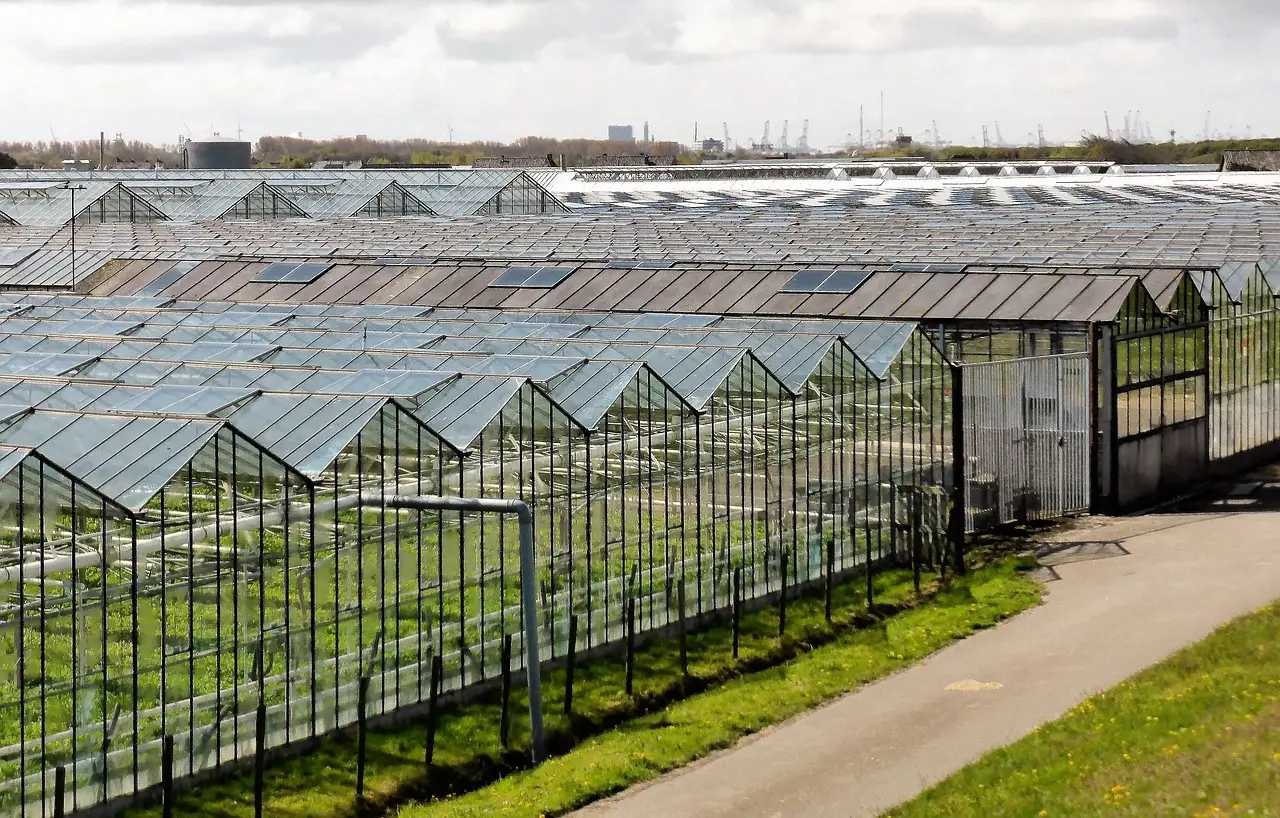
The five-year GreenControl project led by WUR aims to cut greenhouse energy use 25% and costs 35% using plant sensors, cameras and algorithms in tomatoes and lettuce.
Market notes
- GreenControl runs five years and targets 25% lower energy use and 35% lower energy costs in greenhouses.
- WUR, three Dutch technical universities and firms including Ridder, KWS and KUBO Group are partners.
- Trials focus on tomatoes and lettuce, with possible extension to strawberries, cucumbers, peppers and cut flowers.
- Conventional systems measure climate at a single point; the project tests plant-level photosynthesis and transpiration sensors.
- Energy targets are research goals, contingent on crop production, quality and health outcomes.
By Olivia Hart
A five-year Dutch research project is targeting a 25% reduction in greenhouse energy consumption and a 35% cut in energy costs by steering heating, ventilation and lighting from plant-level measurements rather than a single climate sensor. Those figures are research targets, not results — and the consortium behind them says crop production, quality and health will decide what is actually achievable.
The project, called GreenControl, brings together Wageningen University & Research (WUR), Delft University of Technology, Eindhoven University of Technology and the University of Twente. Industry partners include greenhouse technology firms Ridder and KUBO Group, growers' body Glastuinbouw Nederland, data specialists INFO – Digital Decoded, the Jan IngenHousz Institute, vertical farming company Growy, sensor maker Sigrow, plant breeder KWS Group, lighting advisor Ledgnd and automation firm B-Mex.
The work focuses on tomatoes and lettuce, with possible extensions to strawberries, cucumbers, sweet peppers and cut flowers. No harvest data exists yet; the project runs on a five-year horizon, and its energy targets remain untested in commercial conditions.
Why one sensor is not enough
Conventional greenhouse climate control rests on a weak data foundation, according to Leo Marcelis, Professor of Horticulture and Product Physiology at WUR.
"One limitation of current control systems is that the greenhouse climate is measured at a single location using one sensor unit. Yet conditions are not the same throughout the greenhouse. Nor does this tell you whether those conditions meet the plant's precise needs at that moment," Marcelis said.
Growers respond to that uncertainty by maintaining safety margins — extra heating and ventilation that guard against cold or humid pockets but consume energy the crop may not need. Measuring plant activity directly could shrink those margins without exposing the crop to risk, though the project has yet to demonstrate by how much.
"If you know how active a plant is, you also have a better idea of what it needs. You can then use that information to control the greenhouse climate much more precisely. This could help growers save energy and reduce costs," Marcelis said.
For a sector where energy ranks among the largest cost items, even partial delivery on the 25% consumption target would move farm margins materially — but the targets assume the sensing layer works at commercial scale, and that assumption is precisely what the research must prove.
What is being measured, and where
GreenControl is testing combinations of existing technologies: sensors for photosynthesis, air movement and transpiration, plus thermal cameras and cameras that track plant growth. The innovation is not the hardware but the combination and the economics of deploying it.
"Too few measurements may provide an incomplete picture, while too many sensors make the system more expensive and complex. That is why we are looking at what can be measured with a limited number of sensors and cameras, as well as what is possible with a more extensive combination," Marcelis said.
Researchers will determine where to position equipment and how many plants per hectare must be monitored to represent the whole crop accurately. They will also work out how to diagnose the cause of reduced plant activity — whether temperature, light, humidity or a combination is at fault.
One problem the source is frank about: reliability. In warm, humid greenhouses, sensors get dirty, shift position and drift out of calibration. A system whose readings degrade over months could quietly push a grower toward wrong climate decisions, so robustness testing will matter as much as accuracy.
Can growers shift load to cheap power hours?
Beyond cutting consumption, the project will test whether cultivation can flex toward periods of cheaper electricity — a demand-side play that touches grid economics as well as farm accounts.
"When it is sunny or windy, energy is often cheaper. Prices are also often lower on Sundays. By adapting cultivation accordingly, growers can save money while also reducing pressure on the electricity grid. An important question is how far we can go without compromising production, quality or plant health," Marcelis said.
That caveat carries the weight of the whole schedule-shifting idea: greenhouse crops tolerate delayed heating or lighting only within narrow bounds, and the research has not yet defined them.
From data to decisions growers trust
For the technology to enter daily production, the data must convert into recommendations a grower can evaluate rather than a black box. GreenControl will examine how its systems explain proposed adjustments to heating, ventilation and lighting.
"Growers need to understand why the system recommends adjusting the heating, ventilation or lighting. Only then can growers develop confidence in the technology. That would pave the way for the next step: fully automated control. Before we can take that step, however, we first need to ensure that the system is robust," Marcelis said.
What the source does not say is equally telling: no cost figures for the sensing package, no timeline for commercial pilots, and no interim milestones within the five-year window. Whether the 25% and 35% targets survive contact with dirty sensors, variable crops and skeptical growers will only become clear as results come in.
via seedworld.com (Source)
More from Olivia Hart
Show full bio
News editor covering technology and product news in Agribusiness coverage for industry professionals at Agribusiness Wire.
550 articles
Also in the yard
- PlantVoice Brings 'Plant Intelligence' to Precision Agriculture
- OSU Ph.D. Student Wins Global Fellowship to Push Precision Agriculture
- HEAL Report Brands Precision Agriculture a 'Distraction' From Food System Reform
- Canada's $750M Vertical Farming Bet Draws Sharp Critique
- Precision Agriculture's Green Claims Lack Evidence, Researchers Say