Lot No. LOT-2482 · offered November 13, 2026
Precision Agriculture & AgTechLot sheet
Canada's $750M Vertical Farming Bet Draws Sharp Critique
Canada's June 2026 food strategy commits $750 million to year-round produce, but Western University researchers argue vertical farms at 4.4 kWh per kilogram of lettuce cannot fix food security.
Market notes
- Canada launched its first National Food Security Strategy in June 2026, committing $750 million to year-round fruit and vegetable production including vertical farms.
- Vertical plant factories consume about 4.4 kWh of electricity per kilogram of lettuce produced, per a cited life-cycle study.
- Vertical farms cannot grow staple crops and focus on high-margin lettuce, microgreens and berries; several high-profile bankruptcies have hit the sector.
- The FAO does not count leafy greens in global hunger statistics, weakening food-security claims for the sector.
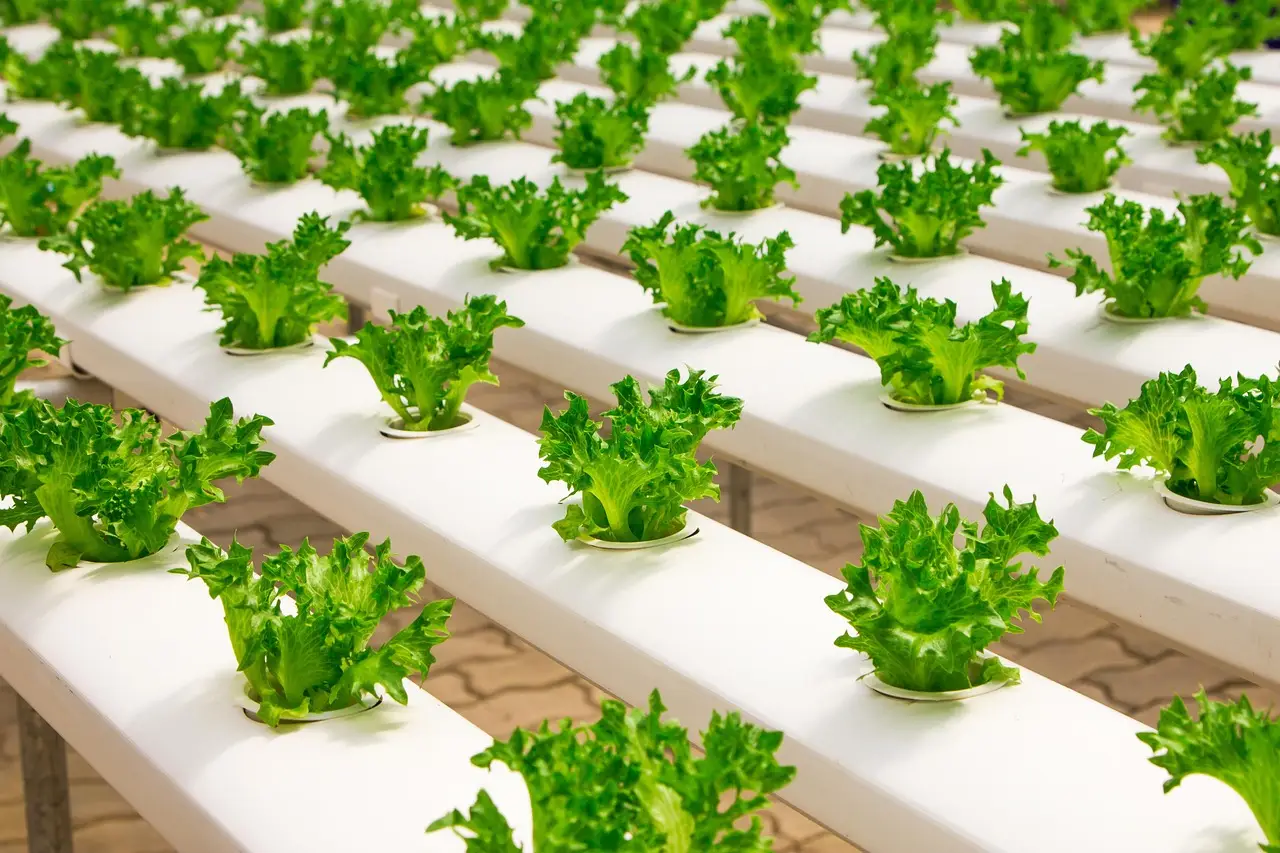
Canada's first-ever National Food Security Strategy, launched in June 2026 under Prime Minister Mark Carney, commits $750 million to expand year-round domestic production of fruits and vegetables — including produce grown in vertical farms. A new peer-reviewed analysis by three researchers at Western University argues that money is chasing a system that cannot deliver food security and diverts resources from more grounded alternatives.
Richard Bloomfield, a PhD candidate in geography and environment, Evan Bowness, an assistant professor, and Tony Weis, a professor, examined claims made by leading Canadian vertical farm developers and their coverage in major Canadian news outlets. Their study, published in Agriculture and Human Values, concludes that vertical plant factories do not solve the problems of industrial agriculture. Instead, they write, the sector represents "a problematic continuation of its contradictory logic."
What are vertical plant factories?
They are fully enclosed buildings or warehouses. Artificial lighting, wiring, plumbing, engineered substrates and climate control systems replace sun, soil and seasons. Output is largely limited to leafy greens and berries. They cannot grow staple crops, so many operators concentrate on high-margin items such as lettuce, microgreens and berries — prices per volume that must cover enormous energy and infrastructure bills.
The energy math is stark. One cited life-cycle figure puts the electricity demand at 4.4 kilowatt-hours per kilogram of lettuce produced. Growing inside a sealed building means replacing free sunlight with high-powered LEDs and round-the-clock temperature and ventilation systems. Lighting, wiring, tubing and microchips require frequent replacement as they break down or become obsolete. The authors argue the result is far more material- and energy-intensive than the industry's marketing conveys.
What does this change for growers and taxpayers?
The practical question is what $750 million in public money buys. The authors point to several high-profile bankruptcies that have plagued the sector in recent years, driven by the same cost structure. They also note that the produce grown is often nutritionally limited and prohibitively expensive for low-income consumers — undercutting claims that plant factories can address food insecurity.
The UN's Food and Agriculture Organization does not include leafy greens in its global hunger statistics, the authors note. Enough food is produced globally to feed the population; the unresolved problem is distribution, not volume.
For policymakers, the researchers warn, plant factories offer a sleek high-tech pitch that can divert public resources toward speculative systems while ecologically sound, community-based food alternatives remain overlooked. The capital-intensive model also replaces farming knowledge and labour with increasingly automated systems — and draws attention from what the authors call more feasible solutions, such as improving land access for new farmers.
The politics of continuity
Why does the sector keep attracting government and venture capital? The authors, drawing on work by Sharon Stein and Evan Bowness, frame the answer as the "politics of continuity" — the struggle over what societies seek to preserve amid deepening environmental instability, what they will do to preserve it, and who bears the costs.
In food, that means defending the expectation of year-round abundance on Canadian supermarket shelves even as the ecological conditions underpinning it grow less certain. Vertical plant factories promise to sustain that expectation without sacrifice rather than adapting food systems and consumption patterns to ecological limits. Enormous technological and material investments, the authors argue, are being mobilized to preserve a particular version of the present into an increasingly unstable future — and foreclose other possible futures in the process.
Where the technology does make sense
The researchers stop short of rejecting the technology outright. In Canada's North, at small scales — inside shipping containers, for example — and powered by solar rather than diesel, vertical production of fresh greens could make economic and environmental sense and cut reliance on long-distance shipping. But broader claims invoking food security, or casting plant factories as a response to the harms of industrial agriculture, do not hold up in their view.
Their prescription: governments serious about building a better food system should invest in farmers, land access and place-based knowledge rather than capital- and material-intensive towers of leafy greens and berries. The challenge, they write, is not deciding which technologies keep the existing system going, but asking what is worth carrying forward, what needs to change, and whose futures current choices make possible — a framing that will hang over Ottawa's $750 million deployment as the strategy moves from announcement to allocation.
via geneticliteracyproject.org (Source)
More from Marcus Bennett
Show full bio
Senior reporter covering regulation, policy and their impact on Agribusiness coverage for industry professionals at Agribusiness Wire.
470 articles
Also in the yard
- Canadian Tariffs Strike U.S. Farm Equipment Sector
- Canola tariff suspension extends to 2028 as Doer urges farmer voice
- Manitoba Researchers Build Technology Aimed at Autonomous Farming
- China, Canada to Expand Agricultural Exchanges and Deepen Cooperation
- U.S.-Canada Trade Talks Collapse, Raising Tariff Threat to Farm Exports