Lot No. LOT-1701 · offered October 3, 2026
Commodity MarketsLot sheet
December Corn Reclaims $5 as Crop-Tour Losses Meet Global Shortfalls
December corn cleared $5.0425/bu. as Midwest crop-tour losses, EU drought and Black Sea disruption lifted soybeans near $12.50 and SRW wheat above $7. New-crop export sales lag, however.
Market notes
- December corn futures broke above $5 to $5.0425/bu. on August 20, 2026, while the national cash corn average hit a 16-month high above $4.445/bu.
- Managed-money net buying in corn since August 12 exceeded 112,000 contracts (562.5 million bushels) as crop tours question USDA's 180.7 bu./acre yield forecast.
- Old-crop corn export commitments of 3.445 billion bushels already exceed USDA's 3.4-billion target, but 2026-27 sales are down 24% and ethanol production hit a five-week low.
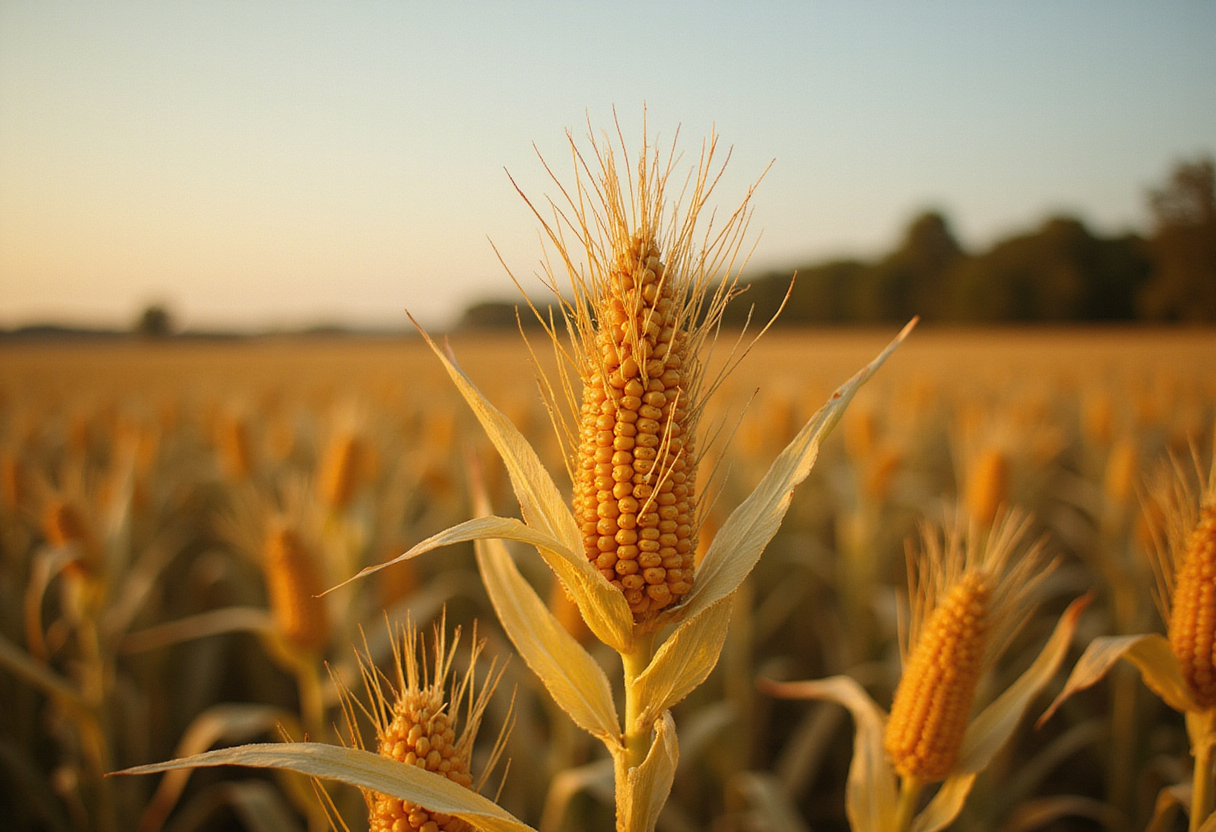
December corn futures broke back above $5 per bushel on August 20, 2026, climbing 6.25 cents to $5.0425 in late overnight trade after touching $5.0450 — the highest intraday level since mid-May. November soybeans rose to $12.4075 per bushel, and December Chicago SRW wheat pushed to $7.0475, as farmers and traders reassessed U.S. crop potential against drought damage in Europe and restricted Ukrainian grain shipments.
The corn rally has moved fast. December futures have gained more than 30 cents in roughly a week and now sit within reach of the May 13 technical high of $5.0650. September corn advanced to $4.79. The national average cash corn price rose to just above $4.445 per bushel, a 16-month high — a level that matters directly for farms confronting elevated input costs and tight operating margins. Another sustained leg higher could materially change marketing opportunities heading into harvest.
Crop Tour Challenges USDA's Yield Number
Crop-tour findings are raising questions about USDA's 180.7-bushel-per-acre national corn yield forecast. Illinois samples indicated a sharp decline in expected yields, although western Iowa showed stronger potential. Even a one- or two-bushel-per-acre reduction could tighten the 2027 balance sheet if export demand holds.
Speculators have positioned aggressively. Since August 12, managed-money net buying in corn totaled more than 112,000 futures contracts — the equivalent of 562.5 million bushels. That capital inflow can amplify price swings and adds another layer of volatility to farm marketing decisions.
Demand Signals Split Between Old Crop and New
The demand picture carries warning signs. U.S. 2025-26 corn export sales commitments reached 3.445 billion bushels, 24% above the comparable year-earlier period and already exceeding USDA's full-year target of 3.4 billion. New-crop sales tell a different story: 2026-27 commitments stood at 416.3 million bushels, down 24% year over year.
Ethanol softened as well. Production fell 2.5% to 1.089 million barrels per day, a five-week low. StoneX analyst Randy Mittelstaedt estimated USDA's corn-use projection for ethanol could ultimately run roughly 25 million bushels too high.
Global Supply Trouble Could Shift Demand Toward U.S.
The opportunity extends beyond domestic crop conditions. Severe drought is reducing European crop prospects — EU soft wheat exports sit at 54.4 million bushels, down 49% year over year — while restricted Ukrainian shipments tighten Black Sea availability. France could turn toward U.S. supplies if its production shortfall requires imports, and extreme shifts in global trade flows could alter the American balance sheet by hundreds of millions of bushels. That prospect gives growers another reason to manage forward sales actively rather than treating the futures rally as an isolated weather move.
Soybeans Ride Pod-Count Losses and Chinese Buying
Soybeans added a second engine to the rally. November futures briefly reached $12.4450, approaching the $12.50 mark, and have gained roughly 58 cents — nearly 5% — in one week. Crop-tour reports showed sharply lower pod counts across many Midwest fields, with continued concern about flood damage in the eastern Corn Belt.
China remains the swing factor. USDA reported 1.76 million metric tons of new-crop weekly soybean sales, nearly twice the prior week, with China accounting for 1.45 MMT. Outstanding 2026-27 U.S. soybean sales to China stood at 4.56 MMT, or 167.4 million bushels, as of August 6 — just over 18% of a reported 25-MMT annual purchase commitment. The remaining gap means export execution will stay a major market variable.
Wheat Responds to Black Sea Disruption — Cautiously
Wheat markets are responding to geopolitics. Ukrainian grain exports totaled only 794,000 MT from August 1 through August 15 after Russian attacks effectively closed its seaports in late July. Yet U.S. wheat export commitments remain weak at 274.6 million bushels, down 32% year over year. Reduced Black Sea competition has not yet produced a broad U.S. export boom, and USDA's export forecast of 775 million bushels stands at a three-year low. December HRW wheat reached $7.7975 in its strongest settlement trend since 2023; December spring wheat rose to $7.2650.
The Bottom Line for Growers
The emerging market equation is unusually complex: smaller yield expectations at home colliding with European drought, Black Sea disruption, stronger speculative buying and potentially shifting global demand. Higher prices could strengthen farm revenue and marketing margins, but ethanol weakness and slower new-crop corn commitments argue against assuming the rally persists. Producers, co-ops and investors will watch USDA yield revisions, weekly export sales, late-August weather and global supply-chain disruptions for confirmation that this price recovery has room to run.
via Google News: Grain prices (Source)
More from Nathan Brooks
Show full bio
Staff writer covering marketplaces and e-commerce at Agribusiness Wire.
198 articles
Also in the yard
- USDA Yield Test Meets Returning Chinese Soybean Demand
- December Corn Hits $4.8750 as Heat, Conflict Fuel Grain Rally
- Corn Slips to $5.22 as Traders Position Ahead of USDA Stocks Report
- Corn, Soybeans, Wheat Slide as 2026 Harvest Outruns Five-Year Pace
- December Corn Hits $5.43 as Harvest Delays and China Bets Lift Grains