Lot No. LOT-4122 · offered September 29, 2026
Trade & ExportsLot sheet
China, Canada to Expand Agricultural Exchanges and Deepen Cooperation
China and Canada will expand agricultural exchanges and deepen cooperation in technology, soil health and the seed industry, a shift with direct relevance for canola, wheat and seed trade flows.
Market notes
- China and Canada agreed to expand agricultural exchanges, per Global Times.
- Cooperation will focus on agricultural technology, soil health and the seed industry.
- No specific tariff, procurement or funding figures were attached to the announcement.
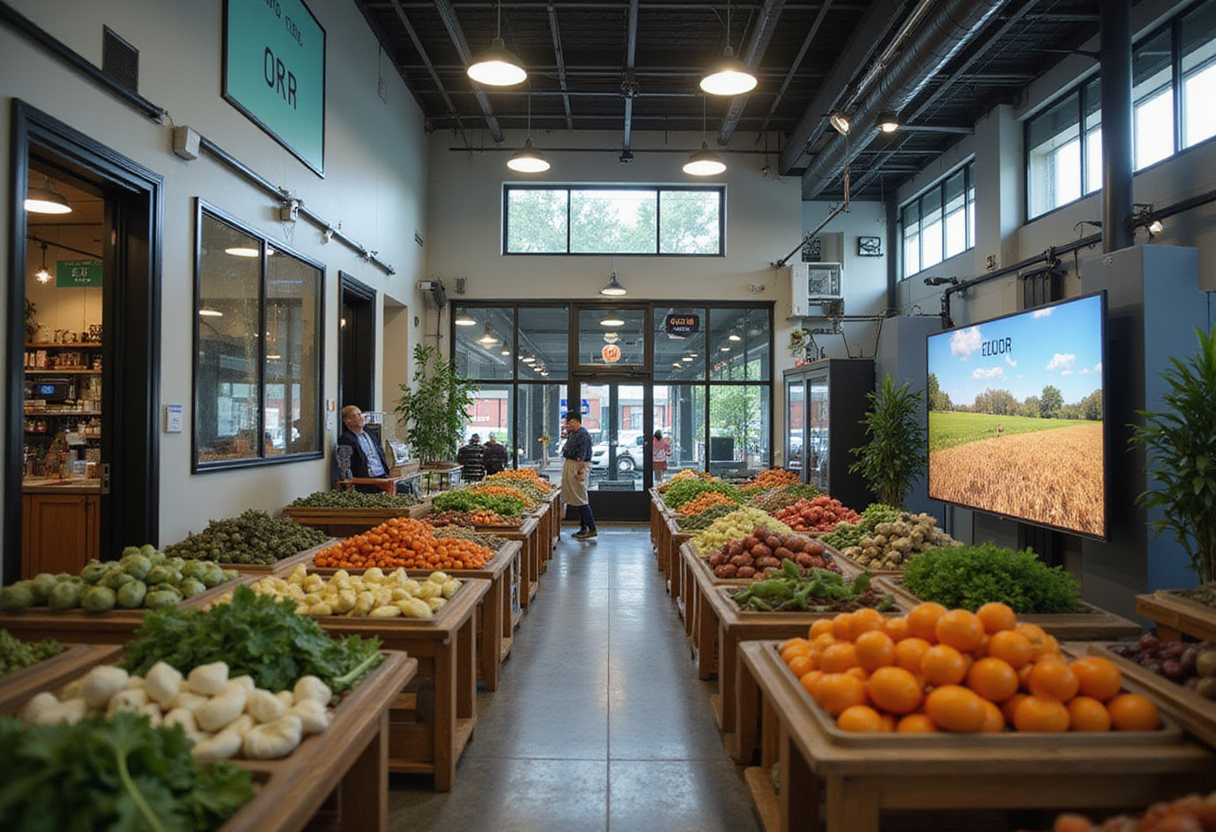
China and Canada have signaled an expansion of agricultural exchanges, with both governments committing to deeper cooperation in agricultural technology, soil health and the seed industry, according to a Global Times report.
The agreement to broaden engagement marks a shift in tone between two trading partners whose agricultural relationship has carried real commercial weight for both sides. Canada has long ranked among the world's leading exporters of canola, wheat and pork, and China has been one of its largest single-country buyers for those products. Seed and biotechnology linkages, along with soil-management science, now sit at the center of the renewed agenda.
For Canadian growers and grain handlers, the announcement matters because market access to China directly affects basis levels and export volumes for canola and wheat. Any framework that stabilizes exchanges in agricultural science and seed technology tends to reduce the policy risk premium that traders price into Canadian exports. It also opens a channel for input-makers and plant-breeding firms in both countries to pursue joint research, variety trials and regulatory dialogue.
Cooperation on soil health points to a shared policy priority. Chinese agriculture faces constraints on arable land quality and degradation, while Canadian Prairie producers have invested decades in no-till and rotation systems designed to preserve organic matter and moisture. Formal exchanges in this field could translate into joint research programs, technical delegations and shared measurement standards for soil carbon and fertility — areas where both governments fund active programming.
The seed industry component carries the longest-run implications. China has made domestic seed security a stated national priority and has sought international partnerships in germplasm and breeding technology. Canada, home to established public and private breeding programs in canola, cereals and pulses, offers counterpart expertise. Deeper institutional ties could facilitate germplasm exchange, joint variety development and harmonized approaches to trait evaluation, though any such work will run through each country's biosafety and plant-variety rules.
The Global Times report did not specify new tariff measures, procurement commitments or funding levels attached to the cooperation. Readers should treat the announcement as a policy-direction statement rather than a shift in traded volumes; condition of the bilateral relationship, like crop condition reports, describes posture at a point in time, not harvested results.
For agribusiness, the practical watch items are concrete: whether the expanded exchanges produce signed research agreements, whether Canadian seed and trait developers gain clearer regulatory pathways into the Chinese market, and whether soil-health collaboration includes measurable pilot projects. Each would move the announcement from diplomatic language into commercial terms that growers, input suppliers and exporters can price.
Officials on both sides framed the expanded exchanges as a foundation for longer-term agricultural ties. Whether that foundation supports renewed growth in two-way agri-food trade will depend on the implementing arrangements that follow.
via Google News: Seed industry (Source)
More from Rebecca Stone
Show full bio
Market editor covering industry trends and analytics at Agribusiness Wire.
135 articles
Also in the yard
- U.S.-China Summit Ends Without Resolution on Agricultural Trade
- China Targets Seed Industry Self-Reliance, Minister Says
- China and US Move Toward Farm Tariff Cuts in Major Win for Agricultural Trade
- Canadian Seed Growers' Association Weighs Launching Its Own Seed Company
- U.S.-China Trade Deals Could Lift Farm Exports and Ease Tensions