Lot No. LOT-8281 · offered November 6, 2026
Precision Agriculture & AgTechLot sheet
Young Indiana farmers put drones, AI and Excel to work
Purdue graduates Brent Runyan and Nate Thompson combine drones, variable rates, AI and Excel, but neither claims the new tools replace field checks or trusted advisers.
Market notes
- Entry-level drones can provide scouting data for as little as $500.
- Runyan Farms traces 200 years of family farming; the grandfather restarted in the 1980s.
- Nate and Scott Thompson bought a sprayer in early 2026.
- Thompson tested five AI tools: ChatGPT, Copilot, Gemini, Grok and Claude.
- Runyan holds Part 107 certification for drone operation.
By Olivia Hart
An entry-level drone provides scouting data for as little as $500, but Purdue graduates Brent Runyan and Nate Thompson base their spending choices on field experience, not measured yield or margin results.
What makes starting out harder now?
Runyan, a Purdue student and soon-to-be farmer at Runyan Farms in Waynetown, Indiana, works in a newly remodeled office lined with century-farm certificates. His family has farmed for 200 years, yet his grandfather started over after the farm economy collapsed in the 1980s. Runyan sees similar economics today, with far higher startup costs for young farmers.
“It’s so hard to jump in today and buy tillable acres,” Runyan said. Securing more land is not assured, so he aims to raise output on existing ground and add outside income. He will use a scouting drone on the farm and as a seed salesman for west-central Indiana’s Indiana Specialty Group.
Runyan argues farmers must keep pace rather than repeat a horse-and-plow model. Off-farm work, diversification, tighter input control and selective technology are central, though none replaces secure land access.
In plain terms, technology helps only after a farmer can secure land and operating room.
Where drones and variable rates fit
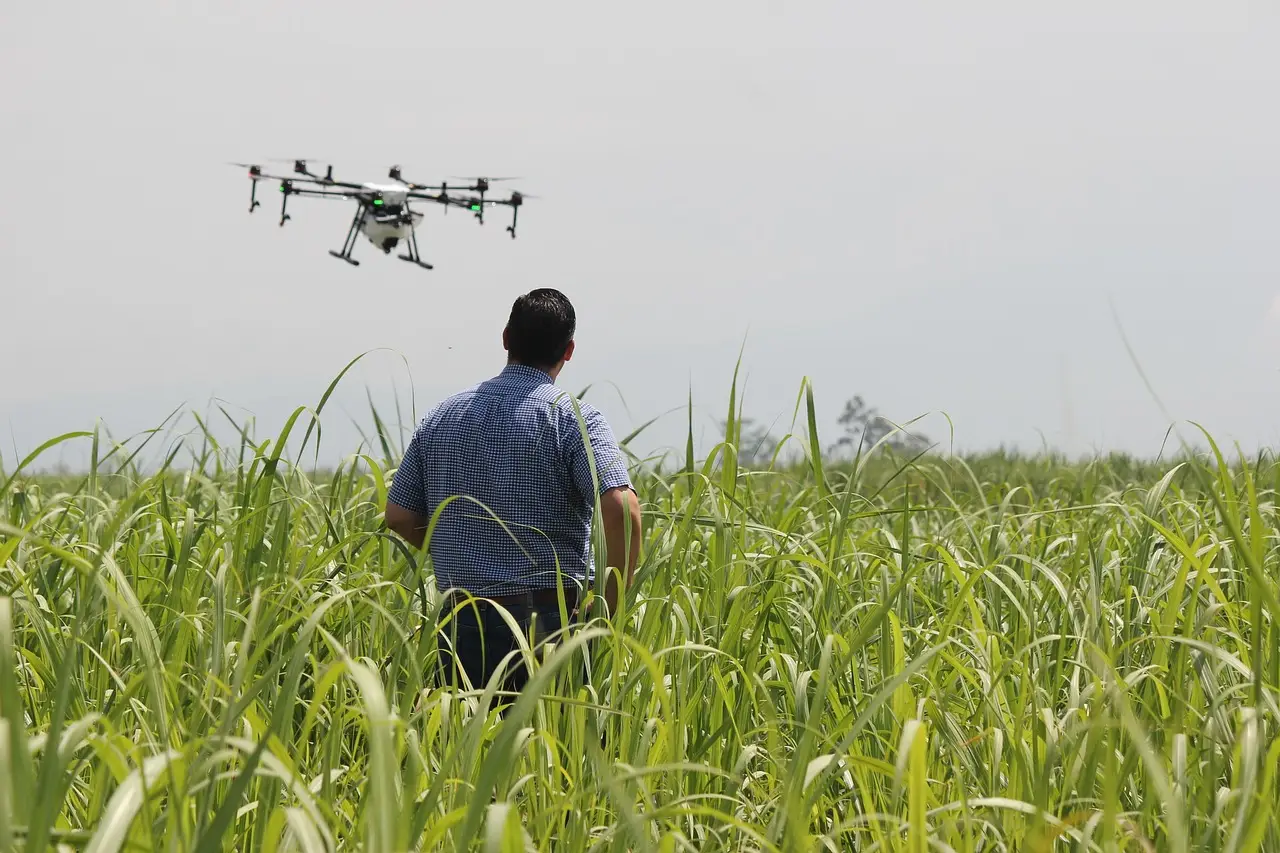
Runyan keeps a drone in his pickup and uses it to photograph fields, locate problems, monitor effects of weather events and decide whether a crop adjuster should visit. He says the device improves accuracy while helping him target treatment.
He also trials seed populations and fertilizer prescriptions because Runyan Farms has varied soils. Runyan says variable-rate work has stopped overapplication, maintained fertility and saved money by matching seed rates to acreage and soil type. The aim is to maximize yield potential on land he already controls.
The article offers no before-and-after fertilizer or seed bills, yield comparison or independent audit. It also reports no crop-price or basis figures against which to judge Runyan’s claimed savings.
In plain terms, these tools make sense only when records confirm they prevent waste.
What can Excel show about herbicide costs?
Nate Thompson and his father, Scott, bought a sprayer in early 2026 when Nate returned from Purdue to their Francesville, Indiana, farm. He uses Microsoft Excel to analyze chemicals, rates and scenarios by field and crop, unlike his grandfather’s pen and notepad. Changing one input recalculates the year, he says, streamlining herbicide selection.
His worksheet includes:
- Tabs for fall burndown, preemergence, post-corn or post-soybean applications, and a Liberty cleanup pass.
- A price table listing each product, mode of action and price per unit, with other tabs referencing those figures automatically.
- A back-end tab tracking totals for corn and soybean applications by farm, exact cost per acre for each program, every sprayer pass, annual pesticide cost per field and net cost per field.
Those records can carry lessons into the next season and sharpen purchasing decisions. They do not establish that a treatment worked agronomically, and the profile supplies no completed-season spending totals or return on the sprayer.
In plain terms, the spreadsheet is a cost calculator, not proof that a herbicide program works.
Can AI guide farm decisions?
Thompson and Runyan belong to the first group of Purdue students to return home with working knowledge of artificial intelligence. Their Purdue professors disagreed: some opposed AI, while others encouraged students to explore it.
Thompson experimented with chatbots to make songs and pictures before testing ChatGPT, Copilot, Gemini, Grok and Claude. Purdue gave him scenarios to explore what AI tools could and could not do.
Thompson ranks ChatGPT highest because familiarity brings him the most accurate results, but he says it lacks agricultural knowledge. He has not found an AI tool strong on farm topics.
Runyan uses ChatGPT for accessible agronomic worksheets, weed identification and machine diagnostics; Thompson uses it for equipment problems and parts and to explore herbicide-program changes.
Runyan treats AI as a field technician when he cannot solve a problem alone. Thompson is more cautious: “For now, I use it more as a glorified search engine,” he said. Both call it an aid, not a crutch.
They reject the idea that they already lean on AI daily, but expect to need it as tools evolve. No independent test of the tools’ agronomic recommendations is reported.
In plain terms, AI can shorten a search without replacing agronomic judgment.
Why do people still matter?
Runyan relies on salespeople, agronomists and advisers rather than a chatbot, reasoning that suppliers succeed only when farmers do. He credits their good intentions and support. He has earned a Part 107 drone certification, and mentors guide his experiments with drones, AI and variable rates. They also retain practices that worked for their parents and grandparents.
Shad Schenck, owner of Indiana Specialty Group, leads that guidance. Runyan says Schenck stays ahead of technology, uses AI and variable rates on his farm, and shares what works with clients. Thompson applies a boots-on-the-ground test: walk the crop and soils, observe conditions all season, then decide.
The farmers expect more tools, but intend to keep only those that improve decisions and pay. Runyan says relationships carry farming farther than a chatbot, a claim field checks and advisers can test.
The next test comes as Thompson records a full season of sprayer passes and Runyan expands drone use in farming and seed sales; until then, these purchases are working hypotheses, not proof of higher margins.
via Farm Progress (Source)
More from Olivia Hart
Show full bio
News editor covering technology and product news in Agribusiness coverage for industry professionals at Agribusiness Wire.
476 articles