Lot No. LOT-9887 · offered November 13, 2026
Commodity MarketsLot sheet
USDA Cuts Corn Yield to 179.6 Bpa, Sparks Grain Rally Off Lows
USDA cut corn yields to 179.6 bpa and soybean ending stocks to 300 million bushels, sparking a rally that analysts say may be a floor — or just a bounce before South American supplies weigh.
Market notes
- USDA's November WASDE cut the corn yield to 179.6 bushels per acre and corn ending stocks to 1.758 billion bushels.
- Soybean 2026-27 ending stocks were lowered from 315 million to 300 million bushels; average yield printed at 53.3 bpa.
- January soybean futures rebounded from lows near $11.85; March 2027 corn at $4.50 is cited as a re-ownership level.
- Diesel is roughly $1 off its summer high and $2 off the spring 2026 low, advisers say.
- Funds are net short corn while still long soybeans, which could cap soybean rallies.
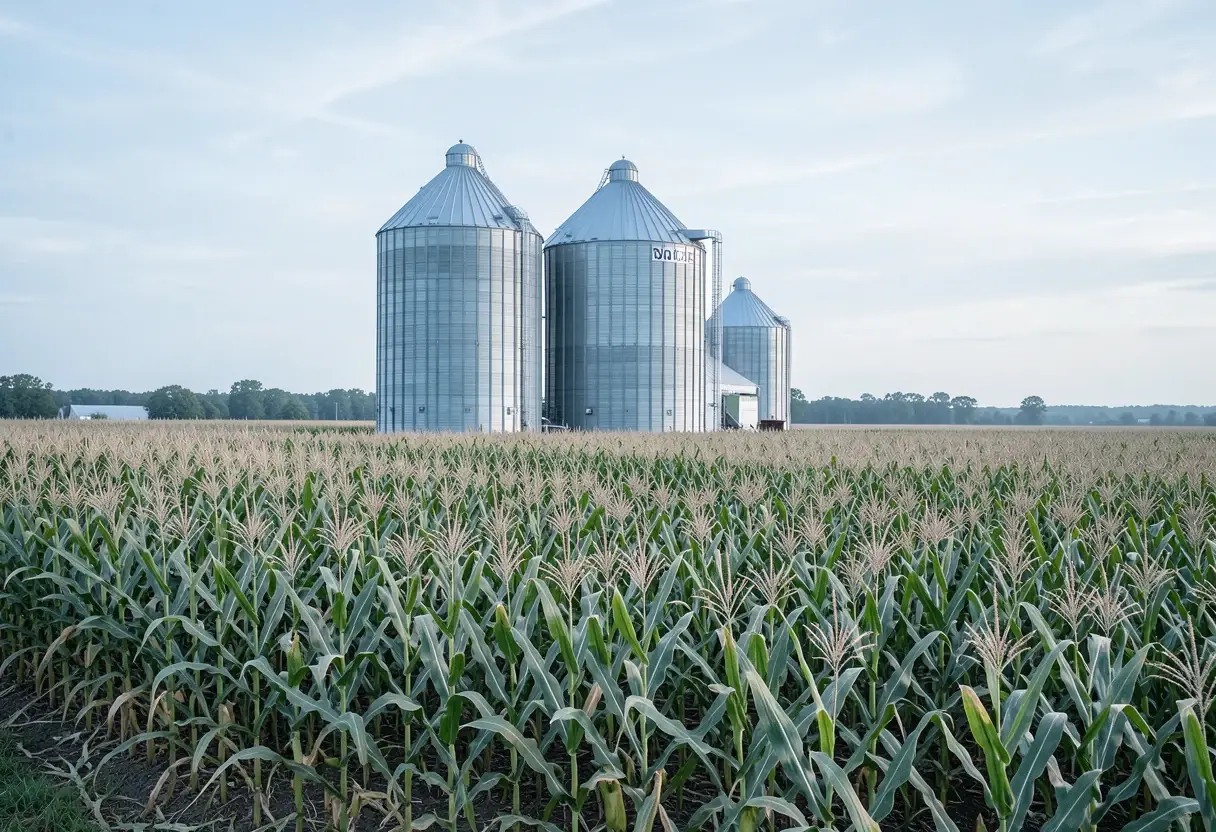
USDA's November WASDE report cut the U.S. corn yield to 179.6 bushels per acre and dropped soybean ending stocks for 2026-27 from 315 million to 300 million bushels, sending both markets surging off multimonth lows after a brutal two-month slide. The question now dividing advisers is whether Tuesday's move marks a genuine price floor or a temporary bounce in a market still crowded with risks.
What did WASDE actually change?
Andrew McCarty, founder and president of Pluto Commodities, said the report "provided some bullish surprises, lowering corn yields to 179.6 bpa and tightening ending stocks to 1.758 billion bushels." Soybeans found support from stronger export demand and tighter stocks, though South American production remains a concern. Wheat continues to struggle with growing global supplies despite ongoing uncertainty surrounding Russia and Ukraine.
His caveat: USDA gave the markets a reason to rally, but sustained strength will require demand to follow through. McCarty is watching corn exports, continued Chinese soybean buying, and South American weather, and recommends using meaningful rallies for incremental sales rather than assuming the lows are behind us.
Joe Fallico, commodity futures broker and president of Insignia Futures & Options, noted the soybean stocks cut to 300 million bushels surprised analysts who had expected an increase. January soybean futures rebounded sharply from lows near $11.85 but still face overhead resistance after a two-month decline. "It is too early to conclude that the downtrend has ended," Fallico said, recommending producers with unpriced soybeans use rallies for incremental sales or protective hedging. Put options can guard the downside while preserving upside, though premiums must be weighed.
How are funds positioned?
Matthew Pot, founder of Grain Perspectives Inc., laid out the money-flow picture: funds have essentially liquidated outright long positions in corn and added shorts, while still holding long soybean positions — which means fund selling could cap any soybean rally. He flagged a 53.3 bpa soybean yield, China buying within a framework that "stalls at 25 million metric tons," and interest-rate probabilities rising again after October's CPI data, with PPI numbers due Friday.
For corn, Pot said whether stocks-to-use falls below 10% after the January report depends on export sales over the next two months. With funds net short corn, a large bearish catalyst would be needed to extend that short at current prices — his argument that, short term, soybeans are the directional market.
Where is the re-ownership opportunity?
Jason Gehler, senior market strategist at Blue Line Futures, called the rally a signal markets may be near price lows. "March 2027 corn futures at $4.50 seems pretty cheap now," he said, framing it as a re-ownership opportunity for bushels already sold off the combine. He sees a potential relief rally to $4.80 or $4.90 if corn bottoms near $4.50, but no return to $5.50 soon given the time of year. For soybeans, he suggests waiting for $12.50 to $13 rather than reacting immediately.
Lauren Urbanczyk, co-founder of Texas Hedge Risk Management, sees value in owning cheap upside or cheap puts on unprotected grain. When December options expire next week, pricing on options versus the March corn contract becomes more attractive, she said, with upside coverage extending beyond the January report. Her benchmark: a 50% retracement of October's monthly move would reward any potential rally.
What about inputs, wheat and storage?
Chris Swift, founder of Swift Trading Company, is waiting for the next two USDA reports before building 2027 marketing ideas. On costs, he notes diesel is roughly $1 off the summer high and $2 off the spring low of 2026. His advice: book a fourth of spring fuel needs on this dollar break and average from there, then look at nitrogen. A colder-than-normal winter and a dependent Europe could push natural gas prices sharply higher, he warned.
Brian Quinn, chief product officer and analyst at Quoreka, flagged winter wheat as the big wild card: acreage is up this year despite drought and expected fertilizer shortages in hard red winter states, and an El Niño year typically brings heavy Southern precipitation. Storage costs are very expensive, yet more farmers are moving to self-storage, he said.
Does more information improve decisions?
David Widmar, ag economist at Agricultural Economic Insights, cited psychologist Paul Slovic's 1970s horse-race study: more information did not improve bettors' accuracy but did greatly increase their confidence. "If we read more market reports or yield projections, are we improving the accuracy of the grain marketing decisions we make or just gaining confidence?" he asked.
Brett Friedman, contributing analyst at OptionMetrics, added a volatility angle: agricultural commodities including wheat, corn, soybeans and sugar have posted strong returns this year, while soybean implied volatility is currently very low even adjusting for seasonality — making the fourth quarter the most favorable time for hedging with options.
The next USDA yield estimates arrive after Christmas, leaving South American weather, fund positioning and export pace to set the tone through year-end.
via Farm Progress (Source)
More from Olivia Hart
Show full bio
News editor covering technology and product news in Agribusiness coverage for industry professionals at Agribusiness Wire.
510 articles
Also in the yard
- Corn Slips to $5.22 as Traders Position Ahead of USDA Stocks Report
- Corn, Soybean Prices Brace for Harvest Verdict After Three-Week Range
- USDA Adds 234 Million Bushels to Corn Supply, Complicating Rally
- Soybean Stocks at 315 Million Bushels Tighten Market Ahead of October WASDE
- USDA Cuts U.S. Corn Crop 141 Million Bushels, Lifts Soybeans