Lot No. LOT-2592 · offered November 5, 2026
Seeds, Crop Protection & FertilizerLot sheet
UAN28 Hits $446/Ton as Seven of Eight Fertilizers Climb in Late October
UAN28 rose 4% to $446/ton in late October, leading seven of eight fertilizers higher; anhydrous topped $1,000/ton for the first time since July, DTN data shows.
Market notes
- UAN28 rose 4% to $446/ton in the final week of October 2026, leading seven of eight fertilizers higher.
- Anhydrous hit $1,007/ton, its highest price since the first week of July, and is 19% above year-ago levels.
- Urea was the only decliner, down 2% to $669/ton; all eight fertilizers are higher than one year earlier.
- Purdue's Center for Commercial Agriculture found Brazilian farms spent ~$85/acre on fertilizer vs ~$57/acre in the U.S. from 2020-2024.
- Brazil imports 72% of its phosphate and 96% of its potash, per the Purdue study posted Oct. 30.
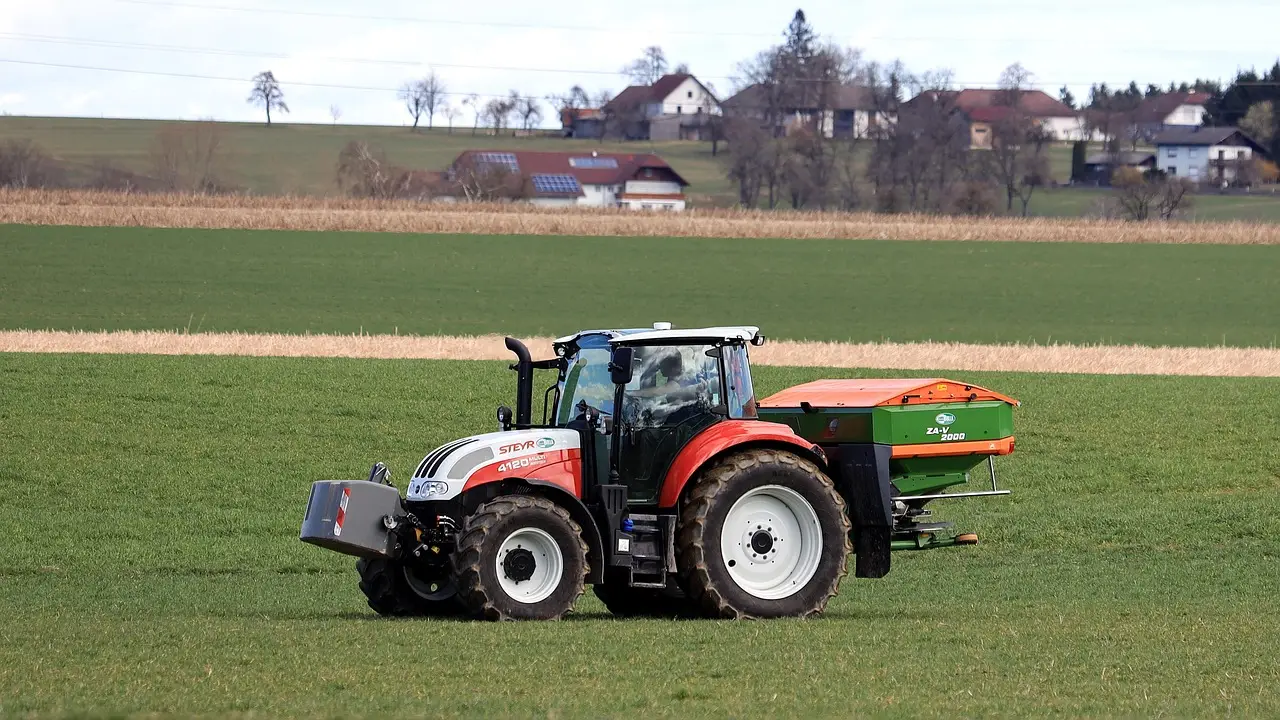
UAN28 jumped 4% in the final week of October, climbing from $430 to $446 per ton and leading seven of the eight fertilizers tracked by the DTN Retail Fertilizer Trends index higher. None of the eight products posted a significant move week over week, but the monthly direction is unmistakable: it was the fifth consecutive week that all but one nutrient price rose.
Anhydrous crossed the $1,000 threshold, up 3% month over month from $979 to $1,007 per ton. That's the highest price since the first week of July, when anhydrous touched $1,032.
What moved, and by how much?
- UAN28: $430 → $446/ton, up 4%
- Anhydrous: $979 → $1,007/ton, up 3%
- UAN32: $483 → $494/ton, up 2%
- Potash: $499 → $510/ton, up 2%
- DAP: $934 → $941/ton, up ~1%
- MAP: $974 → $987/ton, up ~1%
- 10-34-0: $702 → $708/ton, up ~1%
- Urea: $683 → $669/ton, down ~2% — the lone decliner
On a cost-per-pound-of-nitrogen basis, urea averaged $0.73/lb.N, anhydrous $0.61/lb.N, UAN28 $0.80/lb.N and UAN32 $0.77/lb.N. Anhydrous remains the cheapest nitrogen source by that measure, even at four-digit ton prices.
The year-over-year picture is worse
All eight fertilizers now cost more than they did a year ago. The spread is wide. DAP is up just 2%, potash 5%. The nitrogen complex carries the heavier increases: UAN32 and MAP are each 6% higher, 10-34-0 is 6% more expensive, UAN28 is up 8%, urea 12% — and anhydrous leads at 19% higher than last year.
For a grower pricing fall nitrogen, that anhydrous figure is the one that stings. A 19% year-over-year increase on the most commonly applied fall nitrogen source translates directly into higher per-acre input costs heading into the 2027 crop.
Brazil spends more per acre — and why it matters
A study posted Oct. 30 by Purdue University's Center for Commercial Agriculture found Brazilian farms outspent U.S. farms on fertilizer every year from 2020 to 2024 — roughly $85 per acre in Brazil versus about $57 per acre in the U.S.
"The difference reflects both how much Brazilian farms apply and what they pay for it," the study said. "The acidic, nutrient-poor soils of Brazil's Cerrado require large amounts of fertilizer and lime."
Import dependence explains part of the price gap. Purdue found Brazil, the world's largest fertilizer importer, brings in about 72% of its phosphate and 96% of its potash. The U.S. imports 16% of its phosphate and 95% of its potash.
The cost curves peaked at different times. "U.S. fertilizer costs peaked that year at $78 per acre, double their 2020 level, while Brazilian costs peaked a year later, in 2023, at $150, nearly three times their 2020 level, as fertilizer bought at the 2022 price peak likely fed into Brazil's 2022/23 crop," Purdue said. "By 2024, costs had eased to $83 per acre in Brazil and $61 in the United States."
How DTN tracks these numbers
DTN collects weekly fertilizer price bids from agricultural retailers to compile its Fertilizer Index, a series it has reported since November 2008. MyDTN subscribers can access state-level averages alongside the national figures. The weekly index captures retailer bids, not transaction prices, so treat it as a market barometer rather than a grower invoice.
What does this change for fall application decisions? With anhydrous up 19% year over year and every product in the index above year-ago levels, growers locking in 2027 nitrogen now face materially higher pre-plant budgets — and urea, down 2% this month, is the only product showing any backward momentum.
via mydtn.com (Original)
More from Nathan Brooks
Show full bio
Staff writer covering regulation, policy and their impact on Agribusiness coverage for industry professionals at Agribusiness Wire.
515 articles
Also in the yard
- Anhydrous Ammonia Tops $1,000 as Fertilizer Prices Climb Again
- U.S. Nitrogen Prices Surge 15% in a Week, Squeezing 2027 Corn Budgets
- UAN32 Leads Four-Nutrient Fertilizer Slide in DTN Tracker
- UAN32 Leads Fertilizer Index Higher in First October Week
- Anhydrous Ammonia Crosses $1,000 Per Ton as Fertilizer Prices Climb