Lot No. LOT-3639 · offered November 5, 2026
Seeds, Crop Protection & FertilizerLot sheet
IndexBox Sees Fertilizer Granules Demand Growing 2.5% Annually to 2035
IndexBox forecasts 2.5% annual volume growth for fertilizer granules through 2035, an index of 128, with Asia-Pacific leading and cereals near half of demand.
Market notes
- IndexBox forecasts a 2.5% CAGR in volume for 2026-2035, reaching a market index of 128 by 2035 (2025=100).
- Cereals and grains account for nearly half of global fertilizer granules consumption.
- Asia-Pacific is the largest and fastest-growing region, led by China and India.
- Nutrien Ltd. is the world's largest potash producer; Yara leads global ammonia trading.
- The fruits and vegetables segment is expected to grow faster than the overall market.
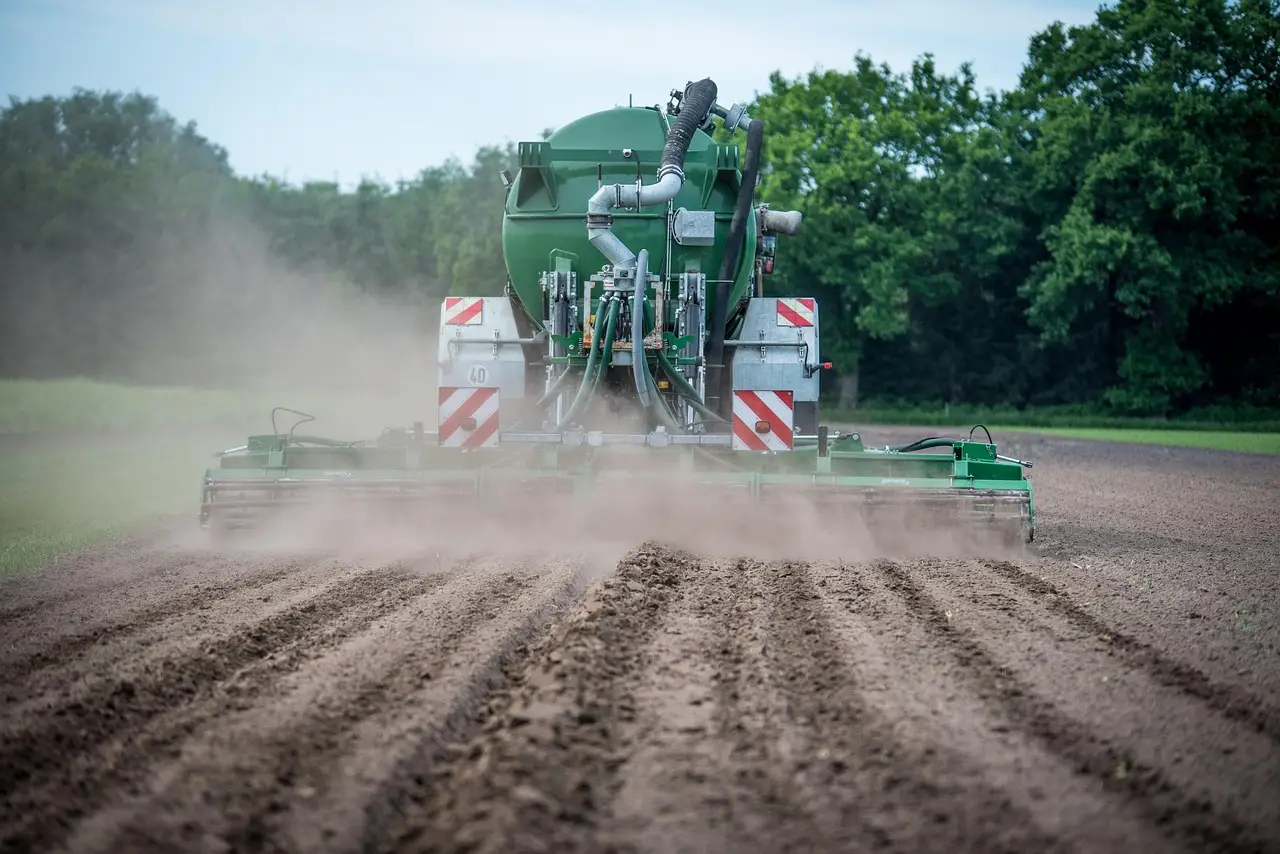
Global fertilizer granules consumption will expand at a compound annual growth rate of roughly 2.5% in volume terms from 2026 to 2035, reaching a market index of 128 by 2035 against a 2025 baseline of 100, according to IndexBox's latest market report.
The forecast rests on a decade of historical data running from 2012 to 2025, segmented by product type, application and value chain. IndexBox builds its figures on official statistics, trade records, company disclosures and expert validation, with all data normalized to a common product definition. The report notes that indexed curves are used to compare medium-term scenario trajectories when full absolute volumes are not publicly disclosed — a caveat buyers of the forecast should weigh.
The market enters 2026 with broader demand fundamentals, more disciplined procurement behavior and a more regionally diversified supply architecture, the report states. Granular products — urea, DAP, MAP, MOP and complex NPK blends — remain the industry standard for large-scale mechanized farming because of their handling, storage and application properties. Price volatility, driven by energy costs and trade policies, stays the key risk.
Which regions carry the growth?
Asia-Pacific remains the largest and fastest-growing market, propelled by intensive farming in China and India, government subsidies and rising adoption of precision farming. Environmental regulations may moderate volume expansion.
North America is a mature, highly mechanized market. Biofuel policies and balanced fertilization support moderate growth, while nutrient management rules steer demand toward specialty granules.
Europe faces the tightest constraints. Regulations limiting nutrient runoff cap volume growth, yet demand for high-efficiency products such as controlled-release and chloride-free granules should sustain value growth.
Latin America, led by Brazil's expanding soybean and corn acreage, offers dynamic growth as no-till and precision practices spread, though economic volatility and infrastructure gaps persist. The Middle East and Africa hold high potential, but limited infrastructure, political instability and low purchasing power confine growth to a few countries.
Where does demand concentrate?
Cereals and grains — wheat, rice and corn — account for nearly half of global granules consumption, reflecting the scale of cereal cultivation and the crops' high nitrogen requirements. Application rates track government subsidies and market prices. Through 2035, population growth, shifting diets in developing countries and biofuel mandates in the Americas will sustain corn demand. Segment trends include:
- Shift toward balanced fertilization and site-specific nutrient management
- Rising use of stabilized and controlled-release nitrogen granules
- Policy support for cereal production in emerging economies
- Growing integration of digital tools for fertilizer recommendations
Oilseeds and pulses form the second pillar, driven by high phosphorus and potassium requirements. Growers in Brazil, the United States and India apply DAP, MAP and MOP to lift yields and oil content. Soybean acreage expansion in South America, high-protein pulse demand in developed markets and biofuel production from oilseeds support steady growth. Crush margins, oilseed prices and biofuel policy are the indicators to watch.
Fruits and vegetables will grow faster than the overall market. Growers apply higher-value granules — SOP, CAN and specialized NPK blends — to optimize yield, appearance and shelf life. Urbanization, health awareness and greenhouse expansion drive volumes, while high costs and limited availability of specialty fertilizers restrain some regions. The turf and ornamentals segment, spanning professional lawn care, sports fields and golf courses, offers stable growth, favoring controlled-release and polymer-coated granules — though nutrient runoff regulations may bite.
Plantation crops — oil palm, rubber, coffee, tea and sugarcane — grow moderately, concentrated in tropical Asia, Latin America and Africa. Controlled-release compound granules cut nutrient losses and labor costs on large plantations; commodity price volatility and deforestation concerns pose challenges.
Who supplies the market?
IndexBox lists 25 leading participants. Nutrien Ltd., headquartered in Saskatoon, ranks as the world's largest potash producer. Yara International of Oslo leads global ammonia trading. Other top-tier players include:
- The Mosaic Company (Tampa) — major phosphate and potash producer
- CF Industries Holdings (Deerfield) — major North American nitrogen producer
- OCP Group (Casablanca) — world's largest phosphate rock producer
- EuroChem Group (Zug) — major Russian-owned producer
- QAFCO (Doha) — world's largest single-site urea producer
- Uralkali and PhosAgro (Russia), ICL and Haifa Group (Israel), K+S (Kassel), Sinofert (Beijing), Coromandel International (Secunderabad), Koch Fertilizer (Wichita), Grupa Azoty (Tarnów), OCI (Amsterdam), Ma'aden Wa'ad Al Shamal (Riyadh), Indorama Eleme (Port Harcourt), Wilmar International (Singapore), Bunge (St. Louis), Incitec Pivot (Melbourne), Kingenta (Linshu), Acron Group (Veliky Novgorod) and Arab Potash Company (Amman)
What does the product mix look like by 2035?
The mix shifts gradually toward higher-efficiency formulations — controlled-release and stabilized fertilizers — though conventional granules like urea and DAP retain dominance. Precision agriculture adoption drives demand for specialized granules that cut losses, and sustainability-linked formulations gain share. The report's baseline frames a resilient market essential to global food security, with the strategic outlook to 2035 resting on product specialization and supply chain resilience rather than volume surges.
via Google News: Precision agriculture (Source)
More from Grace Kim
Show full bio
Correspondent covering people, launches and day-to-day practice in Agribusiness coverage for industry professionals at Agribusiness Wire.
453 articles
Also in the yard
- Urea Slips in DTN Weekly Tracker; Six Other Fertilizers Hold Slightly Higher
- Fertilizer Prices Ease in August; Seven Inputs Still Above 2025 Levels
- UN Warns Hormuz Standoff Could Lift Grain Prices, Backs Fertilizer Flow
- U.S. Nitrogen Prices Surge 15% in a Week, Squeezing 2027 Corn Budgets
- Fertilizer Prices Ease, Yet Consolidation Worries Persist