Offered
Seeds, Crop Protection & FertilizerLot sheet
Three durum varieties trace roots to wild Iraqi wheat
A wild Iraqi wheat collected in 1978 led to three durum releases: drought- and Hessian fly-tolerant Jawahir in Morocco, rainfed Cham 11 in Syria and Red Grain in Lebanon; two are multiplying seed.
Market notes
- In 1978, J.B. Lennart collected Triticum araraticum in northern Iraq for long-term conservation in a U.S. genebank.
- Three national programs developed Jawahir, Cham 11 and Red Grain from the same wild ancestor.
- Morocco’s Jawahir combines drought tolerance and Hessian fly resistance and has entered seed multiplication.
- Syria’s Cham 11 targets rainfed conditions, carries high yield potential and remains under seed multiplication.
- Lebanon’s Red Grain is already grown in the Beqaa Valley for its yield and red-grain burghul quality.
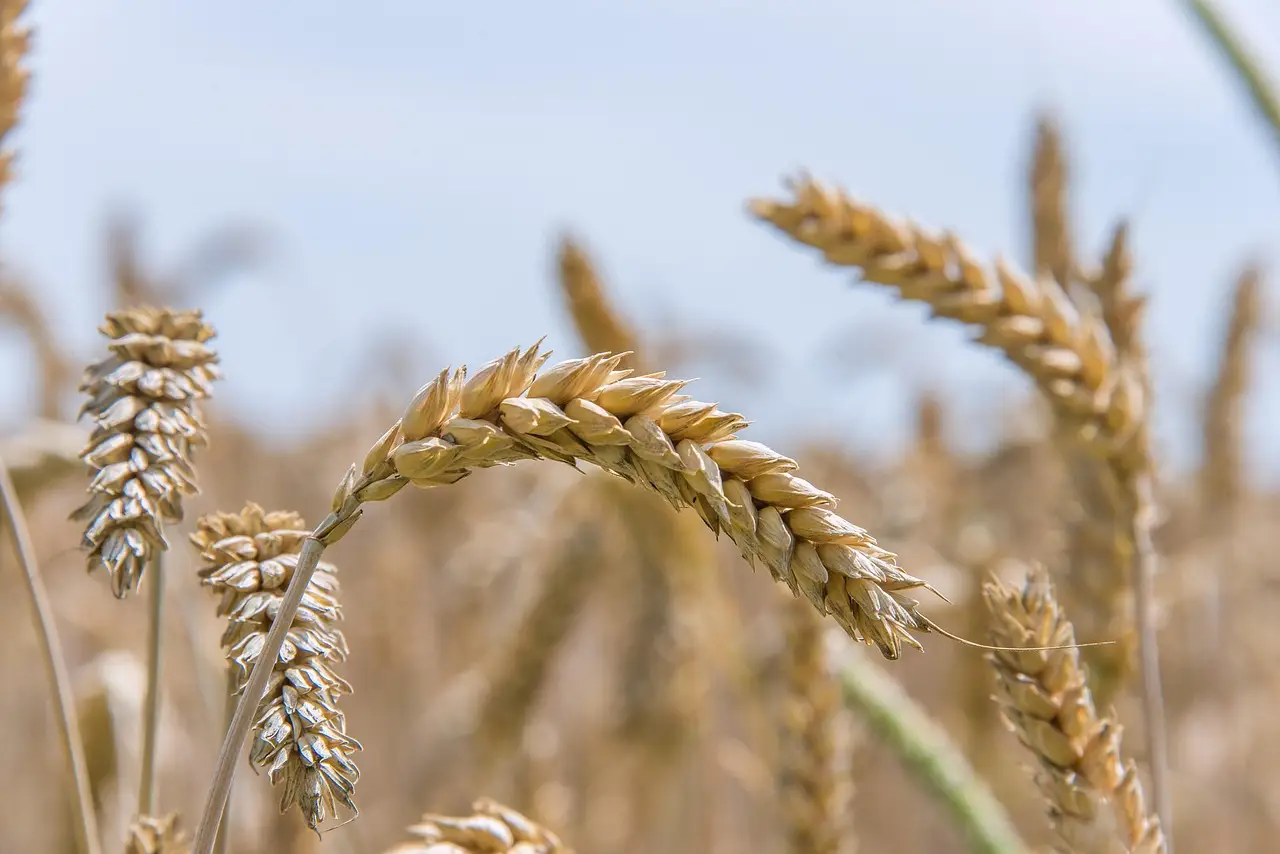
A wild wheat collected beside a remote farm in northern Iraq’s Fertile Crescent in 1978 has contributed to three durum wheat varieties now in seed multiplication or farm use in Morocco, Syria and Lebanon.
How did one 1978 sample reach three countries?
Botanist J.B. Lennart collected Triticum araraticum in 1978. A U.S. genebank conserved the sample for decades. Three Moroccan PhD candidates at Kansas State University later saw useful traits while growers faced persistent drought and Hessian fly, an insect that can cause severe yield losses.
After completing their doctorates, the researchers took the material to Morocco and continued the work. They shared what they had learned with Dr. Nachit, a Moroccan scientist at the International Center for Agricultural Research in the Dry Areas, or ICARDA, in Aleppo, Syria.
Nachit carried a descendant line to Syria and crossed it with high-yielding breeding lines. He called the work “ICA-MOR,” combining the names of ICARDA and Morocco.
ICARDA later led the regional breeding program with national research partners through the Crop Trust’s BOLD project, supported over the long term by the Government of Norway. ICARDA’s genebank in Rabat houses one of the world’s most distinctive and extensive collections of cultivated dryland crops.
The pathway ran from conserved Iraqi diversity through U.S. storage and university research to three national breeding programs.
Which varieties reached which farming systems?
Morocco’s National Institute of Agricultural Research, INRA, developed ‘Jawahir,’ whose Arabic name means “jewels.” The variety combines drought tolerance with Hessian fly resistance and has entered seed multiplication after showing promise in southern Morocco, where drought is a growing concern.
Syria’s General Commission for Scientific Agricultural Research, GCSAR, developed ‘Cham 11’ for rainfed conditions. The variety has high yield potential, valued grain quality and remains under seed multiplication.
Lebanon’s Lebanese Agricultural Research Institute, LARI, developed ‘Red Grain,’ which farmers already grow. They value its yield in the Beqaa Valley and its distinctive red grain, prized for making burghul, a traditional Lebanese food.
The announcement places Jawahir and Cham 11 in seed multiplication; Red Grain is the only variety already in farmers’ fields. The breeding account provides no trial design, sample size, comparative yields, seed prices, input costs, basis levels or farm-margin estimates.
The agronomic targets bear directly on farm output. Drought tolerance addresses a growing constraint in southern Morocco, Hessian fly resistance targets a pest capable of severe yield losses, and Cham 11 targets rainfed production. The announcement does not quantify whether those gains offset farm inputs or lift margins.
Jawahir and Cham 11 are scaling seed, while Red Grain has moved into farm use.
How did farmers shape the varieties?
Researchers evaluated candidate lines in national trials and on farms, checking performance under local conditions and giving farmers a say in promising traits. Agreements to plant trial material made the process participatory: researchers asked growers what was good or bad, and often used farmers’ ancestral knowledge when responses differed from expectations.
In Lebanon, LARI tested ICARDA-supplied lines and involved farmers in variety selection. Dr. Rola El Amil, head of LARI’s plant breeding department, said the partnership helps researchers develop resilient varieties that farmers are more likely to adopt because they fit local needs and support livelihoods.
Bassi summarized the shared result: “Three varieties. Three countries. Three different sets of farmers’ needs, all connected to the genetic diversity of one wild wheat collected decades ago.” Dr. Filippo Bassi is ICARDA’s principal scientist and BOLD’s lead partner for durum wheat.
Farmers served as testers and selectors, not passive recipients of breeding lines.
What does genebank conservation change for future releases?
Keeping Triticum araraticum conserved gave breeders usable diversity long after its northern Iraqi collection. Farmers in Lebanon now grow one descendant, while researchers in Morocco and Syria are increasing seed supplies for two others. As drought, heat and pest pressure grow, genebank collections give breeders more material to work with.
Dr. Benjamin Kilian, BOLD project coordinator at the Crop Trust, said: “This is a story about collaboration across borders at a time when agriculture faces challenges that no country can solve alone.” He said long-term investment and collaboration can turn decades of conserved crop diversity into solutions for current agricultural challenges.
The immediate focus is seed multiplication for Jawahir and Cham 11 and continued availability of Red Grain. Wider harvested-yield and margin evidence will determine whether the three breeding gains deliver durable returns to growers.
via seedworld.com (Source)
More from Grace Kim
Show full bio
Correspondent covering people, launches and day-to-day practice in Agribusiness coverage for industry professionals at Agribusiness Wire.
555 articles