Lot No. LOT-6992 · offered September 28, 2026
Crop EconomicsLot sheet
Southwest Indiana Harvest Accelerates as Wet Season Dents 2026 Crop
Harvest is accelerating in southwest Indiana, where Ben Kron says season-long excess moisture split corn and soybean yields between excellent and drowned-out.
Market notes
- Harvest pace is picking up throughout southwest Indiana.
- Farmer Ben Kron says excess moisture all season affected the 2026 corn and soybean crop.
- Kron reports variable yields: "What is there has been really good," with many drowned-out areas alongside strong corn.
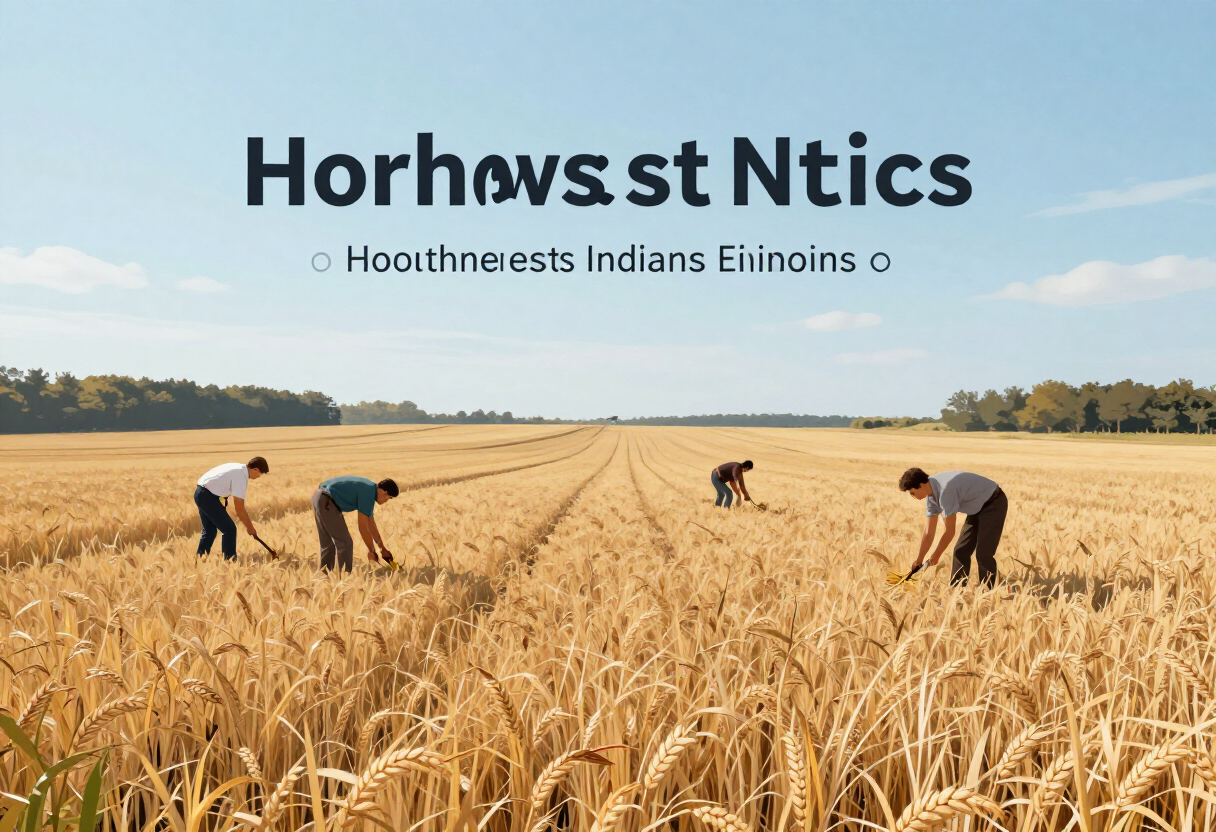
Harvest pace is picking up across southwest Indiana, but the 2026 crop coming off those fields tells a story of a growing season defined by too much water.
Ben Kron, who farms in the region, says excess moisture throughout the growing season has left its mark on both corn and soybeans. The result is a field-by-field split between strong performance and outright loss.
"What is there has been really good," Kron says. "There's been a lot of drowned out areas. There's some really good corn and there's some places where…"
The pattern Kron describes — pockets of excellent corn set against drowned-out low ground — is the classic signature of a wet year. When fields sit saturated for extended stretches, roots starve for oxygen, nitrogen leaches or denitrifies away from the crop, and replant windows close before growers can act. The surviving acres often compensate with strong yields, which is exactly the "really good" corn Kron points to.
For growers and their buyers, that variability complicates marketing. Bin quality and test weight can swing from load to load, and yield estimates built on pre-harvest condition reports may not survive contact with the combine. Harvested results, not August field scores, will settle what this crop actually amounts to.
The drowned-out areas carry a second cost beyond lost bushels: input dollars already spent on seed, fertilizer and crop protection returned nothing on those acres. With corn and soybean margins already tight, farmers in the region will be reading this harvest against their per-acre cost structures rather than against state yield averages.
Kron's account is a single-region snapshot, and condition reports from other parts of Indiana and the broader Corn Belt may differ as harvest widens. State and national yield figures from USDA will come with their own survey methodology and reporting windows, and they will take time to capture the patchwork that individual farmers are seeing now.
What southwest Indiana's harvest does show is that moisture, not drought, shaped this region's season. As combines roll, growers like Kron will be watching whether the good ground can carry enough yield to offset the acres the water took out entirely.
via Brownfield Ag News (Source)
More from Olivia Hart
Show full bio
News editor covering media and advertising at Agribusiness Wire.
137 articles