Lot No. LOT-6510 · offered November 9, 2026
Seeds, Crop Protection & FertilizerLot sheet
Review challenges robusta climate-resilience claims
Robusta holds 43% of global coffee trade, but a century-plus review says irrigation reliance in major producing regions undermines simple climate-resilience claims.
Market notes
- Robusta accounts for roughly 43% of global coffee trade.
- Brazil and Vietnam provide about 65% of robusta exports.
- Approximately 90% of northern Espírito Santo's robusta crop is irrigated.
- The open-access review was published Aug. 27 in Sustainable Development.
- The review covered more than a century of research.
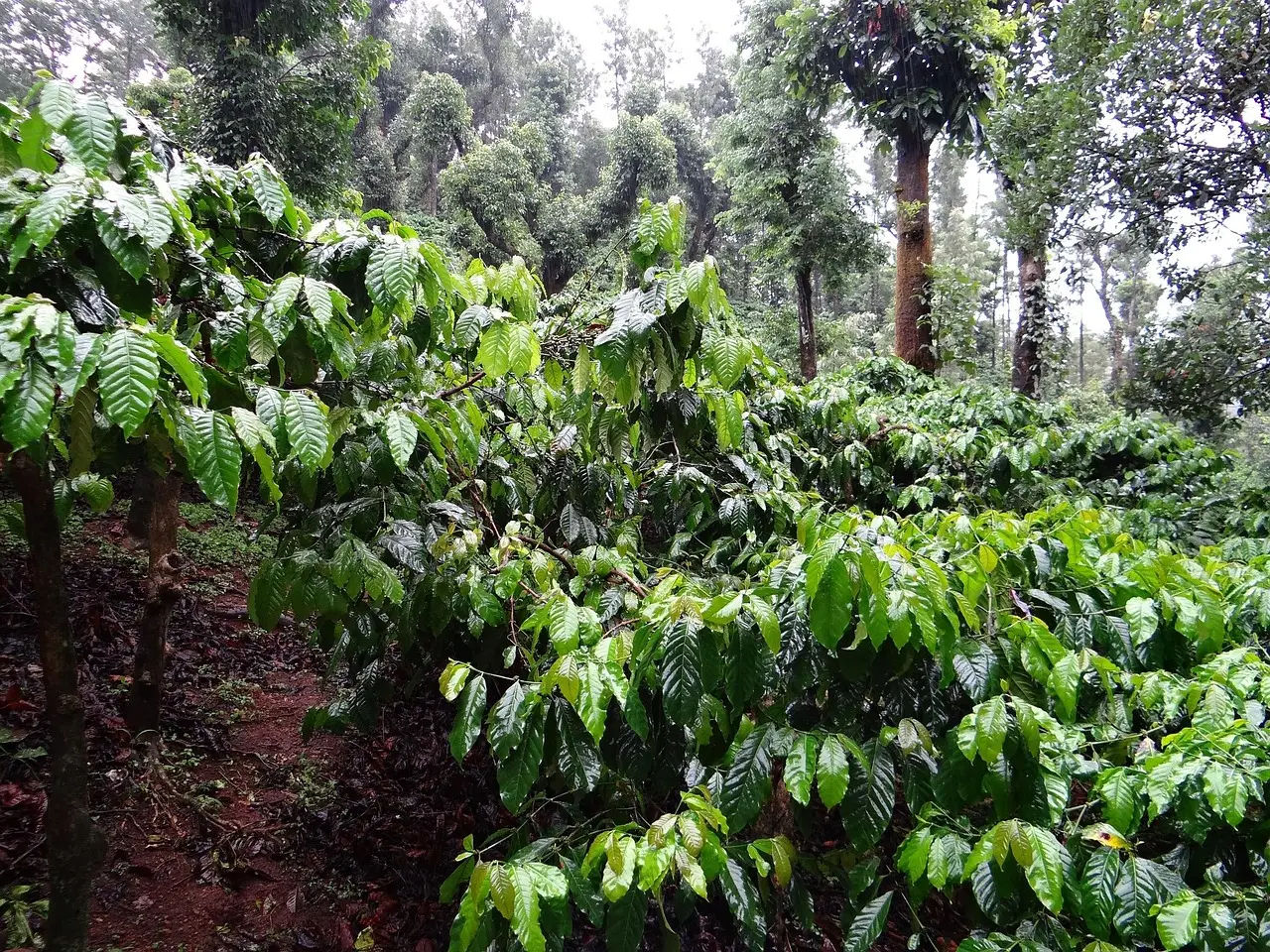
Robusta accounts for roughly 43% of global coffee trade, but a new open-access review says its climate-resilience narrative overlooks water availability in major growing regions as climate change pressures arabica production.
The Aug. 27 review in Sustainable Development, led by Aaron Davis of Royal Botanic Gardens, Kew, with Akshay Dashrath of SICC Labs in India and Kew researcher Justin Moat, examined more than a century of research and added a new analysis of water availability around wild robusta populations in Africa. The authors concluded: “climate resiliency claims for farmed robusta are misguided.”
The paper's own contribution is a literature synthesis and geographic water analysis; it does not report a controlled multiyear trial or farm profitability accounting. Its production figures come from sources cited in the paper, so readers should treat them as estimates for the paper's reporting window rather than current weekly totals.
What does the review say about water?
Wild robusta evolved in warm parts of tropical Africa where soil water generally remains available through most of the year, supplied by rainfall, rivers, wetlands, groundwater or high water tables. The new analysis found wild plants more common where those systems provided moisture beyond rainfall alone.
Climate-suitability models built mainly around temperature and rainfall can therefore misread irrigated farms or naturally wet sites as proof that robusta can thrive under drier conditions. The authors wrote: “We contest that this proposition is not supported by scientific evidence,” referring to the claim that current robusta cultivation offers a straightforward climate-resilient path for global coffee production.
Where does current production rely on irrigation?
The authors argue that major robusta-producing regions in Vietnam, Brazil and India lack the natural conditions required for rain-fed, or non-irrigated, robusta, leaving substantial dependence on irrigation. Brazil and Vietnam together account for about 65% of robusta exports, according to figures cited in the paper.
In northern Espírito Santo, Brazil's most important robusta-producing state, approximately 90% of the crop is irrigated. The production pressure is also visible in Vietnam's Central Highlands, where Daily Coffee News recently reported the environmental costs of the country's robusta boom; the review did not quantify those costs.
What changes for growers and input use?
The review identifies three practices that shape the current robusta production model:
- Extensive irrigation
- Low tree-shade cover, meaning limited overhead canopy
- High synthetic fertilizer use
The authors judged those practices inconsistent with aspirations for ecosystem and biodiversity stewardship and with goals for a low-carbon economy. That assessment links water infrastructure, fertilizer inputs and canopy management to the resource intensity of coffee production.
For growers, production on an irrigated farm in a dry location does not establish that rain-fed robusta is agronomically or economically viable there. The review did not report input prices, coffee basis (the difference between a local cash price and a futures price), farm margins or break-even yields, so its conclusions cannot be converted into a cost-per-pound estimate. It also proposed no subsidy, certification or other policy change.
The paper does not name input suppliers, cooperatives or coffee companies, and it offers no comparison of producer returns. Its test is narrower: whether current cultivation aligns with robusta's water requirements and with stewardship and low-carbon goals.
Does the review call for abandoning robusta?
No. The authors explicitly reject abandoning robusta. Instead, they call for expansion in locations that better match the species' natural water and temperature requirements, accompanied by changes in cultivation practices and climate-focused crop development.
That recommendation depends on more detailed climate mapping to identify where rain-fed robusta can expand sustainably. For operators, the mapping will determine whether new planting represents a rain-fed agronomic fit or simply another irrigated production zone; until that work is available, the cited 43% trade share and 90% irrigation figure in Espírito Santo remain context, not validation of climate resilience.
What lies beyond arabica and robusta?
Davis has also been prominent in research on coffee species beyond arabica and robusta. Last year, a Kew study established liberica and excelsa as genetically distinct species, which could affect their potential commercial cultivation. Earlier this year, a Kew team led by Davis proposed the name Coffea × libex for hybrids between the two species.
Funding came from the Calleva Foundation and the Amar-Franses Foster-Jenkins Trust in the UK, and the authors declared no conflicts of interest. The practical test for growers and policymakers is where rain-fed robusta can expand without the irrigation, sparse shade and fertilizer intensity that define current production.
via dailycoffeenews.com (Source)
More from Rebecca Stone
Show full bio
Market editor covering people, launches and day-to-day practice in Agribusiness coverage for industry professionals at Agribusiness Wire.
468 articles
Also in the yard
- UNU Analysis: Global Farm Trade Moves Water from Poor to Rich
- Drought Shifts From Outlier to Baseline for Agriculture Investors
- Google Applies AI Precision Agriculture to Cut Water Stress
- El Niño Water Year Brings Both Relief and Risk to Western Ag
- Zimbabwe Plans 600,000-Tonne Grain Reserve as Drought Threatens Supply