Lot No. LOT-9971 · offered November 2, 2026
Precision Agriculture & AgTechLot sheet
One Florida Acre Yields 1.7 Million Lettuce Heads a Year
A 1-acre Naples, Fla., hydroponic farm ships 1.7 million lettuce heads a year to in-state grocers while circulating just 10,000 gallons of water.
Market notes
- Naples Fresh produces about 1.7 million heads of lettuce per year on 1 acre.
- The hydroponic system circulates roughly 10,000 gallons of water; irrigated fields average 6,800 gallons per acre per day.
- Seed-to-harvest takes 42 days in summer conditions and closer to 60 days in winter.
- All output is sold through independent grocers within Florida.
- The family started on a 15-acre organic farm before banks would finance the greenhouse.
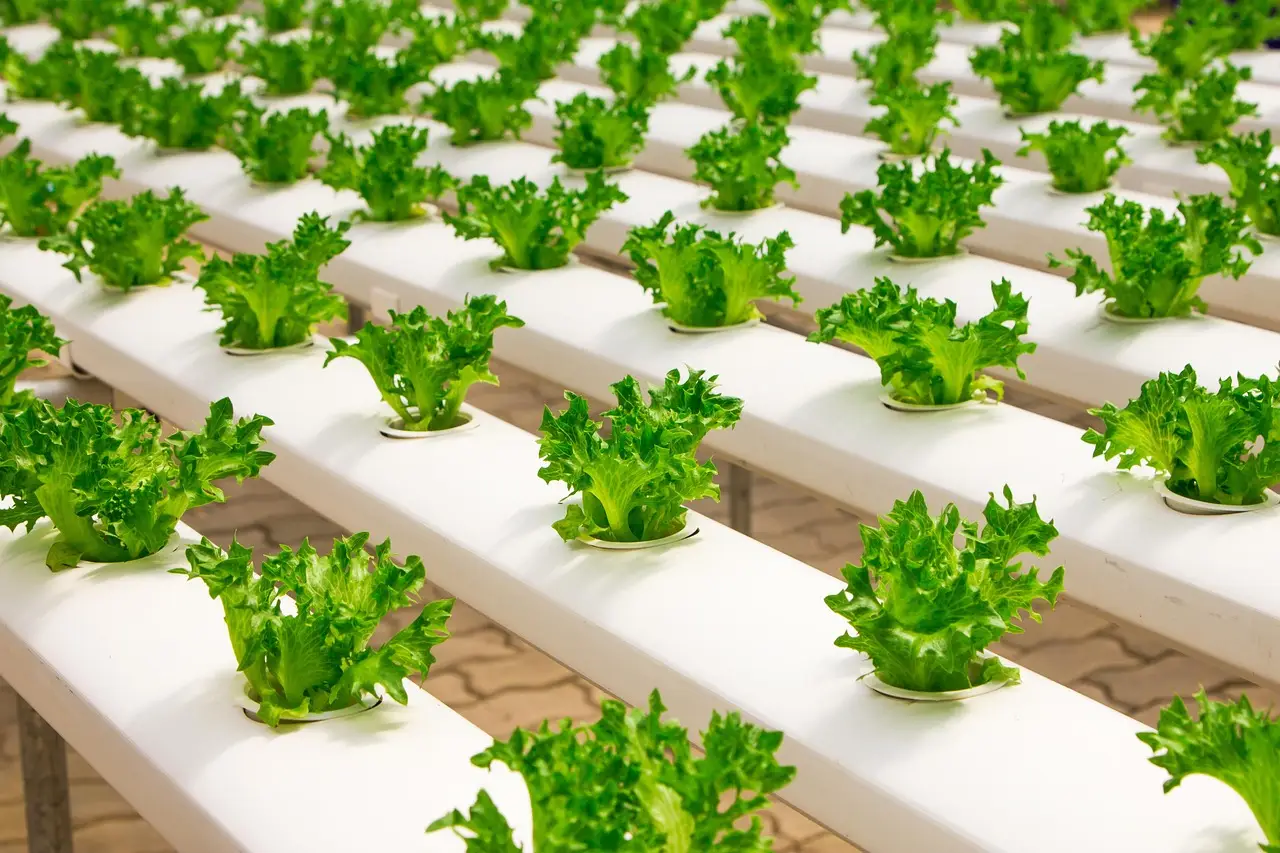
A 1-acre hydroponic farm in Naples, Fla., ships roughly 1.7 million heads of lettuce to Florida grocers every year — a yield that turns the state's water and land economics on their head.
Naples Fresh, run by Saint'Clair Martins Jr. and his father, Saint'Clair Sr., circulates about 10,000 gallons of water continuously through its shallow-water hydroponic system. By comparison, an average irrigated farm field uses about 6,800 gallons per acre per day. Over a year, the water gap between the two approaches is enormous, and it is the number that frames the operation's margin story.
How did the operation get financed?
The path to the greenhouse started on dirt, not water. The Martins family began as an organic farm on a 15-acre property in southern Florida before any lender would touch the greenhouse plan.
"The bank wasn't too sure about loaning farm money to a guy in biotechnology and one in finance," Martins said. "They wanted us to prove we could make it as farmers first."
Martins Jr. left a career on the livestock side of the yeast industry in the Midwest. After several years of profitable field farming, the bank approved a loan for a greenhouse system, and later for the fully automated hydroponic system that now defines the operation. The lesson for growers seeking controlled-environment capital: profitability on conventional acreage came first, technology second.
What technology runs the system?
The farm uses one of three major hydroponic designs — deep water, gutter-based, or shallow water. Naples Fresh chose an Israeli-developed shallow-water technology.
"It's more efficient at recycling water, and if something does go wrong, there's less water in the total system if it needs to be flushed," Martins said.
The control system is what Martins calls "semi-AI" — a conventional computer program that switches the system on or off based on temperature parameters he sets. He runs it from the palm of his hand, but he has deliberately stopped short of full autonomy.
"I don't know that a fully autonomous system is for us yet," he said. "I still like to be hands-on in the decision process."
That hesitation is worth noting. A grower running a system at this density still wants a human in the loop, which says something about the limits of automation even in capital-intensive greenhouse production.
What does the crop cycle look like?
Lettuce moves from seed to finished head in about 42 days, with fresh product leaving the temperature-controlled stocking room weekly. Seasonality still matters inside the structure:
- Summer: faster growth, but humidity raises complications.
- Winter: drier, cooler conditions produce much larger heads — but the cycle stretches from 42 days toward 60.
The main crop is burger leaf lettuce, large heads bred specifically to hold up to heat and humidity — traits that matter both between a bun and under the Florida sun. Variety selection here is a direct answer to the state's climate, not a marketing choice.
Where does the lettuce go?
All of Naples Fresh output stays in Florida. The lettuce is packaged and shipped weekly to independent grocers across the state — a short, direct supply chain with no national distribution layer.
That channel choice carries a caveat the operation's numbers don't address: growth depends on the capacity of Florida's independent retail base, and the article offers no figures on margins, pricing, or production costs per head. The 1.7-million-head figure is a stated output, not an audited result.
Martins frames the larger ambition plainly: "I truly believe in this industrial revolution we're in of [technological] innovation that farmers will be the last to turn the lights off. We know best how to grow great food."
He also cites the reason that does not show up on a balance sheet — having his father and his son working alongside him. With water use, cycle time, and weekly distribution all in his control, the operation is positioned to keep testing whether one acre, tightly managed, can keep competing with fields that use far more of everything.
via Farm Progress (Source)
More from Olivia Hart
Show full bio
News editor covering technology and product news in Agribusiness coverage for industry professionals at Agribusiness Wire.
488 articles