Lot No. LOT-1489 · offered September 28, 2026
Precision Agriculture & AgTechLot sheet
Smart Farming Tools Cut Water Use and Lift Crop Quality, Report Says
A Farms.com report links precision irrigation tools to lower water use and better crop quality, with payback riding on energy savings and premium-grade output.
Market notes
- Farms.com report says smart farming technology reduces water use in crop production.
- The same tools are linked to improved crop quality alongside water savings.
- Payback depends on energy savings, avoided water costs, and quality premiums, though trial details were not disclosed.
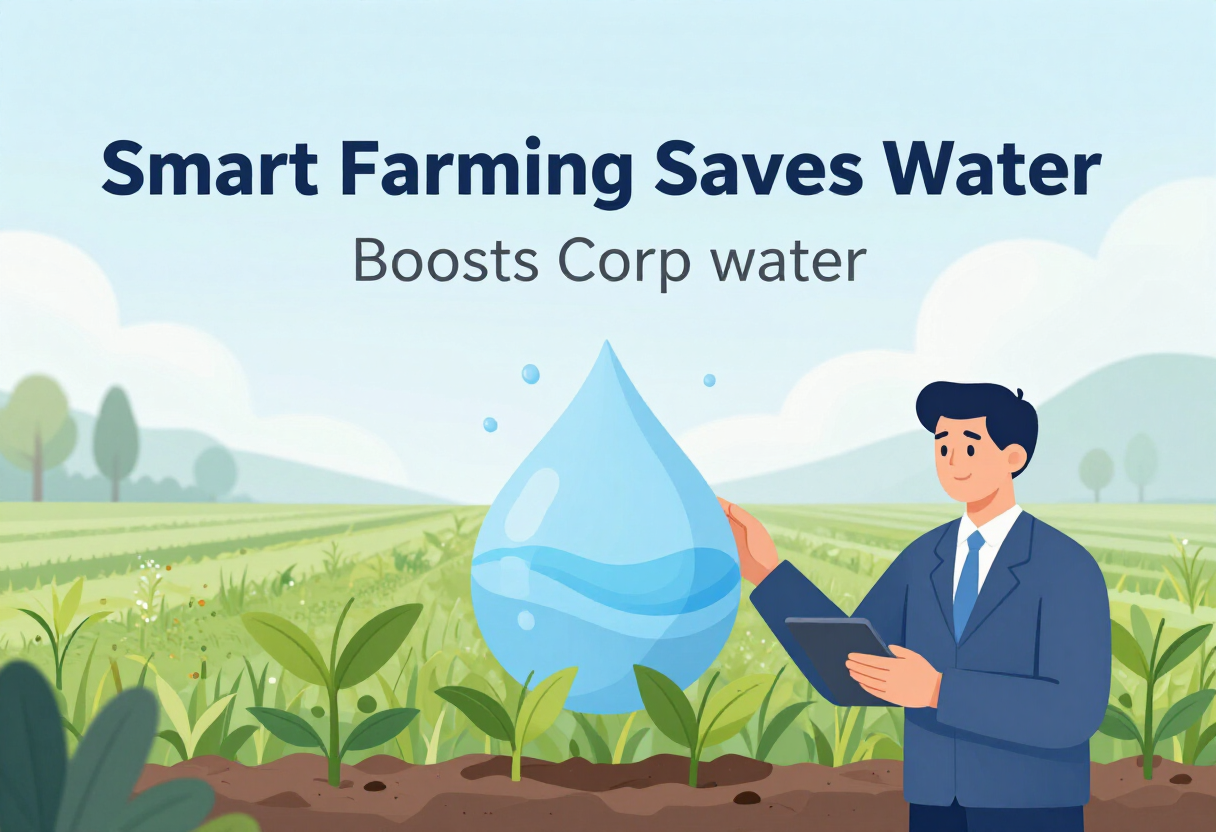
A report from Farms.com highlights that smart farming technology is delivering two benefits growers can take to the bank: reduced water application and improved crop quality.
The claim matters now. Water is becoming a cost line and a regulatory constraint in nearly every major production region. Energy prices push irrigation expenses higher each season, and quality discounts at the elevator or packinghouse can erase thin margins faster than yield losses. Any technology that addresses both sides of that equation — input spend and output value — warrants close attention from producers and their lenders.
What the report points to
The headline finding ties precision agriculture practices to measurable water savings. Smart farming, in this context, covers the toolkit growers already know: soil moisture sensors, variable-rate irrigation, weather-based scheduling, and remote monitoring systems that decide when and how much to water. The report also links these tools to better crop quality, suggesting that applying water only when the crop needs it produces more uniform, marketable output.
That logic tracks with what agronomists have argued for years. Overwatering does more than inflate pumping costs. It can leach nutrients below the root zone, encourage disease pressure, and dilute sugar content or dry matter in quality-sensitive crops. Underwatering stresses the plant and shrinks yields. Sensor-driven irrigation narrows that margin of error.
The margin math
For growers weighing an investment, the calculation comes down to payback. A smart irrigation system carries upfront costs — sensors, controllers, connectivity, and in some cases new application hardware. Against that, the savings arrive in several forms: lower energy bills from fewer pumping hours, reduced water purchases or allocation drawdown where usage is metered, and fewer fertilizer losses from leaching.
The revenue side may carry more weight than the cost side. Quality premiums and reduced rejection rates compound across a season. A grower who moves even a portion of a crop from standard grade into a premium category can recover hardware costs within a single cycle, depending on the commodity and the buyer's specs.
A question of verification
Farmers reading this report should treat it as they would any input maker's yield claim: useful direction, pending field-level confirmation. The headline does not specify crop types, regions, trial sizes, or the methodology behind the water-savings and quality figures. Condition reports and single-season demonstrations are not harvested results. Before committing capital, growers will want replicated trial data for their own crops, soils, and climates — and a clear accounting of how "quality" was measured and priced.
Cooperatives and irrigation districts can play a role here. Pooled purchases of sensing hardware, shared agronomic support, and district-level data on actual water use give individual growers a benchmark that vendor demonstrations cannot match.
Looking ahead
The report signals a broader shift: water management is moving from an agronomic afterthought to a central driver of farm profitability. As sensing hardware gets cheaper and connectivity improves across rural areas, the barrier to entry keeps falling. Growers who test these systems now — on a pivot, a block, or a field — will have the field data they need when stricter water accounting or rising pumping costs make the decision for them.
via Google News: Precision agriculture (Source)
More from Nathan Brooks
Show full bio
Staff writer covering marketplaces and e-commerce at Agribusiness Wire.
173 articles
Also in the yard
- Google Applies AI Precision Agriculture to Cut Water Stress
- Irrigation Makers Push Precision and Remote Control at Husker Harvest Days
- Purdue Study: Only Two Precision Ag Tools Pay Their Way
- USDA Moves to Build Digital Infrastructure for Precision Ag
- Water Quality Question Drives Iowa Farmer to Change Practices