Lot No. LOT-8182 · offered October 30, 2026
Precision Agriculture & AgTechLot sheet
CNPPID serves more than 109,000 irrigated acres in Nebraska
CNPPID serves more than 109,000 acres in Nebraska, where canal-fed pivots rose from 348 to 769 in 15 years and farmers credit surface water with sustaining groundwater recharge.
Market notes
- CNPPID reports serving more than 109,000 acres in south-central Nebraska.
- Canal-supplied center pivots increased from 348 in 2010 to 769 in the most recent season.
- The district operates four hydro plants and roughly 577 miles of canals over the Ogallala Aquifer.
- Lake McConaughy releases support roughly 100,000 additional acres of supplemental irrigation.
- Tom Schwarz's sixth-generation farm includes about 2,000 organic and transitional acres in Gosper and Phelps counties.
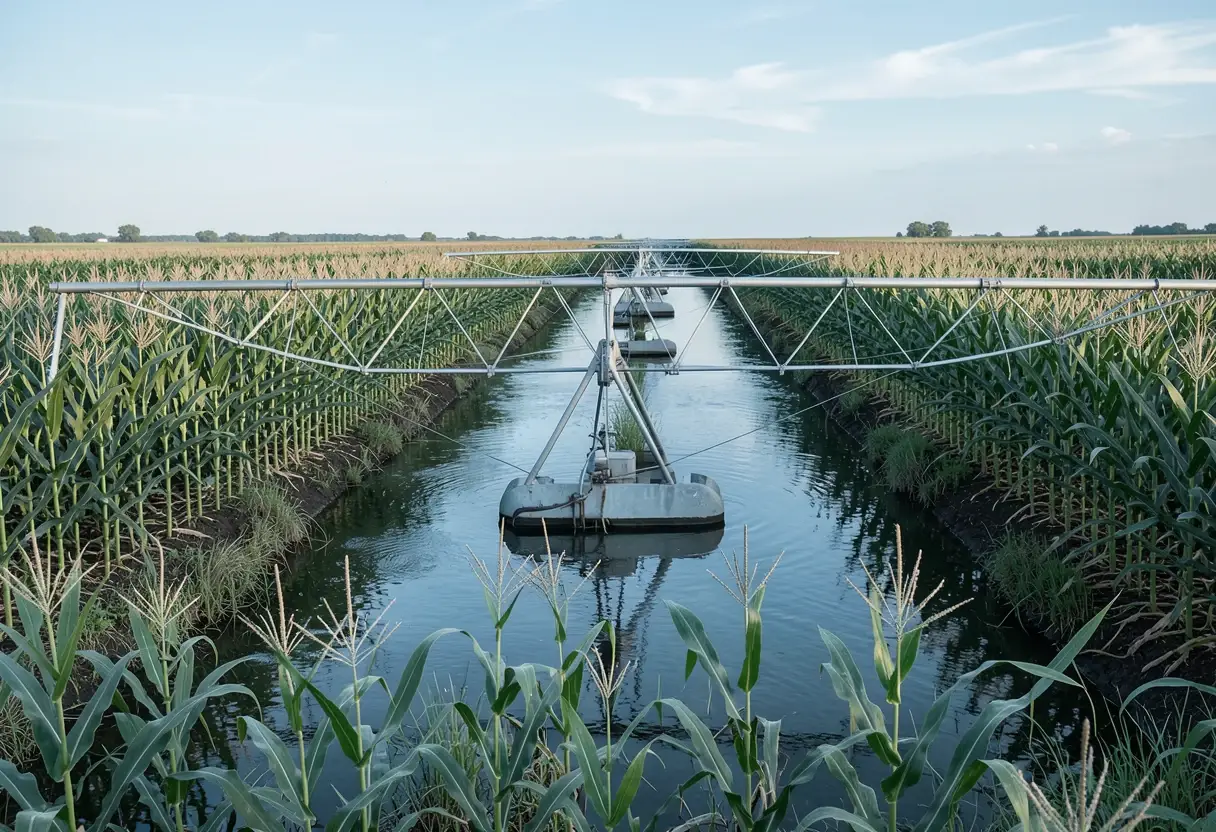
The Central Nebraska Public Power and Irrigation District (CNPPID) reports delivering irrigation water to more than 109,000 acres in south-central Nebraska, while canal-supplied center pivots rose from 348 in 2010 to 769 in the latest season.
Those are service and equipment counts, not harvested acreage or yield results. The reported data include no crop prices, grain basis, input-cost series or profit estimates, so they cannot support a per-acre margin calculation. What they do show is how dependable surface water, irrigation hardware and operating discipline shape whether a farm can keep cropping through a steep rainfall gradient.
Tom Schwarz, his wife Linda and daughter Becky farm about 2,000 organic and transitional acres in Gosper and Phelps counties. Their sixth-generation operation raises corn, soybeans, wheat, field peas, alfalfa, oats, cover crops and food-grade popcorn.
They combine center pivots, gravity-flood systems and subsurface drip. In that corridor, annual rainfall can sustain a crop most years, then fall sharply enough to make dryland farming nearly impossible.
Schwarz calls the groundwater link fundamental: “If we don’t have surface water coming into our area, we wouldn’t have our groundwater,” he said. He credits CNPPID with replenishing the Ogallala Aquifer and says the area would quickly face severe water trouble without imported surface water.
Nebraska Extension water and cropping systems instructor Talon Mues cited more than 9 million irrigated acres statewide and roughly 577 miles of CNPPID canals running above groundwater closely connected to surface supplies, crediting them with helping recharge the Ogallala Aquifer.
Built in the 1930s and 1940s to develop irrigation and electric power, CNPPID is the largest of Nebraska’s nearly 50 irrigation districts. Its canals, laterals and pipelines feed more than 109,000 acres.
Lake McConaughy, Nebraska’s largest reservoir, stores North Platte River water from the Rocky Mountains of Colorado and Wyoming; the flow includes snowmelt, precipitation and substantial return flows from upstream irrigation.
Releases from Lake McConaughy serve irrigation, hydropower and industrial cooling, including a coal power plant, while electricity from the system serves homes, farms and industry.
CNPPID operates four hydro plants: one at Kingsley Dam and three along its supply canal. The lake also supports roughly 100,000 additional acres of supplemental irrigation. The sequence—recreation, power generation, cooling and farm delivery—reflects the system’s intensive water reuse.
Over the past 15 years, canal-supplied center pivots increased from 348 in 2010 to 769 in the latest season, accounting for about two-thirds of the acres receiving delivery service. That shift documents faster adoption of center-pivot equipment, but no farm-income, input-cost or yield data were provided to price the change.
Alex Linden, who grew up farming with his father in Phelps County and now manages public and government relations for CNPPID, says canal irrigation preceded groundwater wells and made regional agriculture viable. He calls maintenance the irrigation department’s No. 1 priority as some structures near 100 years old.
Sparse snow in the 2026 season left crews spending weeks removing cornstalks and debris before water could pass through gates.
Irrigation service specialists coordinate with producers daily, using Gothenburg as the control center for hydro plants and gate structures across the system. When rain threatens a delivery, a specialist can curtail releases and hold water in reserve. The routine matches deliveries to weather, storage constraints and field schedules, though sudden storms can quickly make forecasts unreliable.
Linden said operators may have to release Lake McConaughy water seven days ahead to reach downstream farms, while avoiding shortages at season’s end or excess water returning to the river. Regulating reservoirs provides a buffer, but not always: “Sometimes you’re out of luck,” he said.
The next target is automation from main lines into laterals. Linden said the district is close to full automation, though some laterals remain manual; phone-based water ordering could improve allocation and reduce waste. That is an operational prospect, not a completed rollout, and no savings, cost or yield figures were supplied.
Water management also has a second customer. Recreation became a cornerstone after the system’s 1940s construction. Linden said the district has about 900 lake homes, including stays at Johnson Lake and Jeffrey Lake, and called McConaughy Nebraska’s second-most visited site behind the Henry Doorly Zoo.
Holiday timing can pit farm curtailments against boat-dock levels and 100-mph winds.
Mues works with Nebraska Extension, natural resources districts and government agencies, arguing that teamwork can keep Nebraska among the national leaders in efficient irrigation. He describes a farmer shift from taking the full allotment by default to precision application: less water may still maximize yields while preserving supply for future generations. Those are management claims, not measured harvest results.
Schwarz’s practical test is simpler: the farm must survive. He argues principles do not help a producer who runs out of money, and weather still governs output even with irrigation. The reported figures include no basis, input-cost or yield series, so irrigation’s economic value here remains production feasibility, not a quantified return.
With canal maintenance a top priority, some laterals still awaiting automation and release decisions made seven days ahead, the next test is whether CNPPID can preserve groundwater recharge and farm flexibility without overcommitting Lake McConaughy.
via Farm Progress (Source)
More from Nathan Brooks
Show full bio
Staff writer covering regulation, policy and their impact on Agribusiness coverage for industry professionals at Agribusiness Wire.
521 articles
Also in the yard
- Nebraska cover-crop trials test irrigation and nitrogen savings
- Irrigation Makers Push Precision and Remote Control at Husker Harvest Days
- 13 Ag Tech Startups Roll Out Solutions in Nebraska
- Nebraska Corn Yields Fall 20–30 Bushels as Tar Spot Hits Late
- Flood Bill H.R. 8507 Targets Precision Agriculture Workforce Training