Lot No. LOT-7931 · offered November 16, 2026
Seeds, Crop Protection & FertilizerLot sheet
McGill Chemist Schwarcz Challenges 'Natural Means Safer' Pesticide Assumption
Dr. Joe Schwarcz of McGill tells Seed World Europe that a pesticide's natural or synthetic origin says nothing about safety — only toxicity, exposure and evidence do.
Market notes
- Seed World Europe published the Schwarcz video segment on November 16, 2026.
- Dr. Joe Schwarcz directs McGill University's Office for Science and Society.
- The segment uses apples, coffee and potatoes as examples of crops with natural defensive chemistry.
- Schwarcz argues safety depends on toxicity, exposure and scientific evidence, not on natural versus synthetic origin.
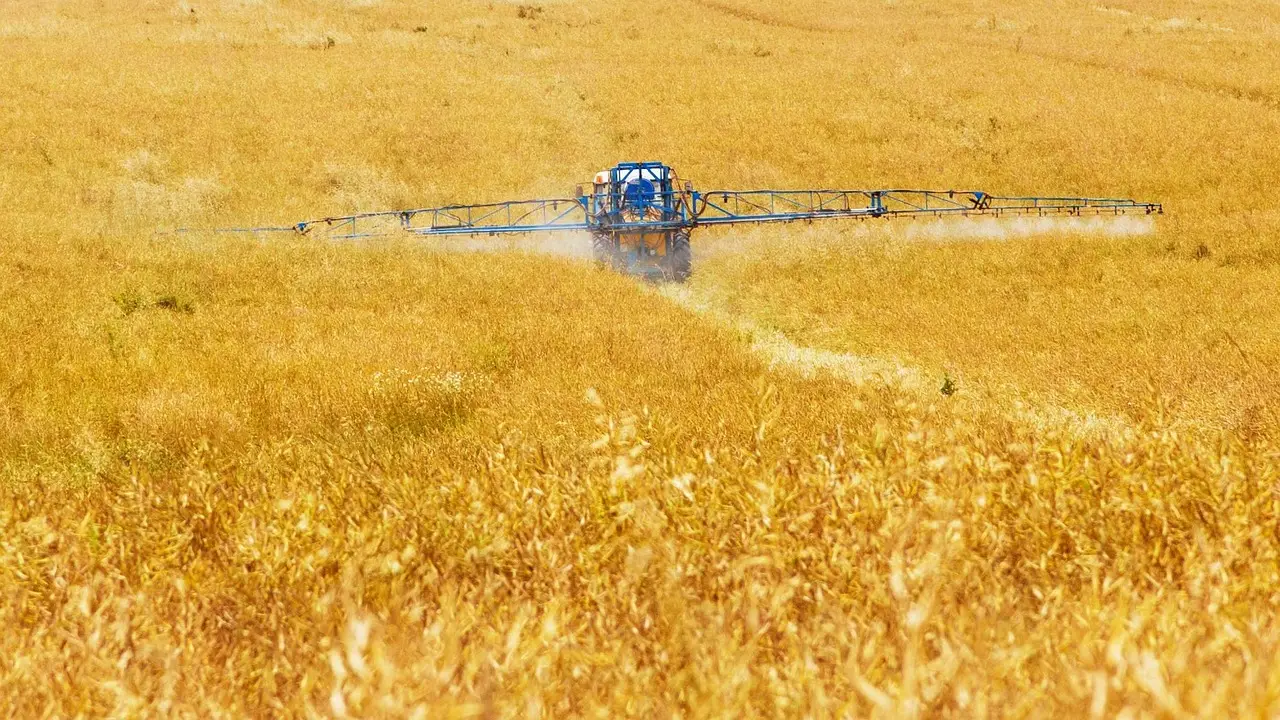
Fruits and vegetables already manufacture their own pesticide-like chemicals — and their natural origin alone says nothing about their safety. That is the central claim advanced by Dr. Joe Schwarcz, director of McGill University's Office for Science and Society, in a new video segment published for Seed World Europe on November 16, 2026.
Schwarcz, a chemist who also writes a regular column for the European seed industry outlet, uses three familiar crops — apples, coffee and potatoes — to walk viewers through the chemistry plants deploy against insects, diseases and other threats in the field.
His argument is direct. A substance's origin, whether synthesized in a laboratory or produced inside a plant cell, does not determine how safe it is. What determines safety is toxicity, the level of exposure, and the weight of scientific evidence behind the assessment.
What does this change for growers and the input market?
For now, nothing regulatory. The segment is educational rather than policy-driven. But it lands in a European market where the boundary between natural and synthetic crop protection carries commercial weight, shaping consumer perception, retailer specifications and the demand picture for biopesticide lines alongside conventional chemistry.
The video's framing cuts against a simple equivalence. If plants themselves produce defensive compounds — some of them chemically formidable — then the label "natural" cannot function as a proxy for "harmless" on its own. By the same logic, a synthetic origin is not automatically a mark of higher risk.
Schwarcz's examples put everyday foods under the lens. Apples, coffee and potatoes all appeared in the segment as crops whose own defensive chemistry is a normal part of what consumers eat. The point is not alarm. The point is that assessment by category — natural versus synthetic — replaces the harder work of measuring doses and consulting evidence.
Why the distinction matters in practice
Three elements anchor the safety question as Schwarcz presents it:
- Toxicity — the intrinsic hazard of a given compound, natural or manufactured.
- Exposure — how much of the compound a person actually encounters, which is where residue levels and application rates enter the picture.
- Scientific evidence — what testing and data show, rather than what an origin story implies.
For a seed and crop protection audience, the segment is a reminder that the safety conversation around inputs is chemistry-first. Claims built on provenance alone, in either direction, do not survive contact with the toxicology.
Schwarcz holds a long-standing position bridging academic chemistry and public communication. As director of McGill's Office for Science and Society, he has built a career on evaluating scientific claims against evidence, and his Seed World Europe column carries that approach to the seed sector's readership.
The full video, embedded with the original publication, offers growers, breeders and input marketers a compact primer on what plant defence chemistry can teach about food safety and crop protection. With European debate over pesticide policy continuing to reward whichever side can command the evidence, expect origin-based safety claims to face sharper scrutiny from chemists who read labels literally.
via seedworld.com (Source)
More from Marcus Bennett
Show full bio
Senior reporter covering regulation, policy and their impact on Agribusiness coverage for industry professionals at Agribusiness Wire.
480 articles
Also in the yard
- Crop Protection Market Reshapes as Asian Firms Gain Ground
- Biotalys Adds Two Independent Female Directors With Crop Protection Backgrounds
- Researchers Decode Fungal Chemistry, Pointing to Greener Crop Protection
- Omnibus X Doubt Clouds Farmers' Access to Biological Crop Protection
- Biological Crop Protection: Big Promises, Field-Level Pitfalls