Lot No. LOT-5036 · offered October 16, 2026
Crop EconomicsLot sheet
Iran conflict pushes US grain farm costs to worst crisis in decades
Financial Times reports US grain farmers face their worst crisis in decades as the Iran war drives fuel and input costs sharply higher across corn and wheat country.
Market notes
- Financial Times reports US grain farmers face their worst crisis in decades.
- The Iran war is sending farm operating costs spiralling, per the FT report.
- Energy-linked inputs, including diesel and fertilizer, are the transmission channel to farm margins.
- The claim is journalistic reporting; no USDA crisis designation has been issued.
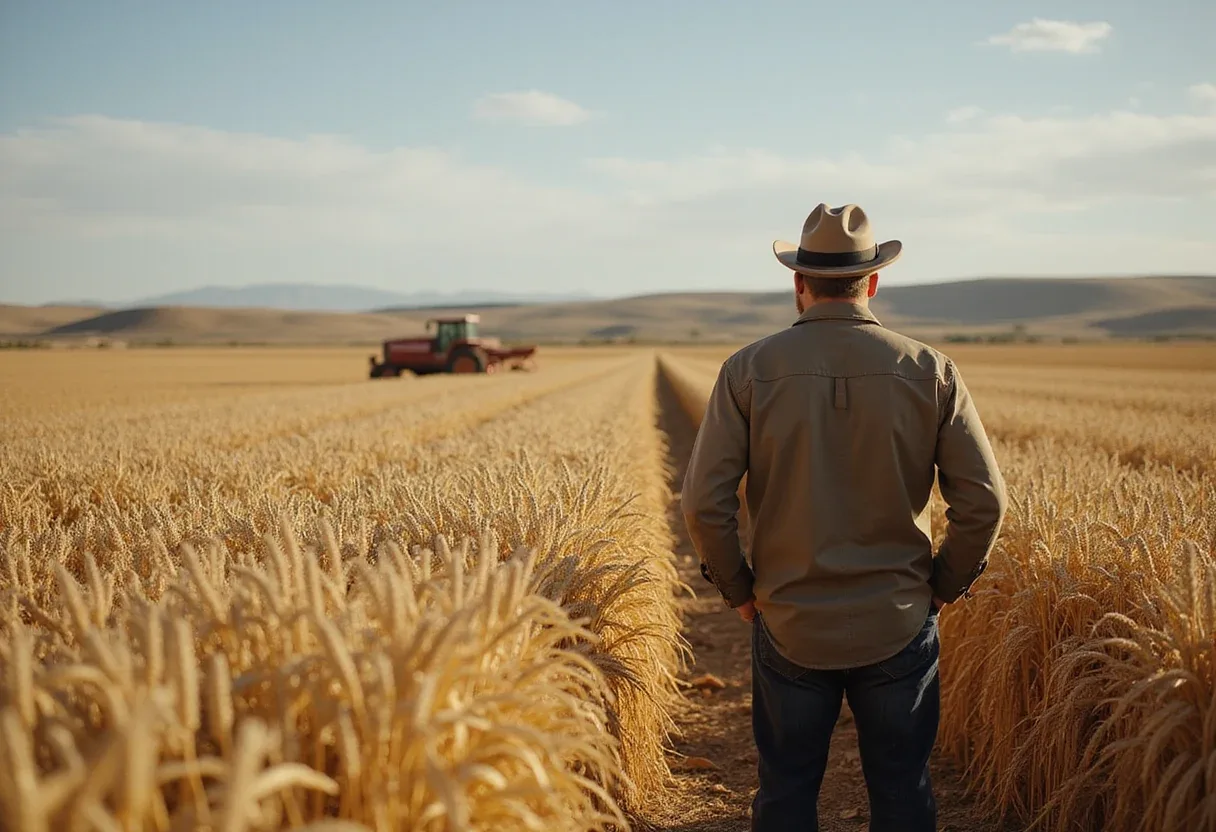
The Financial Times reports that US grain farmers now face their worst economic crisis in decades, as the war involving Iran sends operating costs spiralling upward.
The report lands on a farm sector already squeezed between two pressures: grain prices that have retreated from their 2022 peaks, and input bills that keep climbing. The Iran conflict adds a new shock on the cost side of that ledger, hitting farmers through the energy channel that drives nearly every line of a grain operation's budget.
What does the war change for input costs?
Middle East conflict translates directly into US farm economics through fuel and fertilizer. Diesel powers tractors, combines and grain trucks; natural gas is the primary feedstock for nitrogen fertilizer production. When energy markets tighten on geopolitical risk, both expense lines move up together, and grain growers have limited ability to pass those costs forward.
The Financial Times frames the result as the worst crisis in decades for US grain producers. That is a condition report on financial stress, not yet a harvested result. Whether the crisis shows up in planted acres, crop insurance claims or farmland values will depend on how long the conflict runs and how energy prices settle.
Which growers carry the most exposure?
Corn and wheat producers carry the heaviest energy-linked input loads among major US row crops. Nitrogen application rates on corn make fertilizer the single largest variable expense for many Midwest operations. Wheat growers in the Plains face the same diesel exposure at planting and harvest, with thinner margins to absorb it.
Farm-level math drives the concern. When cash grain prices fall and input costs rise at the same time, working capital burns fast. Lenders tighten. Equipment purchases and land rents come under review. The Financial Times describes exactly that squeeze reaching a severity not seen in a generation.
How should readers weigh the claim?
The crisis framing comes from a single outlet's reporting, and readers should treat it as a journalistic assessment rather than a USDA determination. No federal agency has yet published a formal crisis designation tied to the Iran conflict. The US Department of Agriculture's cost-of-production forecasts and farm income estimates, updated on their own reporting schedules, will provide the checkable numbers against which this reporting can be tested.
Two distinctions matter for analysts tracking the story:
- Cost pressure is a current condition; margin damage is a result that will only show in season-end accounting.
- Energy-price moves driven by conflict can reverse quickly, which makes any farm-income projection built on today's prices unstable.
What comes next?
Watch USDA farm income projections, fertilizer retail price series, and farmer sentiment surveys for confirmation of the deterioration the Financial Times describes. If energy markets stay elevated through the coming planting and input-purchase windows, the cost spiral the paper reports would move from headline warning to measurable line-item damage in growers' books.
via Google News: Grain prices (Source)
More from Grace Kim
Show full bio
Correspondent covering people, launches and day-to-day practice in Agribusiness coverage for industry professionals at Agribusiness Wire.
453 articles
Also in the yard
- Middle East Turmoil Lifts Farm Input and Grain Prices, Farmers Weekly Reports
- farmdoc daily: Iran Conflict Is Pushing Up U.S. Fertilizer Costs
- 70% of U.S. Farmers Can't Afford Needed Fertilizer
- Iran Conflict Stirs Fertilizer Cost Fears Among US Farmers
- Diesel and Fertilizer Costs Climb, Squeezing Jay Farmers' Margins