Lot No. LOT-1809 · offered September 29, 2026
Seeds, Crop Protection & FertilizerLot sheet
Diesel and Fertilizer Costs Climb, Squeezing Jay Farmers' Margins
Rising diesel and fertilizer prices, driven by the Iran conflict, are compressing margins for farmers in Jay, Florida, as energy-linked input costs climb.
Market notes
- Diesel and fertilizer prices are rising in connection with the Iran conflict.
- Farmers in Jay, Florida, report the rising input costs are squeezing their profits.
- Energy markets are the common driver behind both diesel and fertilizer price increases.
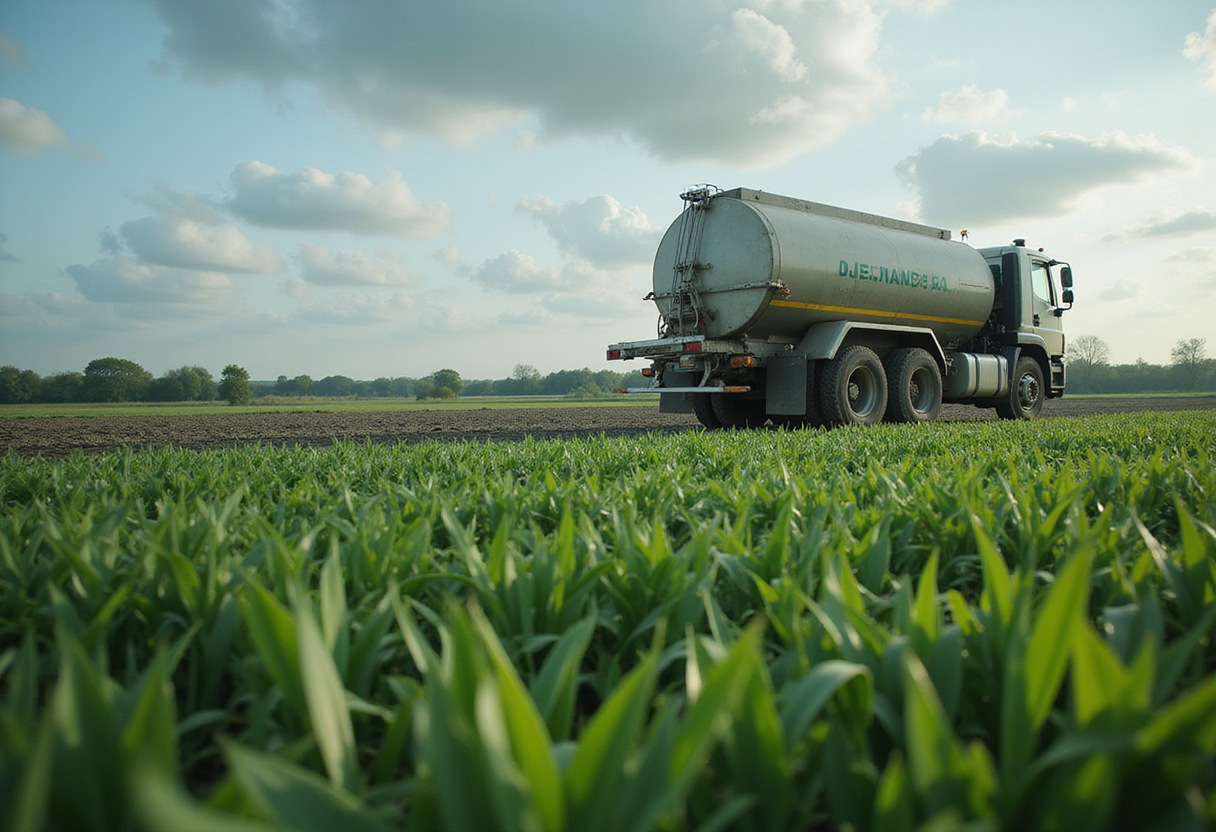
Farmers around Jay, Florida, are watching diesel and fertilizer prices rise in tandem with the Iran conflict, and the squeeze is landing directly on their operating margins.
The escalation in the Middle East has pushed energy markets higher, and diesel — the fuel that powers tractors, irrigation rigs and delivery trucks across the Santa Rosa County farming belt — is one of the first input costs to reflect the strain. Fertilizer, much of it priced off natural gas and global energy inputs, is climbing on the same dynamic.
For growers in the Jay area, the timing compounds an already difficult cost structure. Input inflation over recent seasons has forced producers to scrutinize every pass across the field, and a renewed leg higher in fuel and fertilizer threatens to eat into whatever margin cushion this year's crops might have offered.
The stakes are concrete. Every additional dollar per gallon of diesel raises the cost of land preparation, planting, spraying and harvest haulage. Every uptick in fertilizer prices raises the break-even yield a farmer must hit before a crop pays for itself. When both move at once, the margin compression is multiplicative rather than additive.
Middle East conflicts have historically transmitted to farm input costs through oil markets, and the current Iran situation follows that pattern. Energy is the common denominator: diesel refined from crude, and nitrogen fertilizers produced with natural gas, both track geopolitical risk premiums built into global energy prices.
Jay, a small agricultural community in the western Florida panhandle, sits in a region where row-crop and forage producers depend heavily on diesel-powered equipment and purchased fertilizers. Those producers have limited ability to pass higher costs forward, leaving them to absorb the difference or cut applications — a choice that carries agronomic consequences for the following season's yields.
Skipping or trimming fertilizer applications to save cash can preserve this year's balance sheet at the expense of next year's productivity, a trade-off growers weigh each time input prices spike. Similarly, consolidating field passes to save fuel can delay timely operations, with yield penalties of its own.
How long the pressure lasts depends on the trajectory of the conflict and its effect on crude oil and natural gas markets. A de-escalation could ease energy prices and take some of the heat out of fertilizer markets; a prolonged or widening conflict would keep input costs elevated through the growing and harvest windows.
For now, Jay-area farmers are budgeting against a cost curve that has moved against them, recalculating break-evens on crops already in the ground and factoring higher fuel and fertilizer lines into plans for the next planting cycle.
via Google News: Fertilizer markets (Source)
More from Nathan Brooks
Show full bio
Staff writer covering marketplaces and e-commerce at Agribusiness Wire.
173 articles
Also in the yard
- Middle East Conflict Pushes Fertilizer Prices Up Ahead of Fall Application
- farmdoc daily: Iran Conflict Is Pushing Up U.S. Fertilizer Costs
- Iran Tensions Push Fertilizer Costs Higher, Squeezing Alabama Growers
- Fertilizer Prices Climb on Overseas Conflict, Squeezing Alabama Growers
- Hormuz Stays Open, but Fertilizer Prices Keep Climbing