Offered
Crop EconomicsLot sheet
Farm Share of U.S. Food Dollar Rises to 12.6 Cents in 2025
USDA's Nov. 17 update puts the 2025 farm share of the food dollar at 12.6 cents, up from 11.8 cents, as livestock gains offset a slip in row crops and input costs keep margins tight.
Market notes
- Farm share of the U.S. food dollar rose to 12.6 cents in 2025 from 11.8 cents in 2024, USDA ERS reported Nov. 17.
- Livestock producers captured 3.5 cents per dollar in 2025, up from 3.3 cents; crops fell to 2.4 cents from 2.5 cents.
- 87.4 cents of every food dollar goes to transportation, processing, storage, wholesaling and retailing.
- Fertilizer, fuel, labor and machinery costs have risen, pressuring row-crop margins into 2026.
- Corn and soybean prices recovered at harvest after a mid-season slide, smoothing 2026 revenue.
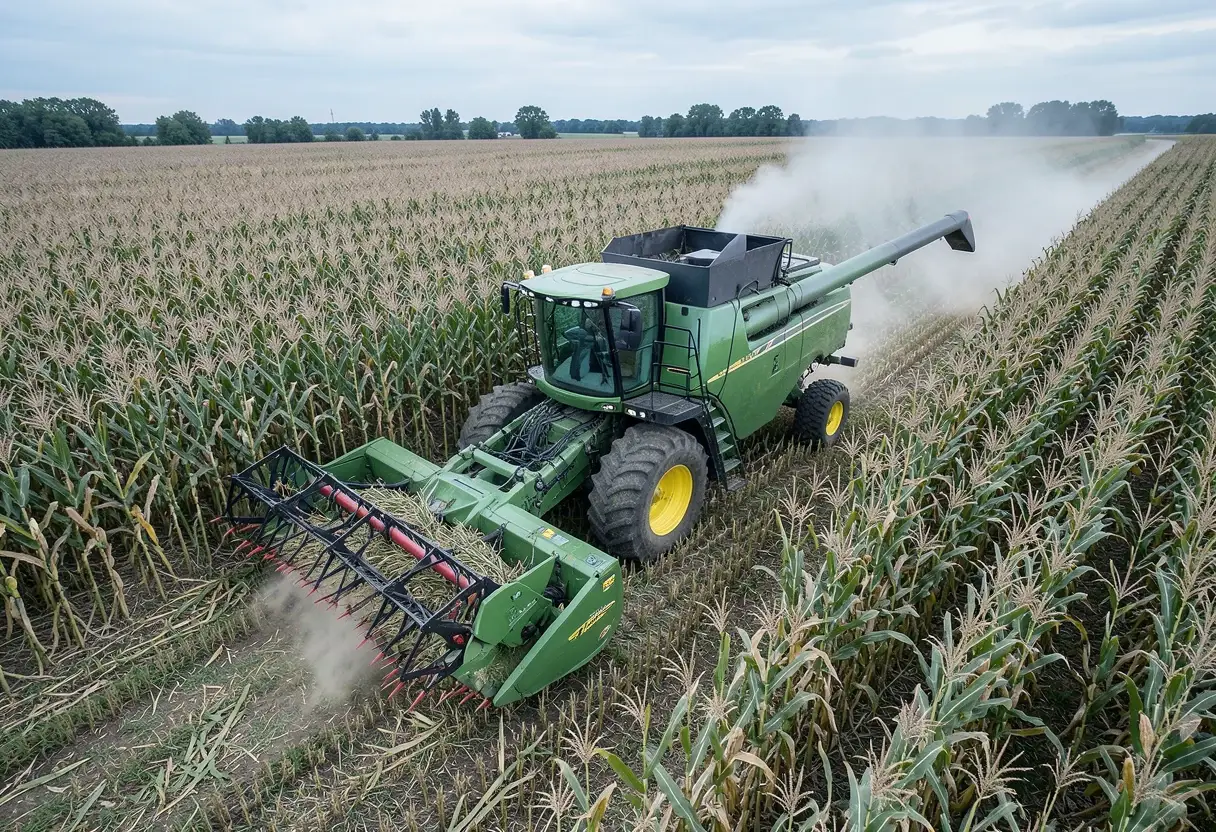
U.S. farmers kept 12.6 cents of every dollar consumers spent on domestically produced food in 2025, up from 11.8 cents in 2024, according to USDA Economic Research Service data released Nov. 17. The remaining 87.4 cents paid for post-farm activities: transportation, processing, storage, wholesaling and retailing.
The ERS "Food Dollar" series measures value along domestic food supply chains using input-output analysis across dozens of food spending accounts. It tracks three views: a marketing bill, an industry group bill and a primary factor bill. The primary factor bill splits the dollar by source of value added — salaries and benefits, property income, output taxes — plus imported inputs.
The industry group bill shows the split within production. Livestock producers captured 3.5 cents per dollar in 2025, up from 3.3 cents in 2024. Crops fell to 2.4 cents from 2.5 cents. Forestry, fishing and agricultural services held flat at 0.9 cents in both years.
"If you think about row crop producers, someone planting corn, soybeans, maybe wheat, they're really providing a preliminary input that needs to be processed," said Matthew Dierson, SDSU Extension risk and business management specialist. "Something else is going to be done with it before it would go to the consumer."
What does the higher share mean for livestock producers?
Beef producers are getting a larger slice after years of thin returns. "That's after a long period of very low returns. So, they had some losses to recoup," Dierson said. "It was only in the last couple of years that calf prices or cattle prices in general had gotten high enough to cover the increase in inflation."
That recovery has let producers fund long-term improvements and consider herd expansion. Dierson said the result would be more beef and lower consumer prices "two or three years from now" — a forecast, not a harvested result, and one that depends on expansion actually materializing.
Specialty crop growers selling direct, such as raspberries or tomatoes, face a tighter gap between farm gate and shelf, Dierson noted.
Why grocery inflation doesn't reach the farm gate
Robert Lee, who grows corn and soybeans and runs a small cattle herd in Kingsbury County, South Dakota, sees little connection between food inflation and farm profit. He started farming about 20 years ago on land his father had rented to other producers, and he also works off the farm in crop insurance — a pattern common in eastern South Dakota.
"I can count on one hand a number of them that truly just farm and that's it," Lee said of the producers he works with. Off-farm income, he said, "takes some of the pressure off" in weak years.
"Your cost of moving goods around from the cereal-making place to the grocery store — every step along the way adds costs and ends up costing the consumer more," Lee said. "Doesn't necessarily equate to more dollars in the farmer's pocket."
How are input costs shaping 2026 margins?
Fertilizer, transportation, labor and machinery costs have all climbed, Dierson said, citing globally sourced nutrients shipped to regions like the Red River Valley and rising raw-material prices in tractors and combines. Technology raises yields — more corn per acre than five or 20 years ago — but who captures that gain is hard to quantify, and it factors into the shrinking farm share.
Lee bought his annual fuel supply the Friday before the U.S. entered conflict with Iran, and manure from a dairy partnership cushions his fertilizer bill. "Chemicals come down a little," he said. Next year the cheap fuel runs out, and he wants corn and soybean prices to keep pace with inputs.
Grain prices opened 2026 low with normal, unremarkable yields, slid mid-season, then recovered at harvest — especially for corn and soybeans — smoothing what Dierson called a would-be "pretty wild revenue year." Lee called his own year good despite yields below 2025.
Dierson expects the farm share to stay capped unless fuel and transportation costs fall in a sustained way. With processing labor and energy showing no sign of a dramatic decline, farmers should not bank on a bigger slice of the 2026 food dollar.
via agweek.com (Source)
More from Olivia Hart
Show full bio
News editor covering technology and product news in Agribusiness coverage for industry professionals at Agribusiness Wire.
561 articles
Also in the yard
- USDA Opens $8 Billion in CCC Funds for Fuel and Input Relief
- Growers Press Lawmakers on New Farm Bill as Input Costs Climb
- USDA commits $472.5 million to farm commodity purchases
- Finstad: $14.6B Crop Receipt Jump Not Enough as Input Costs Bite
- USDA Publishes Farm Bill Spending Data Through Farm Policy Portal