Lot No. LOT-7242 · offered September 30, 2026
Commodity MarketsLot sheet
Corn Leads Broad Grains Selloff in Sept. 30 Futures Close
December corn fell 21 1/4 cents to $5.0075 while soybeans slipped and cattle rallied on Sept. 30, 2026, reshaping hedge math for growers and feeders alike.
Market notes
- December corn closed at $5.0075, down 21 1/4 cents on Sept. 30, 2026
- October live cattle rose $1.45 to $218.67; lean hogs fell 65 cents to $78.72
- December Chicago wheat settled at $6.7575, down 17 cents
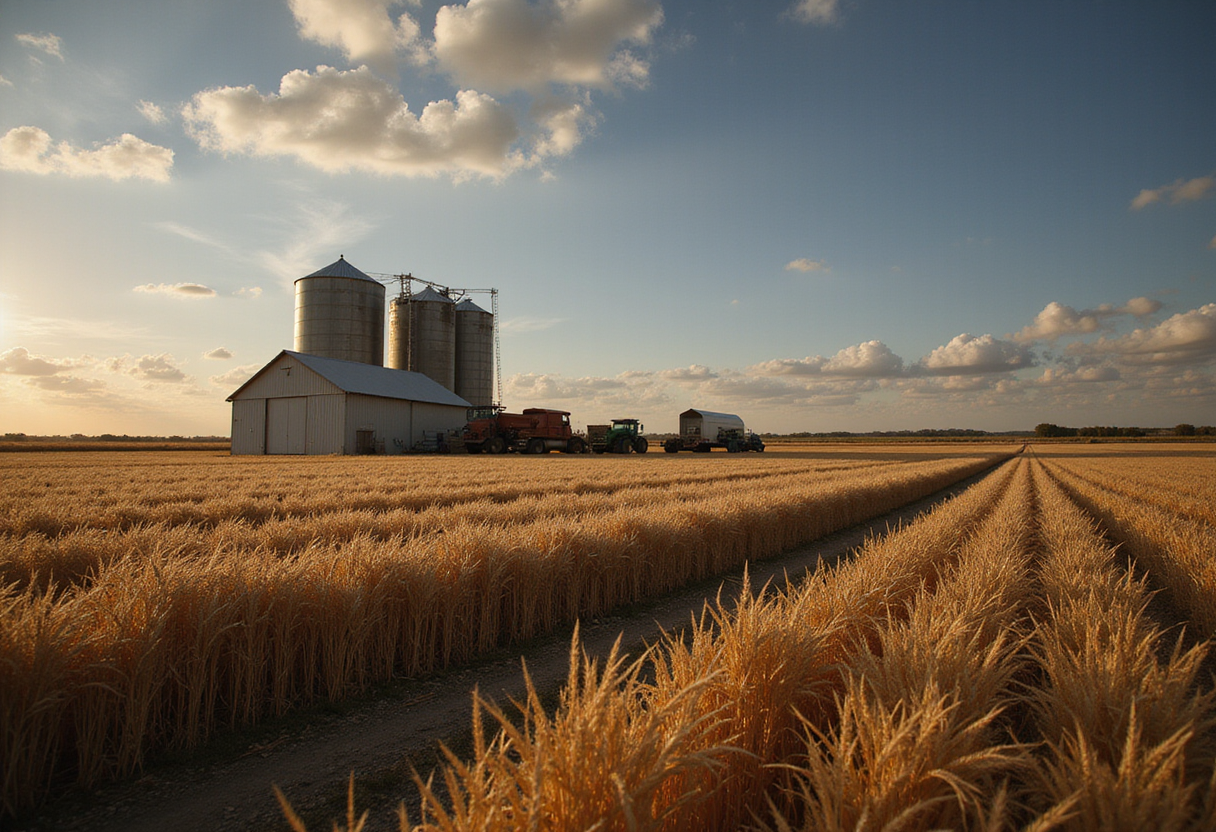
December corn settled at $5.00 and 3/4 on September 30, 2026, down 21 and 1/4 cents — the steepest move on the grain side of a session that pressured every major crop contract except soybean oil.
November soybeans closed at $12.93, off 4 and 3/4 cents. Soybean complex trade split sharply: October soybean meal fell $3.00 to $357.10 per ton, while October soybean oil held flat at 67.85 cents per pound.
Wheat followed corn lower. December Chicago wheat finished at $6.75 and 3/4, down 17 cents on the day.
Livestock markets told a different story. October live cattle gained $1.45 to close at $218.67, and October feeder cattle rose $2.77 to $336.42. October lean hogs moved against the beef complex, slipping 65 cents to $78.72.
The corn decline stands out for farm-margin math. A 21-and-a-quarter-cent drop in the December contract translates to roughly $8.50 per 500-acre corn farmer's revenue expectations on a hedged bushel basis — meaningful at a time when input suppliers have kept fertilizer and seed pricing elevated. Growers holding unpriced new-crop bushels face a narrower window to lock in returns above breakeven.
The divergence within the soybean complex also matters for crushers and livestock feeders. Soymeal's $3.00 decline softens feed-cost pressure for hog and poultry producers, even as flat soybean oil prices offer crushers little margin relief on the oil side of the board.
Strength in cattle contracts, meanwhile, reflects continued firm demand for fed beef. Feeder cattle's $2.77 advance raises replacement costs for backgrounders and stocker operators, a factor worth watching against the softer lean-hog trade.
These are settlement prices, not harvested results; condition reports and cash-market basis will determine how futures moves translate into actual farmgate revenue as harvest progresses.
via Brownfield Ag News (Source)
More from Grace Kim
Show full bio
Correspondent covering industry trends and analytics at Agribusiness Wire.
159 articles
Also in the yard
- Feeder Cattle Gain $3.17 as Lean Hogs Slide in Friday Close
- Soybeans Lead Broad Sell-Off in September 28 Grain and Livestock Close
- Soybeans Climb 9 1/2 Cents While Corn Slips in Tuesday Trade
- Corn Slips to $5.22 as Traders Position Ahead of USDA Stocks Report
- Corn, Soybeans, Wheat Slide as 2026 Harvest Outruns Five-Year Pace