Lot No. LOT-1060 · offered November 8, 2026
Lot sheet
$22 Million Federal Grant to Rebuild Grain Car Fleet on Twin Cities & Western
Twin Cities & Western Railroad landed a $22 million CRISI grant to buy 200 covered hoppers rated at 286,000 lbs, replacing 1980s cars set to age out of service within five years.
Market notes
- Twin Cities & Western Railroad received $22 million in October via the FRA's CRISI Program.
- The grant funds 200 covered hopper cars rated for 286,000-lb loading, up from 263,000–268,000-lb cars built in the early 1980s.
- Greenbrier Companies will build the cars in Paragould, Arkansas; production could run from late 2027 to 2029.
- The award is part of $2.3 billion in FRA funding across 105 rail projects in 45 states and D.C.
- TC&W is contributing a 20% non-federal cost share.
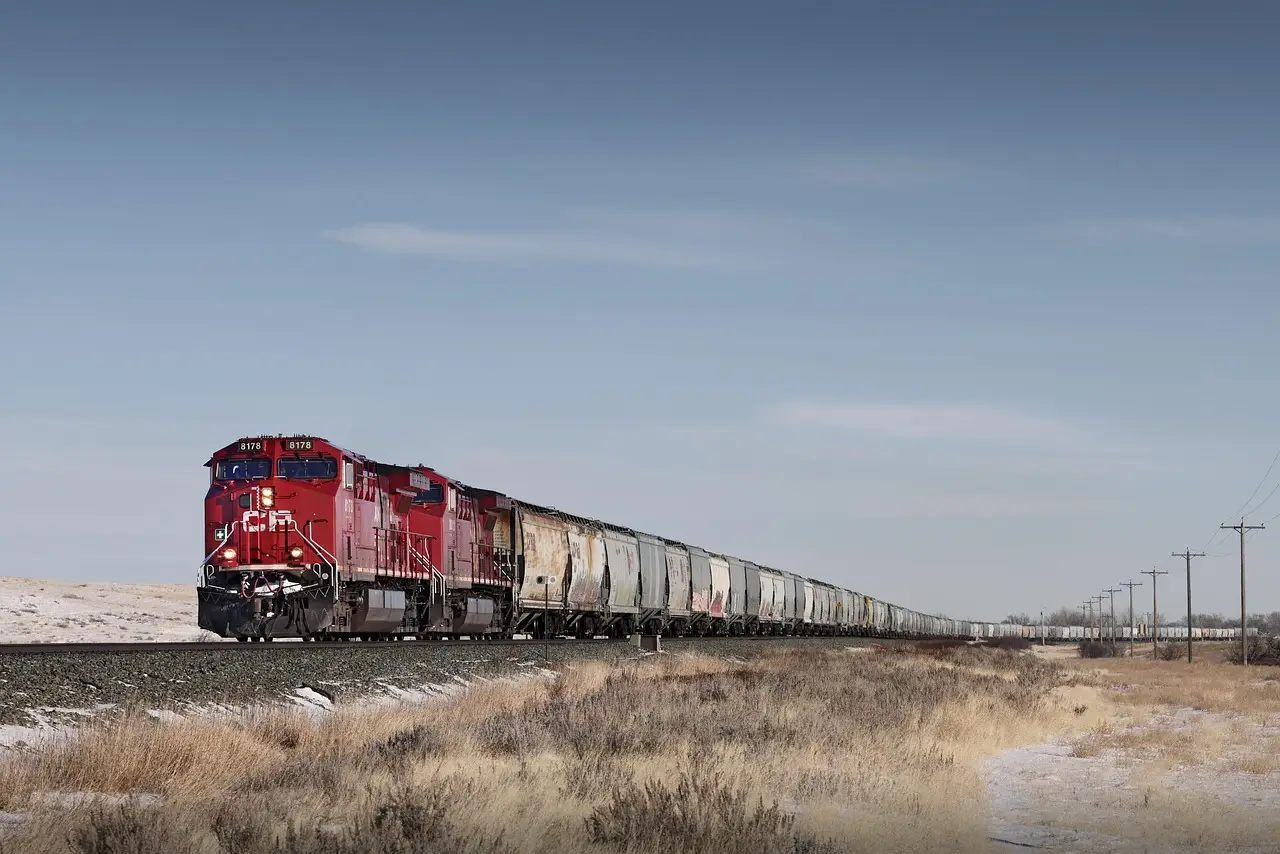
A $22 million federal grant will put 200 new covered hopper cars on Twin Cities & Western Railroad track, lifting loading capacity from 263,000–268,000 pounds to 286,000 pounds per car across a 360-mile Minnesota and South Dakota network that moves grain from a major agricultural artery.
The Federal Railroad Administration awarded the money in October through the Consolidated Rail Infrastructure and Safety Improvements (CRISI) Program. Beyond the new cars, the grant funds rail infrastructure improvements that TC&W says will improve reliability, cut delays, and add railcar capacity.
The fleet math is stark. TC&W's current covered hoppers date to the early 1980s — 4,750-cube cars restricted to 263,000-lb. and 268,000-lb. loads.
"The new railcars procured as a result of this grant will increase the fleet to 5,200 cube cars that will support 286,000 loading," TC&W President Victor Meyers wrote in an email. "Additionally, all of TCWR's existing covered hopper fleet is aging, with the entire fleet expected to age out of interchange service within the next five years."
What does this change for grain shippers?
Meyers framed the answer in shipping terms: "By renewing its fleet and bringing modern railcar capacity directly under its control, TCWR will help protect its customers from equipment shortages, provide greater shipping reliability, and ensure agricultural commodities can move to market when opportunities arise."
For growers and elevators on the line, that translates into fewer spot-car shortages at harvest and heavier loads per movement — a direct input to basis and freight costs.
TC&W will contribute a 20% non-federal cost share on the project, according to the FRA.
Arkansas-based Greenbrier Companies will build the cars. Meyers noted that domestic production can improve railcar availability for moving grain, fertilizer, and other ag commodities over the long run.
"The Greenbrier Companies is very excited to work with our partners at TCWR and the FRA, to build a modern, Made in America grain car fleet in our Paragould, Arkansas, facility," said Brian Comston... rather, Greenbrier President for The Americas Brian Comstock said in a press release. "These American grain cars will create benefits for Minnesota agriculture for the next 50 years."
Production and construction could begin in late 2027 and finish in 2029, Meyers wrote — meaning shippers won't see the heavier cars for at least two more crop cycles.
A slice of a $2.3 billion program
The TC&W award sits inside a broader U.S. Department of Transportation package. The FRA invested $2.3 billion into 105 freight and passenger rail projects across 45 states and the District of Columbia, affecting more than 2,000 miles of track nationwide. The CRISI program drew a record number of eligible applications this cycle.
Selected projects will also draw over $1.9 billion in non-federal funding from state, local, and private partners to reach completion.
The TC&W grant drew letters of support from Sens. Amy Klobuchar, Tina Smith, John Boozman, and Tom Cotton, along with Reps. Tom Emmer, Pete Stauber, Michelle Fischbach, Brad Finstad, and Rick Crawford.
With the existing fleet aging out of interchange service within five years, the 2027–2029 delivery window means TC&W's grain shippers will watch the transition closely as harvest-season car supply tightens in the interim.
via agweek.com (Source)
More from Nathan Brooks
Show full bio
Staff writer covering regulation, policy and their impact on Agribusiness coverage for industry professionals at Agribusiness Wire.
531 articles
Also in the yard
- Pritzker Order Would Extend Illinois Harvest Permit Program Through 2027
- Minnesota lifts truck weight limits 10% to ease harvest fuel bills
- Class I Rail Rate Hikes Push Grain Shipping Costs Higher
- Railroads Raise Grain Shipping Rates, and Farmers May Pay
- New Grain Facility at Port of Baltimore Aims to Lift Maryland Farm Exports