Lot No. LOT-5484 · offered November 16, 2026
Trade & ExportsLot sheet
10% Soybean Tariff Tops Agenda as Trump, Xi Meet at APEC
ASA demands removal of the 10% Chinese tariff on U.S. soybeans ahead of Trump's third meeting with Xi at APEC in Shenzhen, as the Senate weighs Ibach's trade nomination.
Market notes
- ASA is pressing Treasury and USTR to remove a 10% tariff on U.S. soybeans left out of a September framework covering $60 billion in goods.
- Trump meets Xi Nov. 18-19 at the APEC Economic Leaders' Meeting in Shenzhen, their third meeting this year.
- The Senate Ag Committee votes Monday on Greg Ibach's nomination as USDA trade undersecretary and three Farm Credit Administration board nominees.
- Congress has roughly four weeks left this year to pass a five-year farm bill before the calendar runs out.
- The Senate could vote as soon as Monday on the Bipartisan American Affordability and Jobs Act on permitting reform, backed by the AFL-CIO.
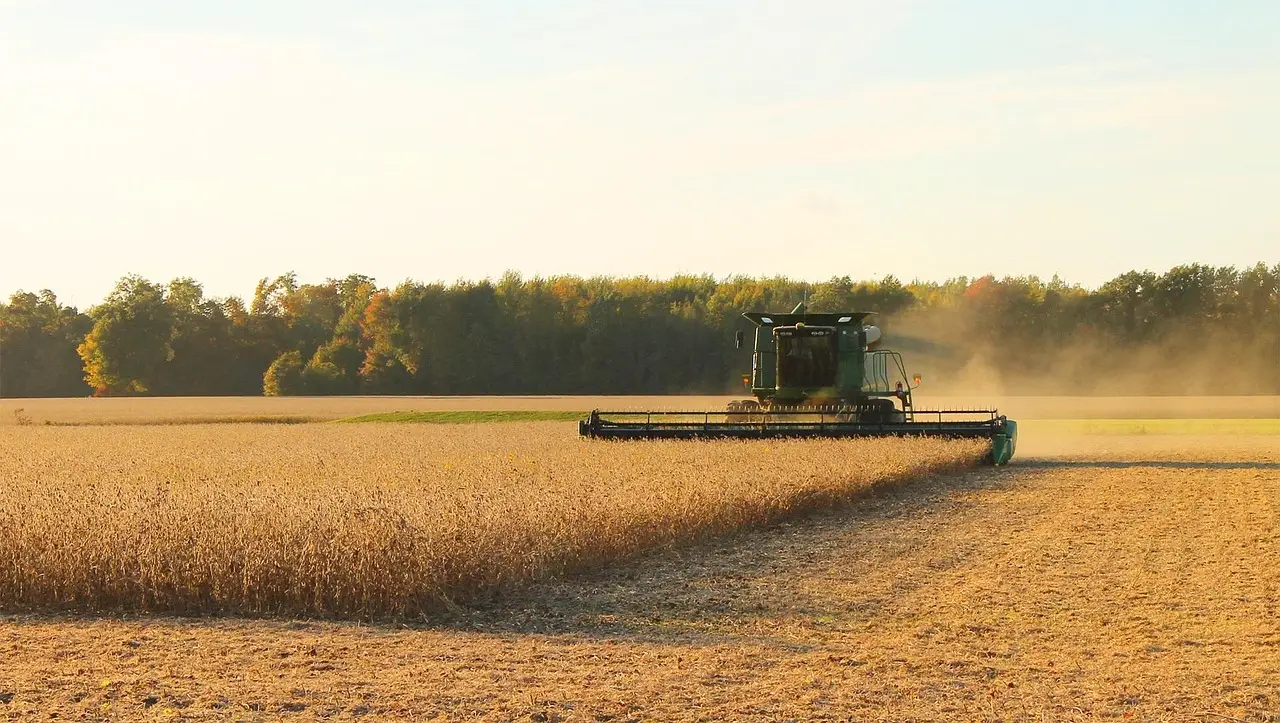
A 10% retaliatory tariff still sits on U.S. soybeans entering China, and the American Soybean Association wants it gone before President Donald Trump sits down with Chinese leader Xi Jinping later this week in Shenzhen.
The meeting, Trump's third of the year with Xi, takes place on the sidelines of the Asia-Pacific Economic Cooperation's Economic Leaders' Meeting on Nov. 18-19. The venue is Shenzhen — China's Silicon Valley — and the backdrop is global trade tension plus mounting questions about artificial intelligence's economic impact.
Why soybeans got left out
In September, the U.S.-China Board of Trade framework lowered tariffs on a list of products covering $60 billion in goods. Soybeans didn't make the list. ASA President Scott Metzger pressed the point in a letter last week to Treasury Secretary Scott Bessent and U.S. Trade Representative Jamieson Greer.
"To achieve long-term trade certainty, the remaining 10% tariff on Chinese imports of U.S. soybeans must be removed," Metzger wrote. "This retaliatory tariff puts U.S. soybeans at a distinct disadvantage compared to South American competitors who have unrestricted access to the Chinese commercial market."
That's the margin question for growers. Brazilian and Argentine supplies face no equivalent levy in China's commercial market. Every point of tariff works like a direct hit to U.S. basis.
Lutnick under fire from both parties
The APEC gathering also lands amid calls from Democrats for Trump to fire Commerce Secretary Howard Lutnick. Reports claim Lutnick sought to weaken computer chip rules that would affect Cantor Fitzgerald, the financial firm he formerly ran and that his sons now manage.
Key Republicans have their own question: why didn't Lutnick investigate the Singapore-based company Megaspeed? The scrutiny follows Jensen Huang's resignation last week as CEO of chipmaker Nvidia, after Huang admitted an extramarital affair with a former Megaspeed executive — an Nvidia customer suspected of being a Chinese spy.
Commerce Department officials didn't respond to Agri-Pulse's request for comment. They told the New York Times that Lutnick has complied with all ethics agreements.
What does the Ibach vote change for ag trade?
The Senate Agriculture Committee meets Monday alongside evening votes in S-216 to advance Gregory Ibach's nomination as USDA undersecretary for trade and foreign agricultural affairs. The panel will also consider three Farm Credit Administration board nominees: Carl Bednarski, John Grunewald II and James Russell Middleton.
Ibach told the committee last week his approach would be straightforward.
"If confirmed, I will prioritize aggressive market development and trade enforcement. That means working closely with the Office of the U.S. Trade Representative, the Department of Commerce, State Department, and our embassies and agricultural attachés around the globe to identify and remove barriers — whether tariff or non-tariff — that limit opportunities for U.S. agriculture," Ibach said. "It also means standing firmly behind our producers when trading partners fail to honor their commitments."
Ibach previously served as USDA undersecretary for marketing and regulatory programs and as Nebraska's director of agriculture. Full Senate confirmation would put him in the seat Luke Lindberg vacated to become executive director of the U.N.'s World Food Programme.
Permitting bill could reach the Senate floor Monday
The Senate is poised to vote as soon as Monday on the Bipartisan American Affordability and Jobs Act, which would revamp environmental permitting laws — especially for energy projects — and shield consumers from higher power grid costs driven by the surge in AI data centers. For rural electric co-ops watching load forecasts, that's a cost-of-power question, not an abstraction.
Democrats are split. Sen. Sheldon Whitehouse of Rhode Island, who helped craft the bill, wants passage now. Sen. Jeff Merkley of Oregon argues it falls short. House Minority Leader Hakeem Jeffries has voiced concerns too. But the AFL-CIO's recent endorsement gives the Trump-backed measure real momentum.
"House Democratic leaders are going to have a major decision to make when this comes over from the Senate. Do they try to clamp down and risk mass defections? Seems very hard to stop the bill with this level of labor support," said James Braid, Trump's former director of legislative affairs.
Farm broadcasters gather; clock ticks on the farm bill
In Kansas City, the National Association of Farm Broadcasting opens its convention Wednesday, running through Friday, with representation across the ag industry: biofuels, lending, commodity trading, fertilizers, crop protection, produce, seeds and meat. Agenda items include data centers, artificial intelligence and renewable energy's role in agriculture. The American Seed Trade Association holds its one-day Forage, Turf & Conservation Seed Conference there Tuesday.
Congress reconvenes Monday afternoon in the Senate and Tuesday at noon in the House, then breaks next week for Thanksgiving. That leaves roughly four weeks on the calendar this year to pass a five-year farm bill.
Democrats hold leadership elections Wednesday. Sen. Chris Van Hollen of Maryland is challenging Senate Democratic Leader Chuck Schumer of New York for the top job. Van Hollen told Fox News Sunday he considers the filibuster undemocratic but wouldn't seek to abolish it "right out of the gate" or without consulting colleagues. The filibuster — a Senate practice not in the Constitution — requires most legislation to clear a 60-vote threshold. In the House, progressive Democrats oppose Jeffries becoming speaker next year, though no challenger has emerged for Wednesday's vote.
The week's ag-relevant calendar (all times EST)
- Wednesday, 9:45 a.m. — Senate Health Committee considers Heidi Overton for FDA commissioner and James O'Neill for National Science Foundation director, 430 Dirksen.
- Wednesday, 10 a.m. — Senate Commerce Committee takes up S.2586, a bill requiring NOAA to establish a commercial-scale offshore aquaculture assessment program, create Aquaculture Centers of Excellence and fund aquaculture workforce development, 253 Russell.
- Wednesday — Senate Energy Committee hears nominations of Dennis Kirk for Interior Department inspector general and Toby Deen for assistant secretary of energy, hydrocarbons and geothermal, 366 Dirksen; Senate Environment and Public Works Committee considers Justin Schwab for EPA assistant administrator plus eight GSA prospectus resolutions, 406 Dirksen; the Sustainable Agriculture Summit convenes in Fort Worth, Texas, through Thursday.
- Wednesday, 1:30 p.m. — Brookings Institution discusses broadband access and affordability.
- Thursday, 8:30 a.m. — USDA weekly export sales report.
- Thursday, 10 a.m. — House Ag subcommittee on Commodity Markets, Digital Assets and Rural Development hears "Strengthening Rural America Through USDA Rural Development Programs and Partnerships," 1300 Longworth.
- Thursday, 2 p.m. — House Foreign Affairs Committee hears "Unlocking Central Asia" with S. Paul Kapur, State Department assistant secretary for South and Central Asian affairs, 2172 Rayburn; Brookings holds a discussion on AI and energy costs.
- Tuesday, 2 p.m. — Center for American Progress discusses the One Big Beautiful Bill Act's impact on school nutrition.
- Wednesday, 3 p.m. — Senate Ag Committee hearing on Nathan Anonick and Matthew Rowland for CFTC commissioner, 106 Dirksen.
With the soybean tariff letter now on Bessent's and Greer's desks, Thursday's USDA export sales report will give growers the first hard read on whether China's buying pattern is shifting ahead of the Trump-Xi meeting.
via apec.org (Original)
More from Nathan Brooks
Show full bio
Staff writer covering regulation, policy and their impact on Agribusiness coverage for industry professionals at Agribusiness Wire.
563 articles
Also in the yard
- Soybeans Lead Grain Losses as China Tariff Deal Excludes Beans
- China's $30 billion tariff condition for wider U.S. farm imports
- U.S. Growers Press Beijing on Soybean, Grain Tariff Standoff
- China Ties $17 Billion US Farm Buying Spree to Tariff-Cut Deal
- CBOT Soybeans Rise 0.6% to $13.11 on China Demand Hopes Ahead of Trump-Xi Summit