Lot No. LOT-7295 · offered November 20, 2026
Precision Agriculture & AgTechLot sheet
Virtual Fence Graziers Find Winter Water Is the Unsolved Problem
A Minnesota grazier runs 10 cows on 60 rented cover-crop acres with Nofence collars, but a Nov. 13 U of M webinar found no one has an off-grid fix for freezing winter water.
Market notes
- Leah Matzke grazes 10 cows on 60 acres of cover crops near Winthrop, Minnesota, using 17 Nofence collars bought with a December grant.
- The Matzkes invested about $60,000 in fencing and water through NRCS's EQIP while farming 40 acres.
- Heifers trained to the virtual fence cut tone-and-shock corrections to once or twice within four to eight hours.
- Peter Desens of Goldenrust Farm near Eyota showed a state grant-funded solar system pumping into a 300-gallon tank — unusable in winter.
- No participant on the Nov. 13 U of M Extension call knew a way to keep water open at a remote site without power.
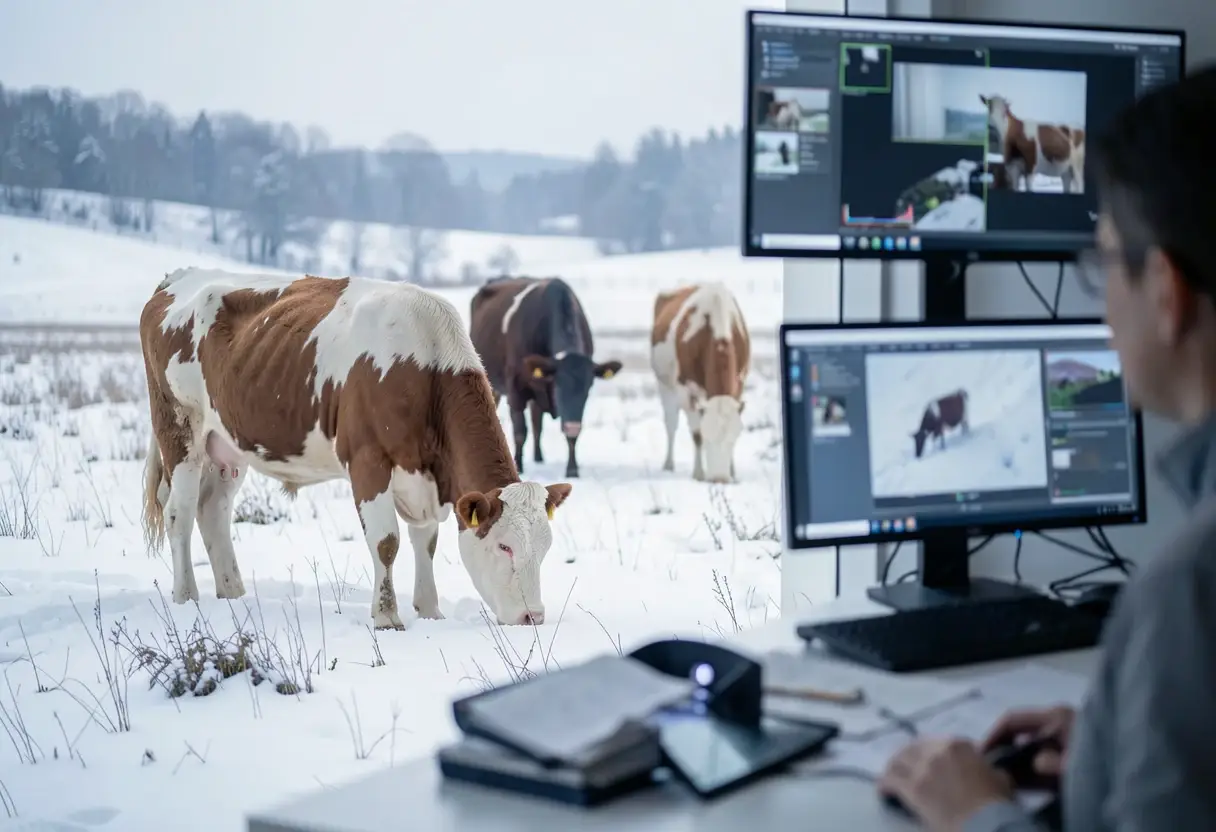
Leah Matzke spent roughly $60,000 — much of it through a federal cost-share program — fencing and watering pasture on 40 acres near Winthrop, Minnesota. Yet this fall, her biggest expense-risk on rented cover-crop ground isn't fencing at all. It's keeping water from freezing.
Matzke and her husband run a small grass-fed beef farm in Sibley County with their children. They bought 17 virtual fence collars from Nofence with a grant secured last December; the collars arrived in March. This fall she used them to graze 10 cows on a neighbor's 60 acres of cover crops, roughly 10 miles from the home farm.
She laid out the two open problems at a Nov. 13 University of Minnesota Extension webinar, the final session in its virtual farmer shop-talk series on crop and livestock integration.
"It's pretty easy to get a cow off of a trailer into a cornfield or a new property, but how do you get them back on?" she asked.
How fast do cattle learn a virtual fence?
Fast, by Matzke's data. A Nofence collar plays a warning tone when a cow nears the mapped boundary. If she keeps walking, it delivers a shock.
"I am shocked at how quick they learn," Matzke said. She recently collared two heifers. Day one: constant tones and shocks. Within four to eight hours, the corrections dropped to once or twice. That's the whole training curve, effectively an afternoon.
The hardware isn't free of setup cost. Matzke said she's been told Minnesota requires a physical perimeter fence even when using virtual collars, so she spent about six hours ringing the 60 acres with T-posts and poly wire before hauling the cows over with a borrowed truck and trailer. The virtual system cut the labor, not eliminated the fence line.
What's the deal structure on rented cover crops?
The landowner charges her nothing. He wants the soil-health benefit; she supplies the fencing, the labor and the cattle hauling.
Gabi Bolwerk, a University of Minnesota Extension educator working on soil health and water resources, moderated the session. She said arrangements vary widely: some livestock producers pay crop farmers per head or per day, while others argue the landowner should pay them for the manure.
"I think it is not definitely standardized yet," Bolwerk said. For growers pricing a similar deal, there's no going rate to benchmark against.
Why is winter water the sticking point?
Water drew more discussion than any other topic on the call. Peter Desens, who raises cattle at Goldenrust Farm near Eyota, showed a portable solar watering system he bought with help from a state Farmer Climate Action Fund grant. It pumps from a creek or pond into a 300-gallon tank — but it isn't built for winter, and he won't run it then.
No one on the call could name a way to keep water open at a remote site with no grid power.
Matzke's workaround for now: 300 feet of hose run out to a trough, filled once a day. She runs the math in hay terms.
"It's like printing 100 bucks," she said — daily water delivery beats buying feed through winter.
How they got here
The Matzkes started with cropland and converted all of it to pasture about five years ago. As beginning farmers, they found cattle a cheaper entry into farming, Matzke said. They put about $60,000 into fencing and water through the Natural Resources Conservation Service's Environmental Quality Incentives Program while farming 40 acres.
The virtual fence collars were the next step — a way to graze more ground without buying land. That math still holds. What the Nov. 13 session made clear is that the collar economy works until the thermometer drops, and until Extension or equipment makers solve off-grid winter water, graziers pushing onto rented crop ground will keep hauling hose.
via agweek.com (Source)
More from Nathan Brooks
Show full bio
Staff writer covering regulation, policy and their impact on Agribusiness coverage for industry professionals at Agribusiness Wire.
591 articles