Lot No. LOT-1507 · offered November 17, 2026
Crop EconomicsLot sheet
Tree Age Dictates Yield: Spring Crops Lose Up to 35% Near Mature Poplars
German six-year study finds spring crops lose 10–35% yield near poplars aged five and older, while winter cereals match treeless fields across the full rotation.
Market notes
- Spring crop yields fell 10–35% versus treeless fields once poplars reached five years of age.
- Largest losses occurred within four metres of tree rows, driven mainly by shade.
- Winter cereal yields stayed comparable to open fields across nine years of tree growth.
- Annual wood production tripled after the second coppice harvest.
- Study ran six years at four German sites, published in Agronomy for Sustainable Development.
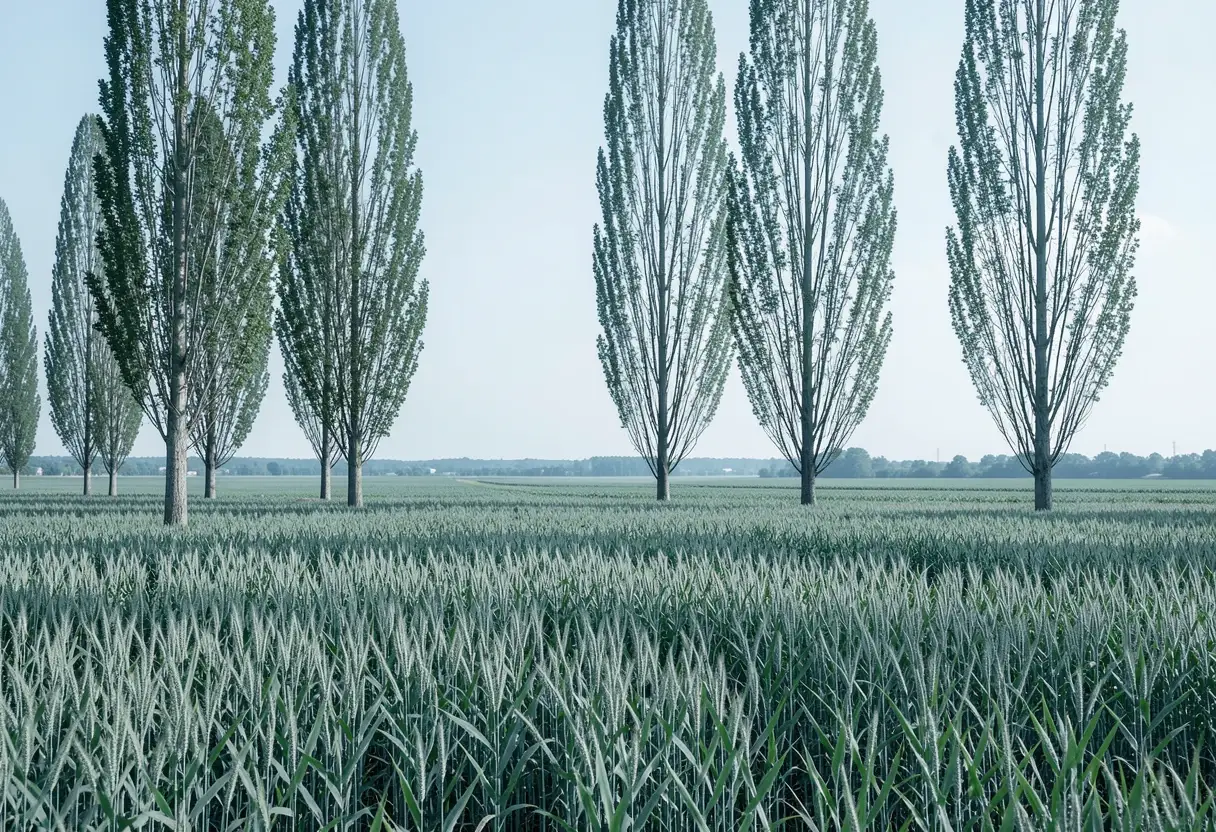
Spring crops grown between rows of mature poplars yielded 10% to 35% less than crops in treeless fields, according to a six-year German study that measured yields at four sites. Winter cereals held their ground across the entire rotation. The gap defines a new decision rule for alley-cropping farmers.
Researchers at the University of Göttingen, led by Professor Edzo Veldkamp of the Faculty of Forest Sciences and Forest Ecology, tracked crop performance at different distances from poplar rows over six years at four sites in Germany. The trees were managed as short-rotation coppice — cut back to near ground level every three to nine years and allowed to regrow. Findings appear in the journal Agronomy for Sustainable Development.
Where did the losses concentrate?
The largest yield reductions occurred within four metres of the tree rows. Shade, not root competition for water or nutrients, was the primary driver, according to the researchers. When trees reached five years of age or older, spring crops in the agroforestry strips lost between 10% and 35% of their yield relative to open fields.
Winter crops — wheat, barley and rye are the typical alley-cropping cereals — responded differently. Their yields stayed close to treeless-field levels across the nine years of tree growth examined.
What does this change for crop planning?
The practical prescription is a rotation tied to the coppice cycle: seed spring crops only in the first three years after trees are harvested, when regrowth casts little shade, and rely on winter cereals for the remainder of the rotation.
Dr Sarah Choe, who conducted the research as part of her PhD, said: "Our study shows that farmers can counteract the negative effects that the shade from trees has on crops by growing spring crops only during the first three years following the harvest of trees, whereas winter crops can be grown throughout the entire rotation because they are less affected by tree shade."
The data also explain why net field-level losses can be smaller than the tree-row buffer zone suggests. Wind shelter from the rows reduces moisture loss in crops farther out, which can offset the harvest shortfall close to the trees.
"The benefit of trees is that they can protect against high wind and this reduces moisture loss from the crop growing a bit further away from the trees," Veldkamp said. "This can, in fact, sometimes make up for the losses in harvest close to the tree rows."
Wood output strengthens the case
The poplars delivered a second result with direct margin implications: annual wood production after the second tree harvest ran three times higher than during earlier harvest periods. Combined with shade-matched crop choice, that wood revenue tips the productivity comparison.
"We were also able to show that there was increased wood production from the poplar trees after the second tree harvest. This means that with the right choice of winter or spring crops, alley cropping agroforestry outperforms open farmland in terms of productivity," Choe said.
Alley cropping carries agronomic benefits beyond the harvest: improved soil quality, reduced wind erosion, biodiversity support and higher carbon capture. For farmers weighing the system, the study's core message is to plan crop and tree rotations together, matching cereal type to the shade profile of each growth stage so grain yields hold while wood output and environmental gains accrue on the same ground.
via seedworld.com (Source)
More from Marcus Bennett
Show full bio
Senior reporter covering regulation, policy and their impact on Agribusiness coverage for industry professionals at Agribusiness Wire.
481 articles
Also in the yard
- U.S. winter wheat harvest falls 23% to 1.019 billion bushels in 2026
- Michigan Corn, Soybeans Lag Averages but Look Better Than Expected
- Iowa corn harvest at 72%, trailing 89% five-year average as rain persists
- Precision Data Aims to Link Soil Health Metrics to Crop Budgets
- Eastern Iowa Corn, Soybean Quality Holding Despite Wet Harvest Worries