Lot No. LOT-5296 · offered September 29, 2026
Seeds, Crop Protection & FertilizerLot sheet
Spray Drones Gaining Ground in Crop Protection
Spray drones are moving from demos to commercial fields as growers add unmanned application to crop protection programs, Brownfield Ag News reports.
Market notes
- Spray drones are gaining ground in crop protection, moving from demonstration use toward commercial farm deployment
- Adoption is driven by applying fungicides, insecticides and crop protection products where ground rigs and manned aircraft face limits
- FAA operating rules and pesticide label restrictions govern how growers and applicators can deploy the platforms
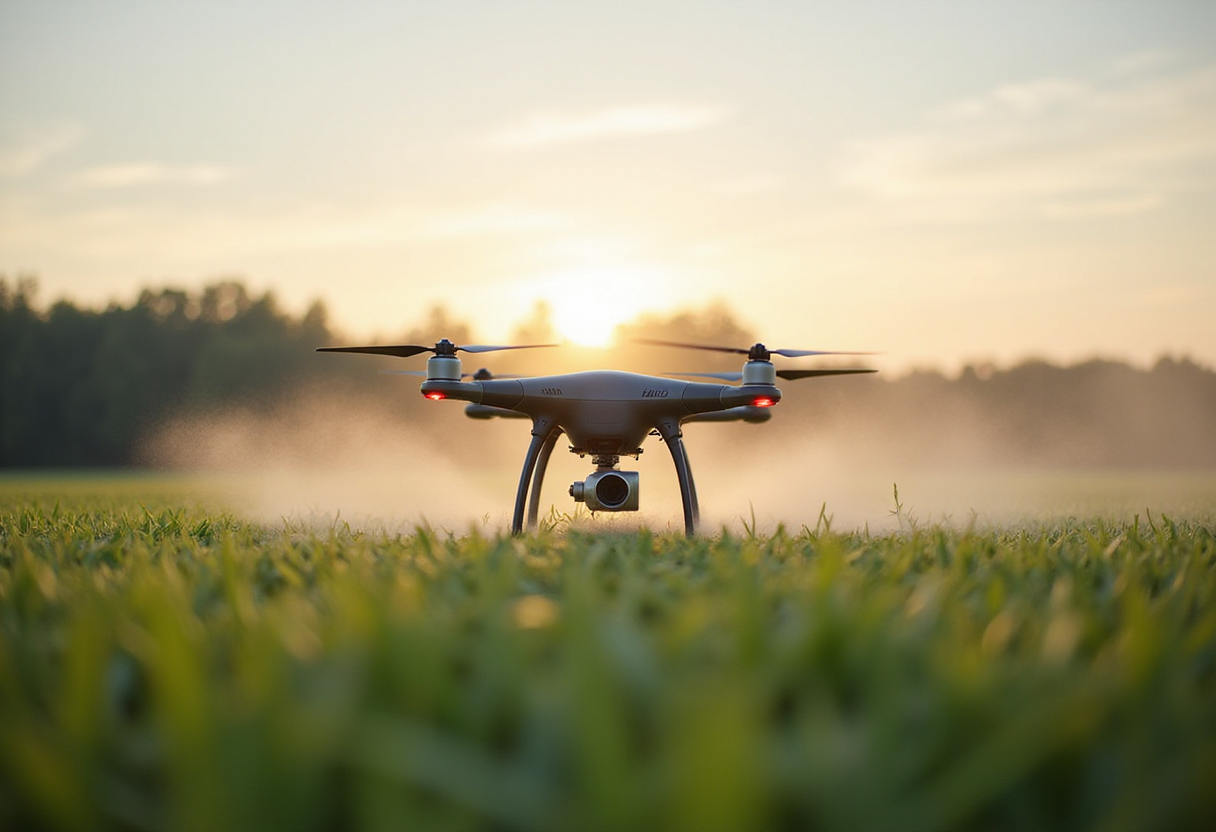
Spray drones are gaining ground in crop protection, according to Brownfield Ag News, as more row-crop and specialty-crop producers add unmanned aerial application to their input programs.
The Brownfield report tracks a shift that has moved drone spraying from demonstration plots and trade-show novelty toward working equipment on commercial farms. Growers are using the platforms to apply fungicides, insecticides and other crop protection products across acreage that ground rigs and manned aircraft have traditionally covered.
For farm margins, the equipment decision comes down to cost per acre. Producers weighing drone platforms must compare capital outlay, batteries, payload capacity and throughput against custom-application rates and the ownership costs of self-propelled sprayers. Throughput remains the practical constraint: drone tanks hold a fraction of what a ground rig carries, so flights per field multiply quickly at commercial scale.
The regulatory layer matters as much as the hardware. Aerial application with unmanned systems falls under FAA operating rules, and pesticide labels must permit the application method. Growers and custom applicators adopting the technology are working through those requirements as part of the deployment.
Interest in the technology spans both broadacre and specialty settings. Where terrain, field size, timber edges or wet ground limit ground-rig access, drones offer a way to keep protection programs on schedule during narrow treatment windows — a direct factor in yield protection and, ultimately, basis-relevant supply at the local elevator level.
Input makers and equipment dealers are watching the adoption curve as well. How quickly drone spraying takes share from conventional application will shape demand patterns across the crop protection supply chain, from product formulation to nozzle and drift-management standards tuned for aerial release from low-altitude unmanned platforms.
Adoption figures and surveyed grower percentages were not detailed in the Brownfield report, so the pace of the shift should be read as directional rather than quantified. Condition-report style claims about coverage and efficacy from operators remain separate from replicated field-trial results.
What is clear from the report is the direction: unmanned spray application is no longer fringe equipment. As regulation settles and payload, battery and flight-automation performance improve, drone spraying is positioned to take a measurable share of crop protection work in the seasons ahead.
via Google News: Crop protection (Source)
More from Marcus Bennett
Show full bio
Senior reporter covering marketplaces and e-commerce at Agribusiness Wire.
127 articles
Also in the yard
- Robots, Drones, and Digital Tools: The Next Generation of Crop Protection
- Free Satellite Imagery and Spray Drones Take Center Stage
- Precision Agriculture Emerges as Key to Biological Crop Protection
- ZenaDrone Begins Testing IQ Octo Prototype for Autonomous Field Spraying
- BioWorks Adds BioNex Insecticide and Hoplite Moss Killer to Portfolio