Lot No. LOT-9981 · offered November 17, 2026
Crop EconomicsLot sheet
South Dakota Winter Wheat Emergence Hits 96%, Well Above Five-Year Average
South Dakota winter wheat emergence hit 96% by Nov. 15, beating the 88% five-year average, as drought relief and timely rain set up the best dormancy entry in years.
Market notes
- 96% of South Dakota winter wheat had emerged by Nov. 15, vs. 88% five-year average
- Condition on Nov. 15: 6% excellent, 35% good, 40% fair, 12% poor, 7% very poor
- Over half of South Dakota was drought-free as of Nov. 12, up from under 10% three months earlier
- 48% of national winter wheat acres were in drought per the Nov. 12 U.S. Drought Monitor
- Jorgensen expects seeded acres to exceed last year's, citing early-September price strength
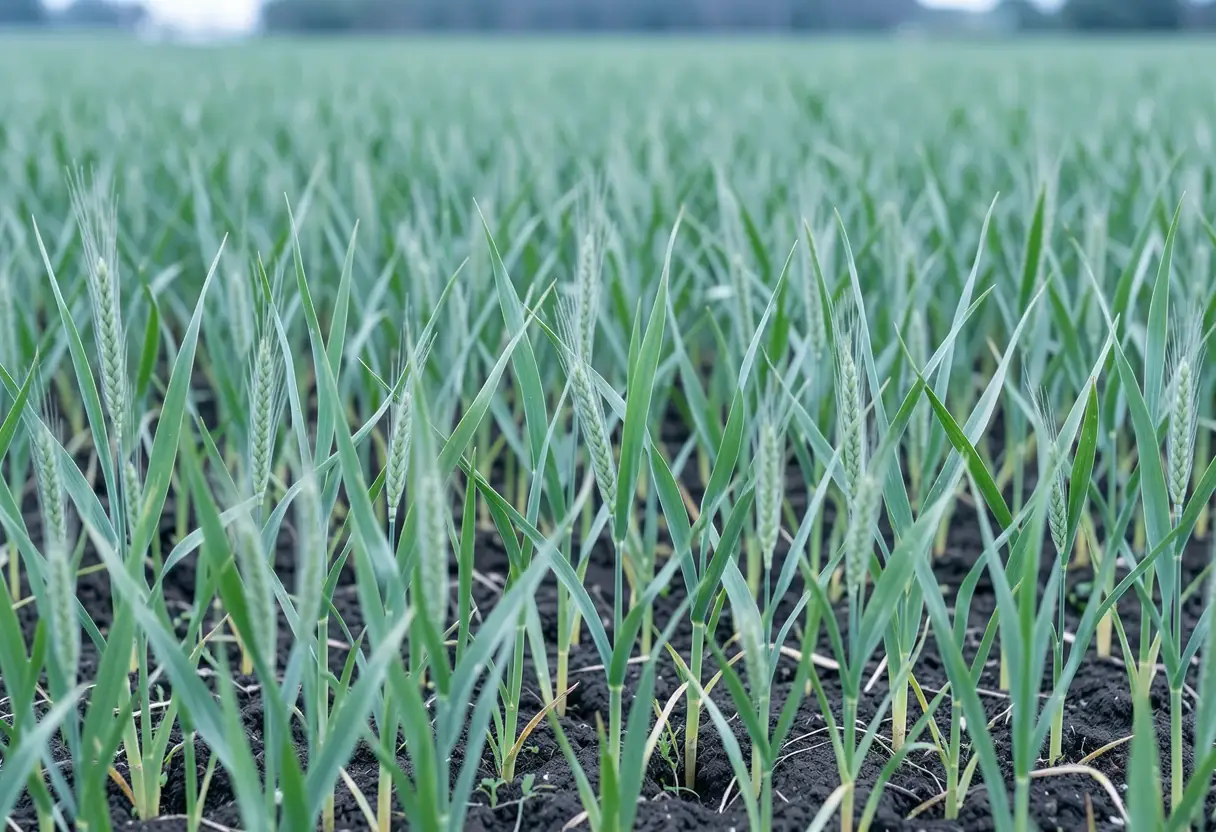
Ninety-six percent of South Dakota's winter wheat had emerged as of Nov. 15, well above the 88% five-year average for that date, according to USDA crop progress data, and growers say root establishment heading into dormancy is the best they've seen in years.
At Jorgensen Land and Cattle in Ideal, South Dakota, the turnaround is stark. After several years of poor planting and emergence, the operation caught close to 4 inches of rain in the last 30 to 45 days.
"It's probably one of the best crops going into dormancy that I've seen in my career," said Bryan Jorgensen, chief operating officer for agronomy at Jorgensen Land and Cattle and chairman of the South Dakota Wheat Commission board. "So, we kind of went from one extreme to the other very quickly."
What do the numbers show?
Planting progress tells the same story. As of Nov. 8, 98% of the state's winter wheat was planted and 91% had emerged. A week later, planting hit 99% with 96% emerged.
Condition ratings on Nov. 15 broke down as:
- 6% excellent
- 35% good
- 40% fair
- 12% poor
- 7% very poor
Nationally, 92% of the winter wheat crop was planted and 82% of that had emerged.
How did planting actually go?
The rain brought delays. Jorgensen started seeding around Sept. 1, early because some of the crop is forage wheat for grazing. The earliest fields are already being grazed — the plants got too big. But wet conditions cost time.
"We lost probably two full weeks of seeding time just because we were too wet," Jorgensen said. "It definitely went from one extreme to another."
Those delays don't threaten the harvest schedule. What matters, Jorgensen said, is root establishment before the ground freezes.
"Getting enough time before it gets cold and before it freezes up to get that plant a strong root, because that's what feeds it all winter long," he said. Without a strong root or any emergence — as in the last several years — yield potential and winter survivability take a hit.
Jorgensen's own planting finished around Oct. 15, and all of it has emerged. Subsoil moisture sits at two to three feet in the profile. "Which isn't as much as I'd like, but it's better than nothing," he said.
How much did drought ease?
More than half of South Dakota was out of drought as of the Nov. 12, 2026, U.S. Drought Monitor release. Three months earlier, less than 10% of the state was drought-free. Nationally, the Nov. 12 monitor put 48% of the nation's winter wheat acres in drought, though that covered less than half of South Dakota's winter wheat territory.
Some western parts of the state remain very dry, Jorgensen said. But emergence is strong and plants have excellent establishment statewide.
"So I anticipate that we will get through the winter quite well," he said.
Snow cover is the remaining variable. Snow insulates the crop from subzero air temperatures; bare ground and cold snaps cut survivability.
"Ideally, I would like to see a good foot of snow on this crop and let it get a good crust on it so it doesn't blow off," Jorgensen said.
What does this change for acreage and rotation?
Jorgensen expects seeded acres to rise. Prices were strong when seeding began in early September and have since fallen back, but he still expects acreage above last year's level.
"And hopefully, if we can get some winter moisture, we're going to have a bigger crop than we did in 2026," he said.
In central and western South Dakota, winter wheat remains a rotation staple even as corn and soybean acres expand. Growers running short corn-soybean rotations, Jorgensen said, are learning quickly that wheat matters for soil health and for accumulating moisture for the next crop.
via agweek.com (Source)
More from Nathan Brooks
Show full bio
Staff writer covering regulation, policy and their impact on Agribusiness coverage for industry professionals at Agribusiness Wire.
576 articles
Also in the yard
- Winter Wheat Acres Seen Bouncing Back for 2027 Crop
- Late-Planted Kansas Wheat: Adjustments That Limit Yield Loss
- U.S. winter wheat harvest falls 23% to 1.019 billion bushels in 2026
- Wheat Futures Slide 13% in September as Four Drivers Test 2027
- Barchart Advises Wheat Growers to Sell Before Prices Decline