Lot No. LOT-8965 · offered September 29, 2026
Seeds, Crop Protection & FertilizerLot sheet
Soil Health Emerges as New Frontier in U.S. Crop Protection
U.S. growers and input makers are treating soil health as a crop protection frontier, as resistance pressure and thin chemical pipelines push defense below ground.
Market notes
- Soil health is being positioned as a new frontier of crop protection in U.S. agriculture
- Resistance pressure and a thin pipeline of new synthetic modes of action are driving the shift
- The trend spans biologicals, inoculants, biostimulants and seed treatments targeting the root zone
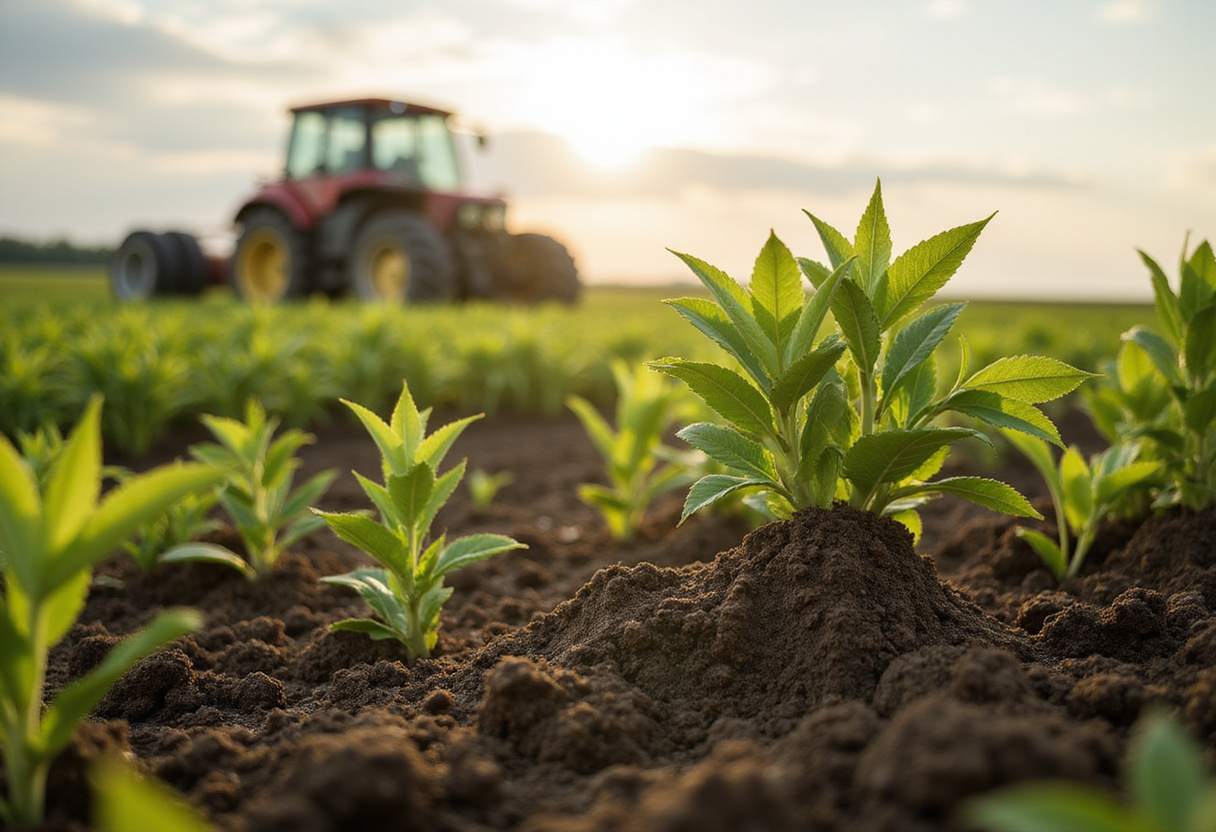
Soil health is moving to the center of crop protection strategy in U.S. agriculture, according to a report from agrolatam.com, as growers and input suppliers look below ground for the next margin of defense against pests, disease and yield loss.
The shift reframes the soil not simply as a growing medium but as an active line of plant defense. A biologically active soil profile — fed by organic matter, cover crops and reduced tillage — can suppress pathogens, improve nutrient cycling and help crops withstand stress that conventional chemistry alone no longer controls at acceptable cost.
The timing matters. Input budgets remain tight across major production regions, and the pipeline of new synthetic modes of action has thinned after decades of reliance on a narrow chemical set. Resistance pressure in weed, insect and disease populations has pushed both growers and registrants toward integrated approaches, where soil biology does part of the work that chemistry once did alone.
For input makers, the trend opens a market that spans biologicals, inoculants, biostimulants and seed treatments designed to work in the root zone rather than on the leaf. For growers, it changes the agronomic calculus: management decisions on rotation, residue and cover cropping now carry a crop protection dimension, not just a soil conservation one.
The report positions this as a frontier rather than a settled practice. Field-level results from biological and soil-mediated protection remain variable, and adoption still depends on demonstrated returns against measurable pest and disease pressure — the same standard any chemical product must meet.
How quickly soil health becomes a mainstream protection tool, rather than a complementary practice, will depend on replicated trial data, clear economic benchmarks and how effectively suppliers can deliver consistent performance across diverse U.S. soils and cropping systems.
via Google News: Crop protection (Source)
More from Olivia Hart
Show full bio
News editor covering media and advertising at Agribusiness Wire.
138 articles
Also in the yard
- Pest Resistance Reshapes U.S. Crop Protection Strategies
- Challenge 250: New Crop Protection Initiative Targets Invasive Pests
- Crop Protection Market to Exceed $106 Billion by 2030
- Precision Agriculture Emerges as Key to Biological Crop Protection
- BioWorks Adds BioNex Insecticide and Hoplite Moss Killer to Portfolio