Lot No. LOT-5889 · offered September 29, 2026
Crop EconomicsLot sheet
Nebraska's Rural Economy Weakens as Grain Prices, Trade Tensions Drag
Nebraska's rural economy is weakening as low grain prices squeeze farm margins and trade tensions cloud export demand for corn and soybeans across the state.
Market notes
- Nebraska's rural economy has weakened amid persistently low grain prices.
- Ongoing trade tensions are clouding export demand for Nebraska crops.
- The margin squeeze pressures farm income, rural businesses and lending.
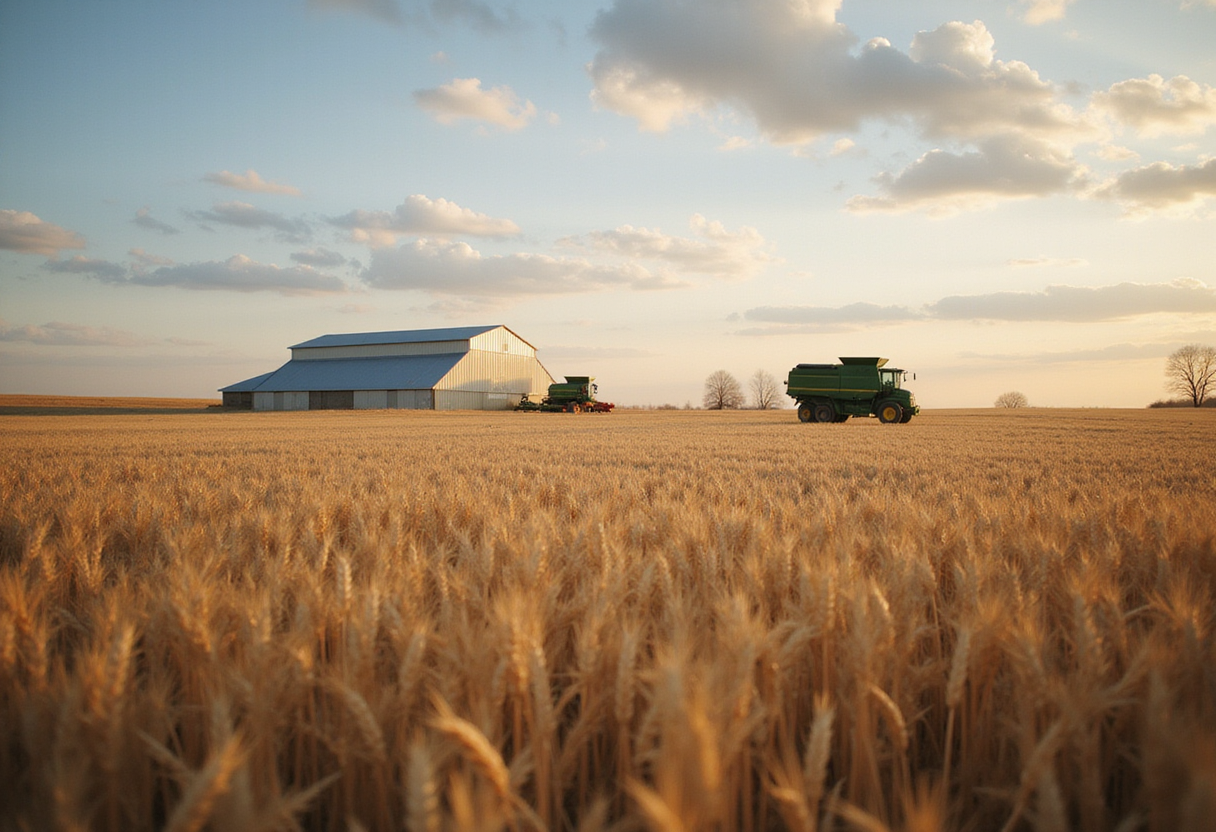
Nebraska's rural economy has weakened as persistently low grain prices and unresolved trade tensions continue to squeeze farm income across the state, Nebraska Public Media reports.
The dual pressure is straightforward in its mechanics. Grain prices sitting below the levels many producers need to cover cash rents, input costs and debt service directly reduce operating margins. At the same time, trade tensions have clouded export demand — a critical outlet for Nebraska-grown corn and soybeans — leaving growers with fewer profitable marketing options and weaker basis in parts of the Corn Belt.
For a state where agriculture anchors much of the rural economy, the effects extend well beyond the farm gate. When farm income tightens, Main Street businesses, equipment dealerships, grain-handling operations and local tax bases all feel the downstream impact. Rural lenders also face growing scrutiny of loan portfolios as producers carry thinner working capital into subsequent marketing years.
The report links the deterioration to two forces that have dominated agricultural policy and market discussions this cycle. First, global grain supplies have remained ample, keeping a lid on prices even as production costs stay elevated — a margin squeeze that has become the defining feature of the current farm economy. Second, trade tensions have injected uncertainty into export channels that Nebraska producers rely on, with tariff disputes and retaliatory measures disrupting established flows of grain and oilseeds to overseas buyers.
The combination leaves Nebraska's rural economy in a vulnerable position heading into the next round of planting and marketing decisions. Producers must weigh whether to lock in current prices or hold unpriced grain in hopes of a demand recovery, while lenders and ag retailers recalibrate expectations for input purchases, machinery spending and land values.
Policy attention has increasingly focused on how federal support — including farm program payments and ad hoc assistance — can buffer the sector against a prolonged period of low prices and trade disruption. Whether that support arrives in time to stabilize balance sheets remains an open question for Nebraska growers.
Going forward, the trajectory of the state's rural economy will hinge on whether grain prices recover enough to restore positive margins and whether trade negotiations reopen export markets that Nebraska producers have traditionally counted on.
via Google News: Grain prices (Source)
More from Olivia Hart
Show full bio
News editor covering media and advertising at Agribusiness Wire.
137 articles