Lot No. LOT-5878 · offered September 29, 2026
Farm MachineryLot sheet
Nebraska Farmers Run Combines Built in Their Own Backyard
Nebraska farmers are harvesting this season with combines built close to home, as an Omaha factory assembles the machines working fields across the state.
Market notes
- Nebraska farmers are operating combines manufactured in their own state.
- A factory in Omaha builds the combines working in fields throughout Nebraska.
- Local production runs in parallel with harvest, shortening the distance between factory and field.
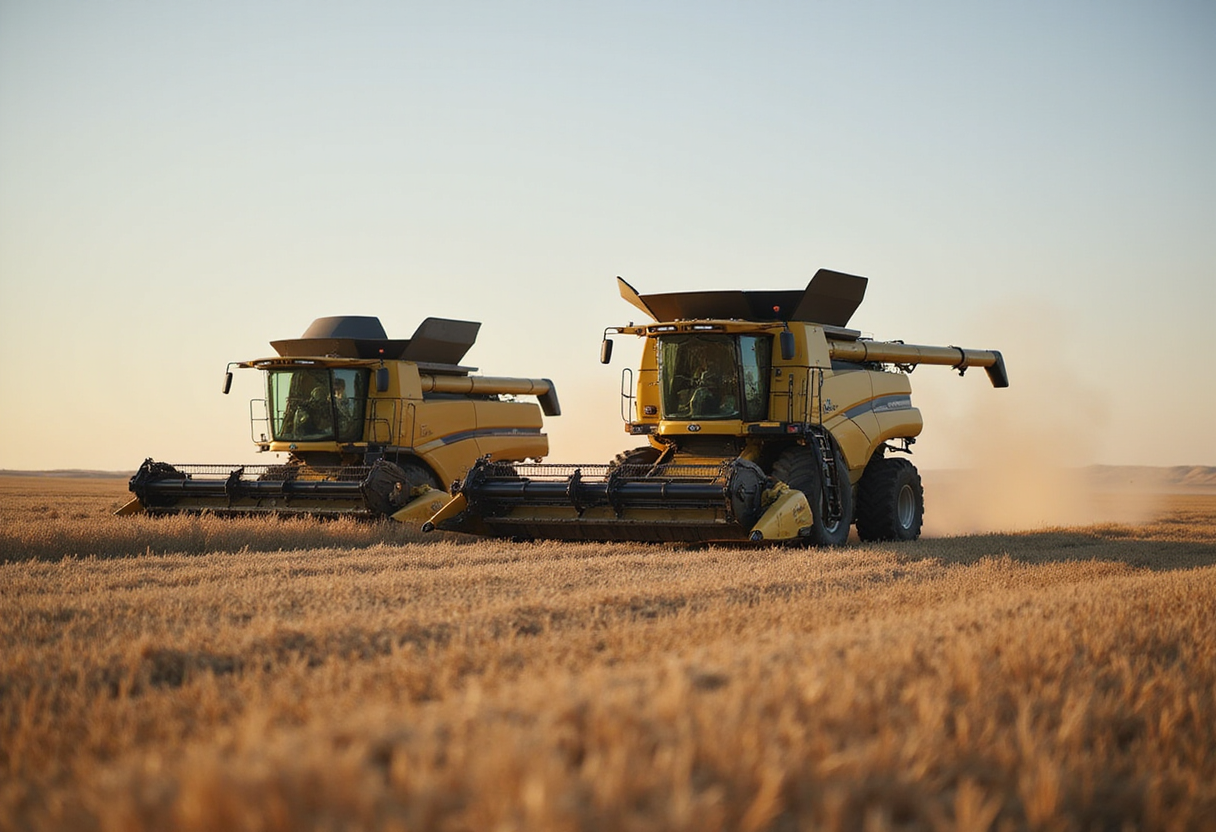
As Nebraska farmers move through harvest, a factory in Omaha is building the combines working in fields throughout the state.
The arrangement places one of the machines most central to Plains agriculture — the combine harvester — within commuting distance of many of the growers who operate it. For a state where row-crop harvest compresses weeks of fieldwork into a narrow window, the local production link matters for reasons that run from machinery availability to service response times during the season's most demanding stretch.
The Omaha plant assembles the machines while farmers keep their attention on getting crops out of the field. The two workstreams run in parallel each fall: fields fill with combines at harvest, and the factory floor continues turning out the next units destined for those same regions.
Nebraska growers, in other words, are harvesting with equipment manufactured in their own backyard. The combines rolling through corn and soybean fields across the state trace back to a production facility inside the state's largest city.
The proximity carries practical weight for operators. Equipment built nearby shortens the distance between factory and field, and for farmers, the distance a machine — or its replacement parts — must travel can decide how quickly a breakdown during harvest gets resolved. When a combine goes down mid-harvest, every idle hour carries a cost in lost combining capacity during a window that weather can close without warning.
The factory's presence also ties Nebraska's urban manufacturing base to its rural production economy. One sector builds the capital goods; the other puts them to work turning crops into stored grain. Each side depends on the other's calendar: the plant's output meets the demand that harvest seasons generate, and farmers depend on a steady supply of machines sized and configured for their cropping systems.
For growers watching input costs, machinery ranks among the largest capital line items on the farm budget. Where that equipment comes from, and how quickly it can be serviced, feeds directly into the economics of harvest — the single period when a season's revenue is actually secured from the field.
The sight has become a feature of the Nebraska agricultural economy: while farmers focus on harvest, the Omaha factory keeps building the combines that will work those same fields in seasons to come.
via Farm Progress (Source)
More from Marcus Bennett
Show full bio
Senior reporter covering marketplaces and e-commerce at Agribusiness Wire.
127 articles
Also in the yard
- 13 Ag Tech Startups Roll Out Solutions in Nebraska
- Rain stalls Nebraska corn and soybean harvest
- Precision Agriculture Is Fueling Demand for Farm Service Technicians
- Bipartisan Bill Targets Precision Agriculture Gaps in Nebraska, Colorado
- Irrigation Makers Push Precision and Remote Control at Husker Harvest Days