Lot No. LOT-4738 · offered October 2, 2026
Agricultural PolicyLot sheet
Letlow and Budzinski Map Farm Policy Path as Costs Climb
Reps. Julia Letlow and Nikki Budzinski outline next steps for expired farm policy and surging production costs in a new Agri-Pulse Newsmakers interview.
Market notes
- Reps. Julia Letlow (R-La.) and Nikki Budzinski (D-Ill.) discussed rising farm costs and expired farm policy on Agri-Pulse Newsmakers.
- The farm bill has expired, leaving program authorities in flux while input costs remain elevated.
- Both lawmakers sit on the House Agriculture Committee that will shape the next farm bill package.
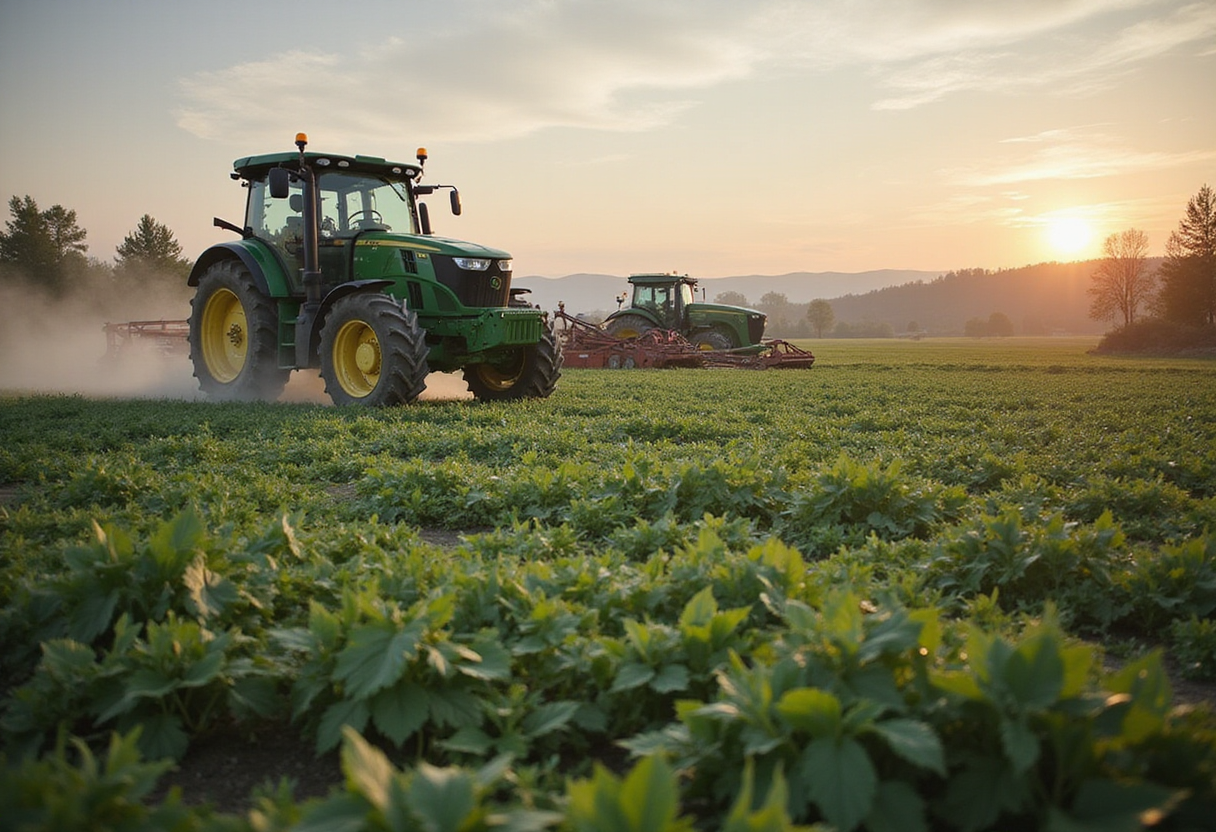
Two House Agriculture Committee members from opposite parties — Republican Julia Letlow of Louisiana and Democrat Nikki Budzinski of Illinois — sat down with Agri-Pulse to lay out what growers can expect as federal farm policy sits in limbo and production costs keep climbing.
The conversation, part of Agri-Pulse Newsmakers, centers on a practical problem facing row-crop and livestock producers alike: the farm bill has expired, and the operating environment has not gotten cheaper. Fertilizer, fuel, seed, crop protection and labor costs remain elevated even as commodity prices have retreated from recent highs, squeezing farm margins from both directions.
Letlow and Budzinski represent districts anchored in production agriculture. Louisiana's 5th Congressional District covers row-crop, timber and poultry country; Budzinski's central Illinois district sits in the heart of Corn Belt corn and soybean acreage. That geographic spread frames the policy discussion — Southern commodity interests and Midwest grain interests often pull farm bill negotiations in different directions on titles ranging from commodities to nutrition.
Both lawmakers serve on the committee that will write the next farm bill, or its successor package, and the interview addresses the sequence that matters to producers: whether Congress will move a full five-year reauthorization or another extension of expired programs. When the farm bill lapses without an extension, some authorities terminate outright, while others revert to permanent law provisions written decades ago — a scenario that would uproot current planting incentives and price supports if left unaddressed for a sustained period.
The cost question runs through the discussion. Elevated input prices have changed the economics of every acre. Growers budgeting for the coming season face fertilizer and chemical bills that remain well above pre-2020 levels, even where specific product prices have eased from their peaks. Land rents and machinery costs compound the pressure. Federal safety-net programs designed under the 2018 farm bill reference price structure were calibrated before this cost environment, and producer groups have spent months arguing those reference prices no longer cover the cost of production for crops including corn, soybeans, wheat, cotton and rice.
Letlow and Budzinski also address the politics of moving legislation in a divided Congress. Farm bill negotiations have stretched past their original September 2023 expiration, through multiple continuing resolutions and an extension that carried 2018-era programs into the current period. The lawmakers discuss what a realistic timeline looks like for final action, what trade-offs between commodity support, conservation spending and nutrition funding will shape the final package, and how committee leaders in both chambers can bridge regional and partisan gaps.
For input suppliers, lenders and grain merchandisers, the stakes are concrete. The safety-net structure determines how aggressively growers can bid for rented ground, how much working capital they commit to fertilizer and crop protection purchases, and how lenders underwrite operating lines. Ad hoc disaster aid has filled gaps in recent cycles, but temporary payments complicate planning compared with a functioning five-year bill.
The interview closes the loop on next steps: Letlow and Budzinski each indicate where they see movement possible in the coming months and what provisions they consider non-negotiable for their producers — a signal farm groups and ag lenders will read closely as the committee moves from statements to markup.
Watch the full Agri-Pulse Newsmakers segment for the lawmakers' complete remarks on cost pressures, program timing and the path to the next farm bill.
via Google News: Farm bill and ag policy (Source)
More from Olivia Hart
Show full bio
News editor covering media and advertising at Agribusiness Wire.
155 articles
Also in the yard
- Farm Bill Stalls Over SNAP Fight as Illinois Counties Show Stakes
- Grassley: November Elections Could Decide Farm Bill's Fate
- McConnell's Return to Senate Ag Committee Boosts Farm Bill Odds
- Farm Bill Timeline Could Turn on November Midterms, Grassley Says
- Farm Bill Window Narrows to Six Weeks as Boozman Pushes Fall Talks