Lot No. LOT-3030 · offered October 9, 2026
Crop EconomicsLot sheet
Kansas corn sprouting on the stalk as wet weather stalls harvest
Meng's yields were tracking above average before the rains. Now upright ears are collecting water and beginning to germinate on the stalk, putting quality — not yield — at the center of the risk.
Market notes
- Andrew Meng farms in the northeast corner of Kansas.
- Corn yields on Meng's operation were tracking above average before the rains began.
- Meng said upright ears are collecting water and beginning to sprout on the stalk.
- Wet weather is stalling combines and pushing harvest past the calendar.
- Brownfield Ag News flagged parallel concerns about soybean quality under the same weather pattern.
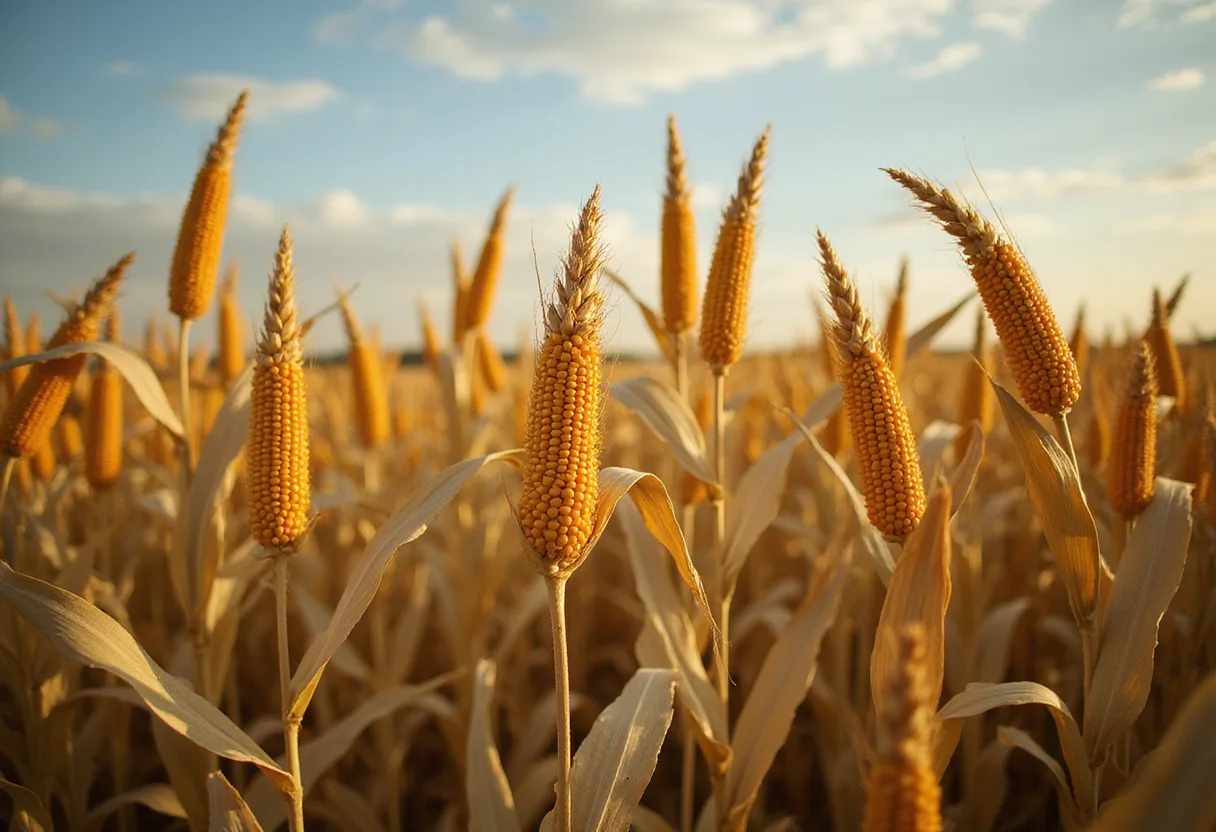
Standing corn in northeast Kansas is sprouting in the ear, and the longer the rain keeps combines out of the field, the bigger the hit at the scale ticket.
Andrew Meng, who farms in the northeast corner of the state, told Brownfield Ag News that upright ears across his acreage are already collecting water and beginning to germinate on the stalk.
"Any ear that is upright right now is getting water in there and it is sprouting," Meng said. "I don't know how big of an issue it's going to be, but it's certainly not helping."
What does an above-average crop look like when the rain won't stop?
Meng's corn yields were tracking above his farm's recent average before the rains set in. That margin has now turned from a production story into a quality story. Grain that once looked like a saleable surplus at elevator scale now risks being docked for damage or rerouted through premium drying capacity before storage.
The shift from yield gain to quality loss plays out in days under saturated conditions. Upright ears act as funnels, channeling rainwater through the husk and onto the kernels. Once moisture reaches the seed coat, in-field sprouting begins before the combine ever pulls into the row.
Where do the charges show up first?
Sprouted kernels trigger a chain of costs that move straight to a grower's settlement statement:
- Lower test weight, which stacks dockage on top of base price
- Higher drying charges before the grain can go into storage
- Elevated risk of mold and mycotoxin development during holding
- Direct per-bushel discounts on damaged-kernel percentages
Each step widens the basis between local cash bids and the futures contract. For a crop on track for an above-average finish, the discounts can quickly erase the bushels gained during the growing season.
How does this pattern translate to soybeans?
Soybean quality sits as the parallel concern under the same weather pattern. The agronomic mechanisms differ — pod shattering as wet and dry cycles alternate, seed-quality decline in fields sitting through multiple rain events, and stem disease pressure in canopies that cannot dry out.
But the marketing result looks the same. Widened basis, elevated storage risk, and quality discounts all compound with each extra day the crop sits in the field.
How much does timing matter now?
Meng's report places the damage in the later stretch of harvest, after most of the yield risk has migrated into quality risk. Growers cannot trade the calendar against the weather. Once combines can finally run, they take whatever terms the elevator sets.
That timing also leaves little room for a cash price rally to offset the quality hit. With margins compressed by the season's input costs, the discount schedule has become the lever that determines each farm's real return for the year.
What is Meng's working plan from here?
The short-term question across northeast Kansas is whether the wet pattern breaks before more ears sprout or the crop degrades further. Meng's approach is straightforward.
"I'm just trying to get what I can get out of the field," he said.
That posture — take what dries, market the rest at the elevator's price — reflects the calculation running across the region as the harvest calendar narrows.
via Brownfield Ag News (Source)
More from Nathan Brooks
Show full bio
Staff writer covering regulation, policy and their impact on Agribusiness coverage for industry professionals at Agribusiness Wire.
466 articles
Also in the yard
- Drier Forecast Offers Southwest Iowa Growers a Harvest Window
- Wet Weather Compromises Midwest Corn Stalks, Slows Harvest
- Iowa State Agronomist: Persistent Rain Stalls Harvest, Quality Erodes
- Wet Weather Dumps More Rain on Corn Belt Than Agronomists Expected
- Rain and Stalk Rot Compress Harvest Window in Northwest Missouri