Lot No. LOT-2700 · offered September 29, 2026
Agricultural PolicyLot sheet
House Members File Trump-Backed Bill to Ease Hemp THC Product Ban
House lawmakers have filed a Trump-backed bill to loosen the federal ban on hemp-derived THC products, reopening a policy fight with stakes for growers, processors and the thin hemp demand base.
Market notes
- House lawmakers have filed a bill, backed by President Trump, to loosen the federal ban on hemp-derived THC products.
- The bill addresses restrictions that followed the 2018 Farm Bill's legalization of industrial hemp.
- The legislation must clear committees and both chambers, and could be folded into a farm bill or appropriations package.
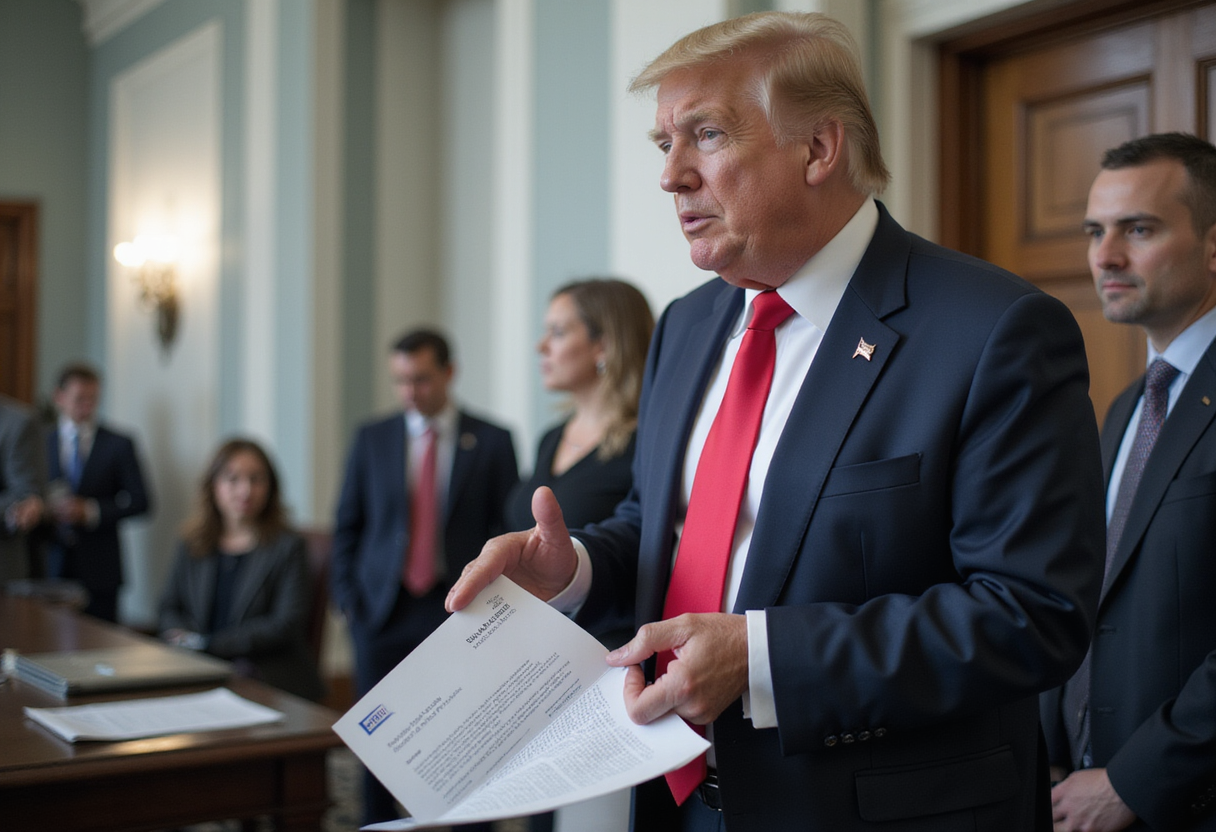
A group of House lawmakers has filed legislation, backed by President Donald Trump, that would loosen the federal ban on hemp-derived THC products, reopening a policy fight with direct consequences for growers, processors and retailers tied to the U.S. hemp supply chain.
The bill responds to restrictions that tightened the legal environment around intoxicating hemp cannabinoids — products made from hemp but delivering THC effects similar to marijuana. Those restrictions followed the 2018 Farm Bill's legalization of industrial hemp, which defined the crop by its delta-9 THC content and, in the interpretation adopted by regulators, closed loopholes that had allowed chemically converted or naturally concentrated hemp THC compounds to reach store shelves nationwide.
For farm-country readers, the stakes are straightforward. Hemp acreage contracted sharply after the initial 2018-2019 planting boom, when growers chased processing contracts that in many cases never materialized. A workable federal framework for hemp-derived consumer products has been one of the few demand anchors left for the crop, alongside fiber and grain markets that remain thin in most regions. Pulling THC product sales out of the legal gray zone — or pushing them further into it — moves basis, processing margins and planting decisions for a cultivated crop that USDA still tracks in its surveys alongside traditional row crops.
The House measure, filed with the president's endorsement, signals that the executive branch wants Congress to resolve what agencies have so far handled through enforcement discretion and proposed rulemaking. Lawmakers backing the bill argue that a ban approach strands investment already sunk into extraction, formulation and retail infrastructure built since hemp's federal legalization, and that a regulated market serves consumers better than an unenforced one.
Opposition remains. Public-health groups and some state regulators have pressed for stricter limits on hemp-derived intoxicants, citing retail access and labeling concerns, and several states have enacted their own caps or prohibitions that a federal fix would not automatically override. The result is a patchwork: growers and processors face different rules state by state, complicating interstate movement of extract and finished goods.
The legislative path is long. The bill must clear committee assignment, markups and floor votes in both chambers, and any final language will likely be folded into broader negotiations — potentially the next farm bill or an appropriations vehicle — where hemp definitions compete with higher-priority titles for attention. Supporters of the current restrictions have shown they can slow or reshape cannabinoid provisions during those talks.
Watch for two early signals: whether Senate counterparts introduce a companion measure with comparable language on THC thresholds and product definitions, and whether USDA and FDA adjust enforcement posture while the bill moves. Both will tell growers and processors whether the market for hemp THC products is stabilizing or facing another cycle of regulatory whiplash.
via Google News: Seed industry (Source)
More from Grace Kim
Show full bio
Correspondent covering industry trends and analytics at Agribusiness Wire.
159 articles