Lot No. LOT-8017 · offered November 20, 2026
Seeds, Crop Protection & FertilizerLot sheet
Herbicide-Tolerant Crops Cut Pesticide Environmental Impact 15.3%, Study Finds
A peer-reviewed 29-year analysis finds HT crops lowered pesticide environmental impact 15.3% and cut active ingredient by 866.9 million kg — though the study was funded by Bayer.
Market notes
- GM technology cut pesticide use 866.9 million kg of active ingredient from 1996 to 2024 and lowered environmental impact 15.3%.
- In 2024, 205 million hectares of GM crops were harvested worldwide; 92% carried herbicide-tolerance traits.
- HT soybeans raised herbicide volume 0.4% (21.7 million kg) but improved environmental impact 10.5% over 1996–2024.
- 62 weed species are now resistant to glyphosate; 176 resist ALS herbicides used in conventional systems.
- The research was funded by Bayer Crop Science; PG Economics says its reports are compiled independently of sponsors.
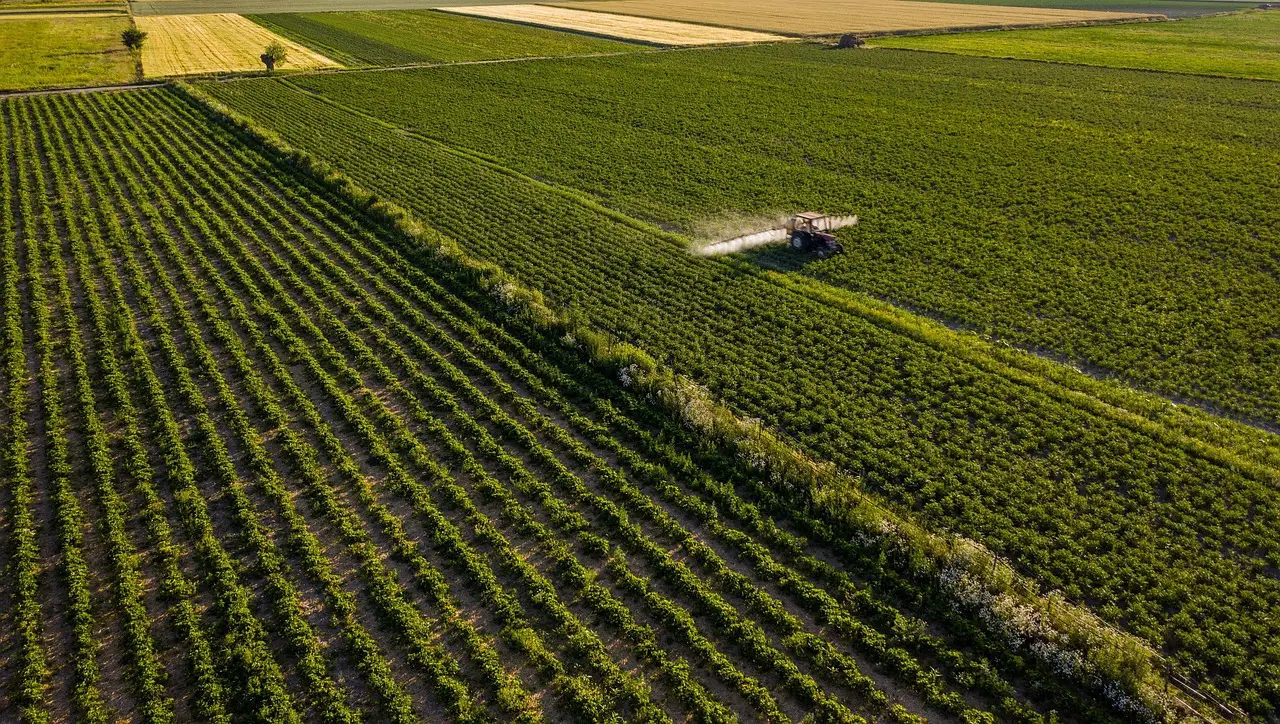
Herbicide-tolerant GM crops cut global pesticide use by 866.9 million kg of active ingredient between 1996 and 2024 while lowering the environmental impact of crop protection by 15.3%. That is the central finding of a peer-reviewed analysis by agricultural economist Graham Brookes of UK-based PG Economics, published in the journal GM Crops & Food. The numbers arrive with a caveat the reader should hold onto: the research was funded by Bayer Crop Science, though PG Economics says its reports are compiled independently of sponsors.
The study covers nearly three decades of pesticide-use data, from 1996 through 2024, and directly challenges a claim made for years by critics such as Charles Benbrook: that rising glyphosate and glufosinate volumes on GM crops prove biotech farming has become more toxic.
What does the study actually measure?
Brookes argues the public debate rests on a misleading yardstick — total kilograms applied. A kilogram of one herbicide can be far more or less harmful than a kilogram of another; weight alone says nothing about toxicity, soil persistence or leaching into groundwater.
Instead, he uses Cornell University's Environmental Impact Quotient (EIQ), which scores each pesticide for effects on farm workers, consumers and ecology, including bees, birds, fish, beneficial insects, soil persistence and runoff potential. Cornell revised the index in 2024, raising scores for most chemicals — glyphosate's rating rose from about 15 to 32, and atrazine, a mainstay of conventional maize weed control, from about 23 to 50. Brookes recalculated every pesticide on every crop in every country back to 1996 with the new values. His conclusions barely moved, because the revision applied equally to GM and conventional systems.
What is the crop-by-crop evidence?
Across 1996–2024, herbicide-tolerant crops reduced the environmental impact of weed control in every major crop and every adopting country, even where volumes rose:
- HT soybeans: volume up 0.4% (about 21.7 million kg), but environmental impact improved 10.5%, with gains in every adopting country
- HT maize: 231 million kg less herbicide (−5%) and an 8.6% improvement
- HT cotton: 27.8 million kg less herbicide (−5.3%) and a 9.6% improvement
- HT canola: an 18.5% cut in volume and a 28% improvement
- HT sugar beet: 1.1 million kg less herbicide (−4.6%) and an 8.2% improvement
Soybeans show most clearly why weight misleads. In 2024, farmers applied about 12 million kg (3.4%) more herbicide to GM soybeans than a conventional alternative would likely have required — yet environmental impact was still 7.7% lower, because the HT system replaced harsher chemistry. In 2024 the gains in other crops were larger: 10.6% in maize, 19.8% in cotton, 27.1% in sugar beet and nearly 37% in canola.
HT soybeans alone delivered a quarter of the environmental improvement; HT maize more than a quarter of the volume reduction.
Why has herbicide use risen anyway?
Brookes does not deny use has increased. The cause, he says, is weed resistance. Early glyphosate reliance put intense selective pressure on weed populations; no-till farming, which HT crops made easier, shifted weed species toward those glyphosate controls less well. Worldwide, 62 weed species are now glyphosate-resistant — in the United States, resistant marestail, waterhemp and Palmer amaranth are widespread across maize, cotton and soybean fields.
Farmers responded by stacking traits and rotating chemistry. Since 2020, about 95% of US HT soybeans have been planted to varieties tolerant to herbicides beyond glyphosate. In 2006, only 14% of the crop received any of the next four most-used herbicides. Average herbicide use per hectare on US HT soybeans doubled over that period, while glyphosate's share fell from 82% in 1998 to 63% by 2016 — a sign of integrated weed management, not simply more of one product.
Critics, Brookes notes, omit what happened on conventional farms. Herbicide use per hectare on the small conventional US soybean crop also doubled between 2006 and 2024, driven by resistance to non-glyphosate products. Resistance predates GM crops entirely: 176 weed species resist ALS herbicides and 89 resist photosystem II inhibitors such as atrazine. Australia had glyphosate-resistant weeds before planting any HT crops and now has 21 such species. Resistance, not seed choice, is the common driver.
He also flags a benchmarking trap: today's conventional growers are self-selected, often with light weed pressure or extensive systems. Before HT cotton, US growers applied about 2.54 kg of herbicide per hectare with an EIQ score near 100; today's small conventional crop, concentrated in extensive Texas operations, uses about 1 kg per hectare — a poor national baseline. Brookes instead builds conventional benchmarks from extension and industry recommendations for comparably effective weed control, cross-checked against pre-adoption usage.
What the study concedes
The environmental advantage of HT crops is smaller than in the early 2000s, and Brookes says so directly. Over-reliance on glyphosate eroded early gains; some farmers' return to plowing likely cut the carbon savings of no-till; and the EIQ is a hazard index, not a full risk assessment. A more comprehensive tool, such as Germany's SYNOPS model, would be ideal but is not practical globally across more than 20 countries.
Still, he concludes that in 2024 HT crops "continue to deliver a net environmental gain," and together with insect-resistant crops provide "substantial net environmental benefits" — findings consistent with independent meta-analyses, including the widely cited 2014 Klümper and Qaim study. With 205 million hectares of GM crops harvested in 2024, 92% of them herbicide-tolerant, expect the debate over how to measure that footprint, not whether the acreage exists, to drive the next round of scrutiny.
via geneticliteracyproject.org (Source)
More from Olivia Hart
Show full bio
News editor covering technology and product news in Agribusiness coverage for industry professionals at Agribusiness Wire.
550 articles
Also in the yard
- GM Crops Added $385 Billion to Farmer Income Since 1996
- EPA and HHS Expand Collaboration as Glyphosate Review Proceeds
- Crop Protection Market to Exceed $106 Billion by 2030
- Ag Groups Warn Crop Protection Access At Risk in House Farm Bill Debate
- New Crop Protection Molecules Cost $307 Million to Reach Market