Lot No. LOT-9766 · offered November 4, 2026
Farm MachineryLot sheet
Ghana Puts GH¢551 Million Behind 1,840-Unit Farm Machinery Buy
Ghana's GH¢551 million escrow deposit funds a letter of credit for 1,840 machines, with 15 of 50 Farmer Service Centres under construction and operations targeted by Q1 2027.
Market notes
- Ghana deposited GH¢551 million (~US$48.5 million) in escrow for a letter of credit covering 1,840 machinery units.
- Construction is under way at 15 of 50 planned Farmer Service Centres, targeted operational by end of Q1 2027.
- A 2022 study found 77.6% of Ghana's farm operations were performed manually; agriculture was 22.8% of GDP in 2025.
- The 2026 Budget provides for roughly 4,400 machines across 50 districts, including 660 tractors and 200 mini-tractors.
- Upper West Region farmers reported ploughing costs of GH¢350–400 per acre and fertiliser at GH¢400–500 per bag in June 2026.
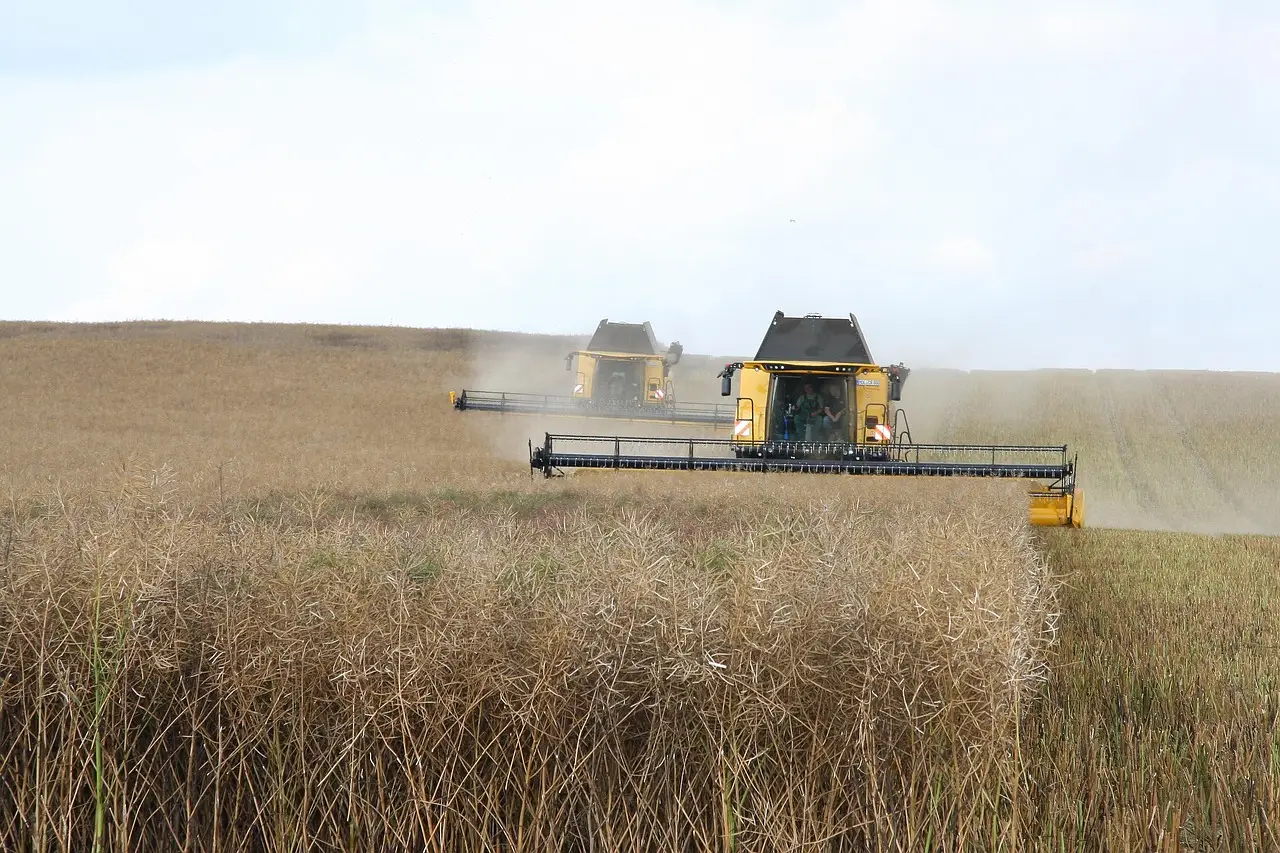
Ghana has deposited GH¢551 million (about US$48.5 million) in an escrow account at the Bank of Ghana to open a letter of credit (a bank guarantee that sellers get paid once shipping documents are verified) covering 1,840 units of agricultural machinery and equipment. Finance Minister Dr Cassiel Ato Forson disclosed the commitment in the 2026 Mid-year Fiscal Policy Review presented to Parliament in July 2026. The machines will be deployed through 50 Farmer Service Centres being established nationwide under the Feed Ghana Programme, with construction under way at 15 of them as of October 2026.
The scale of the mechanisation gap explains the urgency. A 2022 study found that 77.6% of farm operations in Ghana were performed manually. Agriculture accounted for 22.8% of GDP in 2025, according to the Ghana Statistical Service. Those two figures frame the policy case: a sector producing nearly a quarter of national output remains overwhelmingly hand-powered.
What does the procurement cover?
The letter of credit covers tractors, trailers, power tillers, ploughs, cultivators, seed drills, sprayers, fertiliser spreaders and combine harvesters. No per-item quantities have been published. The government expects the investment to raise farm productivity, cut production costs and support food security.
The purchase sits inside a wider programme. The 2026 Budget Statement, presented in November 2025, outlined plans to provide roughly 4,400 machines and implements across 50 agricultural districts, including 660 tractors and 200 mini-tractors. A government deployment update in April 2026 reiterated the target of more than 4,000 pieces of equipment. The 1,840-unit procurement represents a specific, funded commitment within that broader ambition — and the relationship between the two figures remains unclear.
How far along are the Farmer Service Centres?
President John Dramani Mahama cut the sod for the first centre at Takoratwene in the Afram Plains on 21 March 2026. The area, a major producer of maize, cassava and groundnuts, hosts the pilot. The centre is planned to offer tractors, combine harvesters and threshers, a maintenance unit, a soil testing laboratory, training, seeds and fertilisers, plus warehouses and silos so farmers can avoid distress sales at harvest.
"The era of farming with traditional tools such as cutlasses and hoes must give way to modern, mechanised agriculture," Mahama said at the ceremony. He added that fertilisers will be supplied free to farmers, that irrigation schemes covering about 900 hectares have started in the area, and that funding for the National Buffer Stock Company's food purchases rose from GH¢200 million last year to GH¢300 million this year.
In October 2026, Food and Agriculture Minister Eric Opoku confirmed construction was under way at 15 of the 50 planned centres, with those facilities targeted to become operational by the end of the first quarter of 2027. The programme builds on an earlier plan to establish the first 11 centres under the 2026 Budget.
Why shared access matters
Usage already outpaces ownership. The 2017/18 Ghana Census of Agriculture found that 24.7% of agricultural holders used tractors, against 73.0% who used knapsack sprayers. Among smallholders, 534,190 used tractors but only 7,454 owned one — about 1.4% of users on simple arithmetic. The census noted most holders use equipment they do not own, which supports the service-centre model. The data predate the current programme and serve as a baseline, not a measure of current coverage.
Who will supply the machines?
Supply routes are diversifying. Belarus has said it plans to send 3,000 pieces of agricultural machinery to Ghana in 2026, including tractors, implements, seeders and ploughs, with maintenance centres and training for local technicians attached. In July 2025, the Ministry of Agriculture signed an agreement with Turkish manufacturer Hattat Traktör to set up a tractor assembly unit in Ghana. Neither the value of the Belarus shipment nor its delivery schedule has been disclosed.
Ghana imported about $900 million of agricultural technology, equipment and supplies in 2020, per the Ministry of Food and Agriculture, with tractor parts and accessories ranking second among import categories and tractors fifth. Suppliers from China, India, Japan and the European Union compete in the market, and reconditioned equipment sells well where after-sales service exists. At the Ghana Agrotech Fair in March 2026, Dr Hellie Gonu of Ghana EXIM Bank's Business Advisory Services Department said Ghana could strengthen domestic machinery sourcing within five years — a personal assessment, not a formal government target.
What could stall the programme?
Quality standards and affordability remain open questions. In September 2026, Prof Francis Kumi of the University of Cape Coast and Dr Shadrack Kwadwo Amponsah of the CSIR-Crops Research Institute said Ghana has strong fabrication capacity but inconsistent standards for materials, performance, safety and hygiene. They called for minimum requirements for locally made machines — grinding mills, decorticators, multi-crop threshers — and for public procurement and subsidies to be linked to certified performance, with a proposed National Centre for Agro-Machinery Research, Testing and Certification in the medium term.
Farmers in the Upper West Region reported in June 2026, in interviews with the Ghana News Agency, ploughing costs of GH¢350–400 per acre, fertiliser at GH¢400–500 per bag and improved maize seed at GH¢300–350 per acre, with women farmers facing particular barriers to equipment access. Whether the centres set transparent, affordable hiring rates will determine if the GH¢551 million commitment reaches smallholder margins. Operational readiness by the end of Q1 2027 will show whether delivery can match the procurement promise.
By Rebecca Stone
via Google News: Farm equipment (Source)
More from Rebecca Stone
Show full bio
Market editor covering people, launches and day-to-day practice in Agribusiness coverage for industry professionals at Agribusiness Wire.
472 articles
Also in the yard
- Kindiki backs precision farming as El Niño threatens Kenya food supply
- Tractor Sales to Hit 2.6 Million Units by 2031
- Benin Turns to Private Sector to Modernise Its Seed Industry
- Japan Backs Modern Machinery and Irrigation for Moldovan Farmers
- USDA Opens $8 Billion in CCC Funds for Fuel and Input Relief