Lot No. LOT-2752 · offered November 19, 2026
Lot sheet
FDA redacts names in Salmonella outbreak that sickened 99
An FDA report links a 99-case Salmonella Oranienburg outbreak in the Midwest to Mexican-style restaurants, hospitalizing 22, while redacting the farms and packinghouse in the traceback.
Market notes
- The Salmonella Oranienburg outbreak sickened 99 people and hospitalized 22 in the Midwest.
- An FDA emergency response coordinator notified the outbreak investigation arm on June 29.
- The 13-case traceback covered six points of sale and six legs, but no microbiological match confirmed a source.
- Implicated lots were harvested from April 28 through May 7 and were comingled in outgoing shipments.
- An inspection closed Aug. 28, and the FDA recommended another inspection with sampling next growing season.
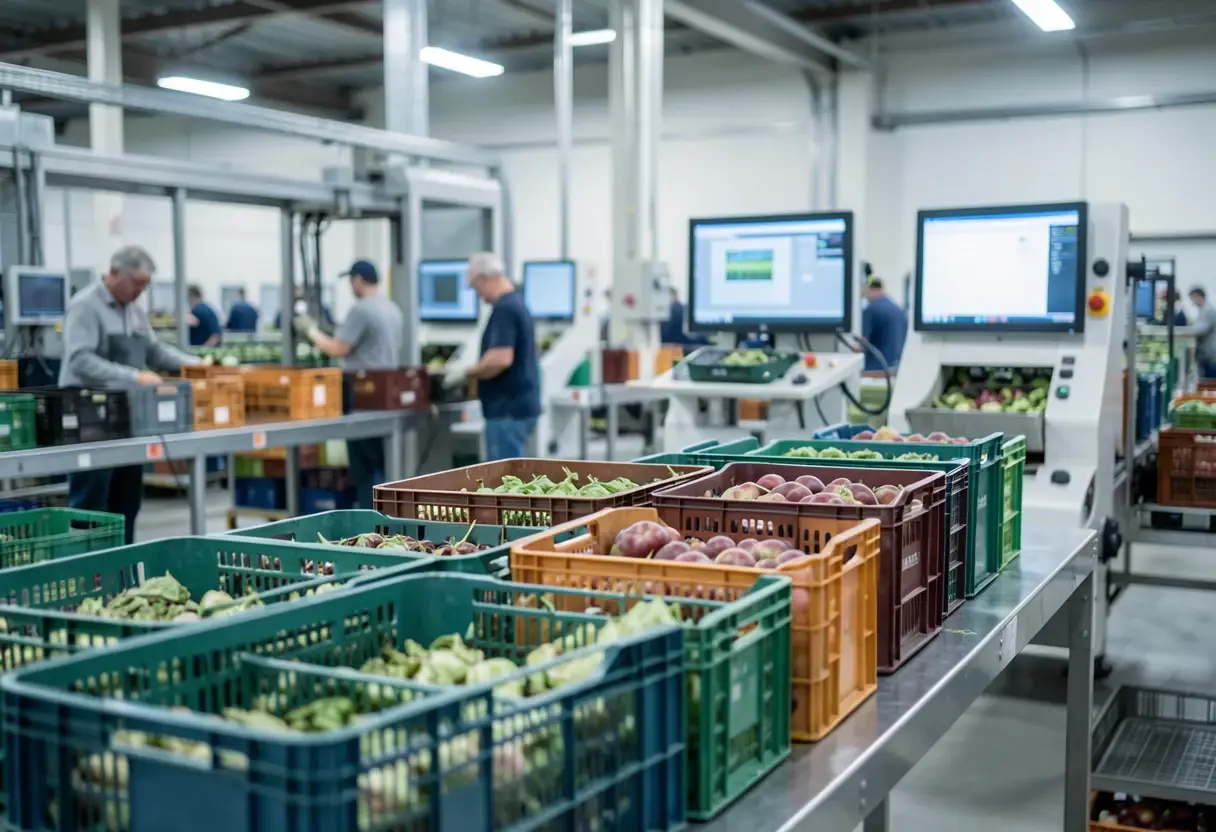
99 people became ill in a Salmonella Oranienburg outbreak in the Midwest, and 22 people were hospitalized, according to an FDA report that redacts the names of the restaurants, farms and packinghouse involved.
The report associates the outbreak with Mexican-style restaurants but names none. It also leaves the suspect commodity, affected states, growers and corporate suppliers redacted. That leaves readers without a complete chain from farms to service locations, despite six investigative paths converging on the same redacted grower and packinghouse.
An FDA emergency response coordinator notified the agency’s outbreak investigation arm about the illness cluster on June 29. State partners began information and record collection. The FDA requested recipes, supplier information and distribution records from corporate representatives for items linked to locations associated with illnesses.
Traceback findings
- Traceback scope: The investigation covered multiple commodities and used 13 cases from redacted states, representing six points of sale. The 13-case traceback should not be confused with the full 99-person outbreak total.
- Supply convergence: Investigators identified growers across six traceback legs. Each leg converged on a redacted grower and a redacted packinghouse, which the report identifies as the source of the supplied product for all six legs.
- Farm links: The report says a redacted grower oversaw farms that shared fields. It also describes shared-field links among growers. That arrangement connects the grower to multiple farms without isolating one site.
- Harvest window: Multiple implicated lots carried harvest dates from April 28 through May 7. Different harvest dates were comingled in outgoing shipments, allowing one load to contain product from several lots.
Limits of the source finding
Six converging legs provided a common supply point, but investigators found no microbiological evidence matching the outbreak strain. The report therefore designated the redacted product as the “suspect vehicle,” not a confirmed source. The packinghouse supplied all six legs, but investigators did not prove where contamination occurred.
The report’s language separates exposure from causation. “Associated with” identifies Mexican-style restaurants as the setting for the cluster. “Traceback” describes the search backward from those locations. “Suspect vehicle” names the product under investigation. None of those terms establishes contamination at a particular farm.
An inspection involving two redacted farms closed on Aug. 28. The report links those farms to the traceback, but its redactions remove the names and other identifying information needed to assess the findings independently.
Timing also limited the inspection. The FDA stated: “Due to the inspection being conducted outside of the growing season, it was recommended that another inspection is conducted next growing season with sampling.” The agency supplied the firm an FDA Form 4056 with observations that identified multiple sanitation issues.
What does this change for growers and suppliers?
The practical answer is limited because the evidence remains incomplete. The report does not name growers, packinghouse operators or restaurants, and it does not confirm an outbreak-strain match at any farm. It provides no figures from which to calculate farm revenue or margin effects.
The report nevertheless documents shared fields, six converging legs, cross-harvest lot comingling and sanitation observations. The FDA’s recommended follow-up puts inspection and sampling back on the agenda for the next growing season. The document still does not establish which operation caused the outbreak.
The FDA’s recommendation for inspection and sampling in the next growing season sets the next practical test for the redacted farm links, packinghouse and sanitation issues recorded on Form 4056.
via foodsafetynews.com (Source)
More from Marcus Bennett
Show full bio
Senior reporter covering regulation, policy and their impact on Agribusiness coverage for industry professionals at Agribusiness Wire.
496 articles
Also in the yard
- FDA Closes Salmonella Outbreak Probe Without Naming Jalapeño Grower
- FDA Adds Country Creek and Francisco Family Foods to Sprout Seed Recalls
- CDC Closes Dual-Pathogen Sprout Outbreak; FDA Won't Name Seed Supplier
- Imported Produce Safety Lapses Cost U.S. Growers $280 Million a Month
- USDA Proposes Modernized Fresh Beef and Lamb Import Rules