Lot No. LOT-9690 · offered October 16, 2026
Farm MachineryLot sheet
Farm Equipment Sales Reach Cyclical Bottom After Tough Year
Farm equipment sales have reached a cyclical bottom after a tough year, per industry tracking, as row-crop machinery declines meet compressed farm margins and dealer order weakness.
Market notes
- Farm equipment market has reached a cyclical bottom after a difficult twelve months, per Farm Progress reporting
- Row-crop tractor and combine segments have absorbed the largest unit-volume decline of the cycle
- Net farm income has compressed for a third consecutive year, weighing on capital spending decisions
- Historical lag between equipment sales bottom and production rebound has run two to four quarters
- Parts and service revenue typically carries higher margins than new-equipment sales for OEMs and dealers
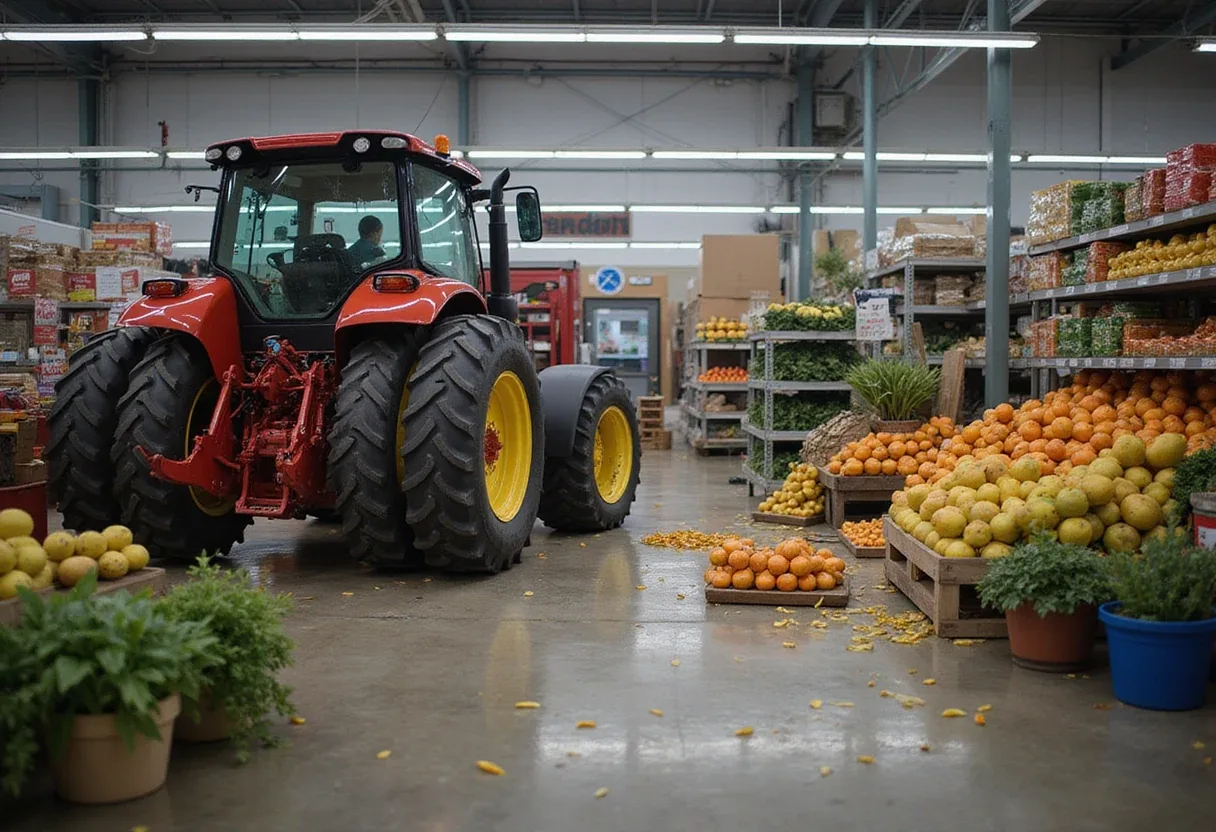
Farm equipment sales have reached a cyclical trough after a difficult twelve months marked by shrinking dealer orders and compressed farm margins, according to a Farm Progress report tracking the agricultural machinery sector. The publication's headline finding — that the market has now "hit bottom" — signals a diagnostic moment rather than the start of a confirmed recovery.
What does "hitting bottom" actually mean for dealers?
Equipment manufacturers use the term loosely. In practice, it describes a quarter when unit sales stop falling on a sequential basis, even when year-over-year comparisons remain deeply negative. For dealers, the distinction matters because inventory write-downs, floorplan financing costs (interest paid to lenders on unsold stock held on the lot) and used-equipment valuations typically stabilize only after the volume chart stabilizes.
The Farm Progress report arrives at a moment when several pressure points have converged on farm capital spending. Net farm income has compressed for a third consecutive year. Input costs for nitrogen fertilizer, diesel and seed have remained elevated in nominal terms, while prices received for corn and soybeans have retreated from prior peaks. The combined effect has pushed growers to defer replacement of tractors, combines and planters, leaving dealers to absorb the overhang.
Which segments have led the decline?
Row-crop equipment — high-horsepower tractors and combines used primarily for corn, soybean and wheat production — has taken the largest unit-volume hit. That segment is the most sensitive to net farm income because individual purchases are large, financed over multi-year terms and tied to depreciation cycles on existing fleets.
Small-tractor and livestock-equipment categories have held up comparatively better, because they serve diversified operations and part-time farms less exposed to commodity cycles. Hay and forage equipment has tracked roughly with row-crop demand, since dairy and beef margins have also tightened, though less severely than crop margins.
What changes when the cycle turns?
Manufacturers historically respond to a bottom by cutting production first, then rebuilding inventories only as dealer demand firms. The lag between a sales bottom and a production rebound has stretched between two and four quarters in recent cycles. During that window, parts and service revenue — which carries higher margins than new equipment for both OEMs (original equipment manufacturers) and dealers — becomes the financial anchor for the channel.
For growers, a market bottom typically brings two practical effects. Trade-in prices on used machines stop falling, restoring some leverage when negotiating a replacement. Incentive programs from manufacturers — rebate financing, below-market lease rates and waived documentation fees — expand as factories work to clear remaining model-year inventory.
What is the forward signal?
The Farm Progress report frames the bottom diagnostically, describing where the cycle has been rather than forecasting where it will go. The forward read for practitioners is straightforward: monitor quarterly unit sales from the major OEMs, watch dealer used-equipment inventory days, and track USDA (United States Department of Agriculture) net farm income projections ahead of the spring planting decision. A durable turn requires all three to move in the same direction at once.
via Google News: Farm equipment (Source)
More from Rebecca Stone
Show full bio
Market editor covering people, launches and day-to-day practice in Agribusiness coverage for industry professionals at Agribusiness Wire.
430 articles