Lot No. LOT-6255 · offered October 2, 2026
Agricultural PolicyLot sheet
Farm Bill Expires Again, U.S. Agriculture Faces Renewed Policy Void
The U.S. farm bill has expired again, sending growers and lenders into another planning cycle without updated commodity programs, crop insurance terms or reference prices.
Market notes
- The U.S. farm bill has expired again, leaving agriculture without a renewed statutory framework.
- Congress has previously relied on short-term extensions of the 2018 law to keep commodity, crop insurance and conservation programs operating.
- A second unresolved expiration leaves reference prices and program formulas frozen while production and financing costs remain elevated.
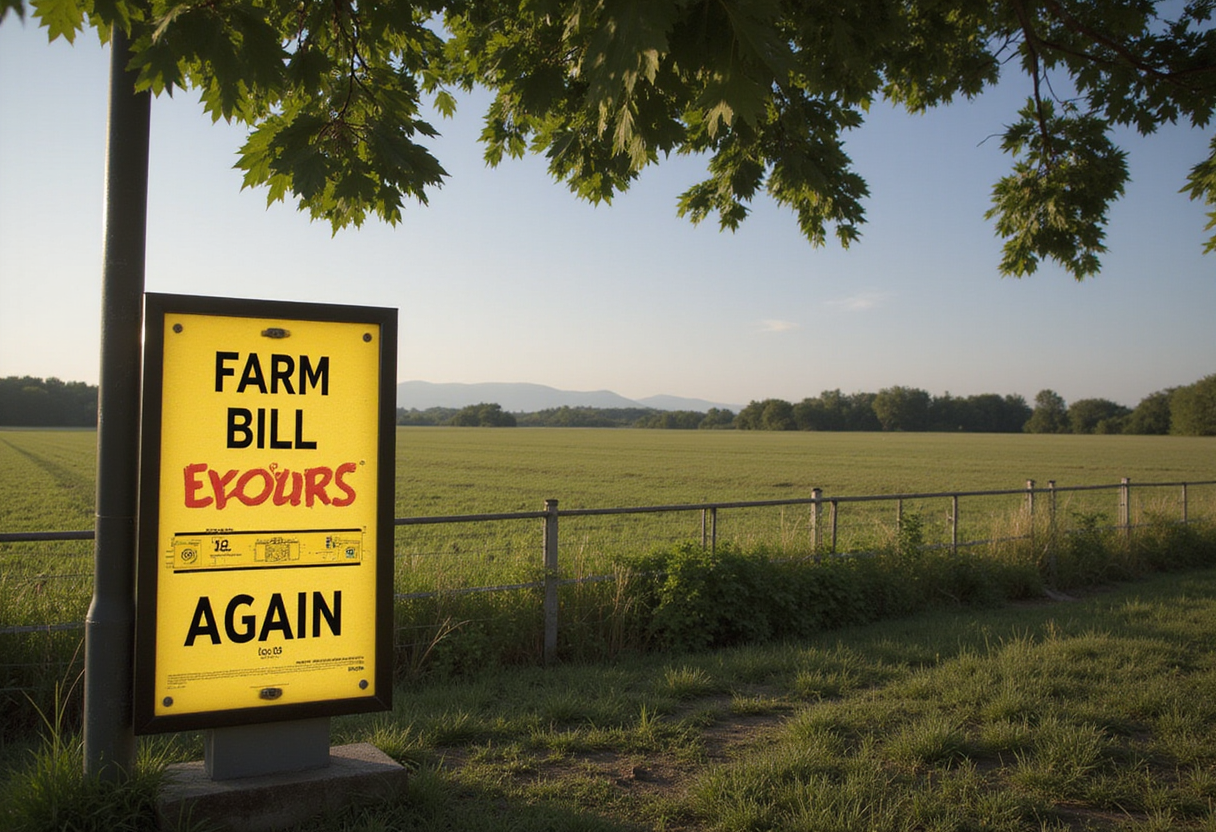
The U.S. farm bill has expired again, returning American agriculture to a policy vacuum and leaving growers, lenders and input suppliers to plan another production cycle without a renewed statutory framework for commodity programs, crop insurance and conservation spending.
The expiration, reported by agrolatam.com, marks a repeat of the standoff that has shadowed the sector since the 2018 farm bill lapsed. Congress has twice allowed that law to lapse without a successor, relying on short-term extensions to keep the major titles operating. Each lapse narrows the window in which farmers and their lenders can calculate expected support levels for the coming planting season.
The timing matters for farm margins. Commodity program payments, marketing assistance loans and reference prices all sit inside the expired legislation. When the bill lapses and only a temporary extension carries programs forward, growers continue under the previous law's parameters — parameters written for a different cost environment, before fertilizer, chemical and financing costs climbed to recent highs. Producers comparing forward-pricing decisions against potential government support now face a second consecutive cycle in which that baseline remains unresolved.
The last expiration produced a familiar pattern: an initial lapse on September 30, followed by a continuing resolution that extended the 2018 law's authorities for an additional year. That extension preserved the safety net in nominal terms but froze reference prices and program formulas while production costs moved. Farm groups spent the intervening months pressing for higher reference prices and updated payment limits, arguing that the 2018 framework no longer covers cost of production for major row crops.
Another lapse repeats that dynamic. Unless Congress acts again, the sector reverts to the same sequence — expired authorities, pressure for an extension, and a delayed rewrite of the titles that determine crop insurance subsidies, conservation program enrollment and nutrition spending, the largest single share of the bill's cost.
The uncertainty reaches beyond the farm gate. Lenders sizing operating credit for the next season weigh government program payments as part of expected revenue. Input makers and retailers planning production and pricing for seed, crop protection and fertilizer watch the same signals. A second unresolved expiration keeps that planning horizon short and pushes risk premiums into financing terms at a moment when interest costs already weigh on working capital.
For growers, the practical question is whether the next extension — if one comes — carries the same terms or attaches changes to reference prices and payment limits. The difference flows directly into break-even calculations on rented ground, where cash rents negotiated against old revenue assumptions meet a cost structure that has moved sharply since the 2018 law was written.
Agribusiness will now watch the congressional calendar. Each week without action compresses the timeline for a full five-year reauthorization and raises the odds that agriculture enters another planting season under an extended, outdated framework rather than a new bill. The sector's next concrete signal will come when House and Senate agriculture committees release either a further extension or mark up a replacement — whichever comes first will define the support baseline growers carry into the next crop year.
via Google News: Farm bill and ag policy (Source)
More from Grace Kim
Show full bio
Correspondent covering industry trends and analytics at Agribusiness Wire.
176 articles