Lot No. LOT-1313 · offered October 2, 2026
Agricultural PolicyLot sheet
Farm Bill Expires: What Lapse Means for Agriculture Programs
The Farm Bill has expired, leaving commodity support, conservation and nutrition titles operating under lapse rules as growers await an extension or new five-year bill.
Market notes
- The Farm Bill has expired without a replacement, as reported by weareiowa.com
- Commodity support, conservation and nutrition titles face different timelines during the lapse
- Past expirations have typically ended in a short-term extension or new five-year bill
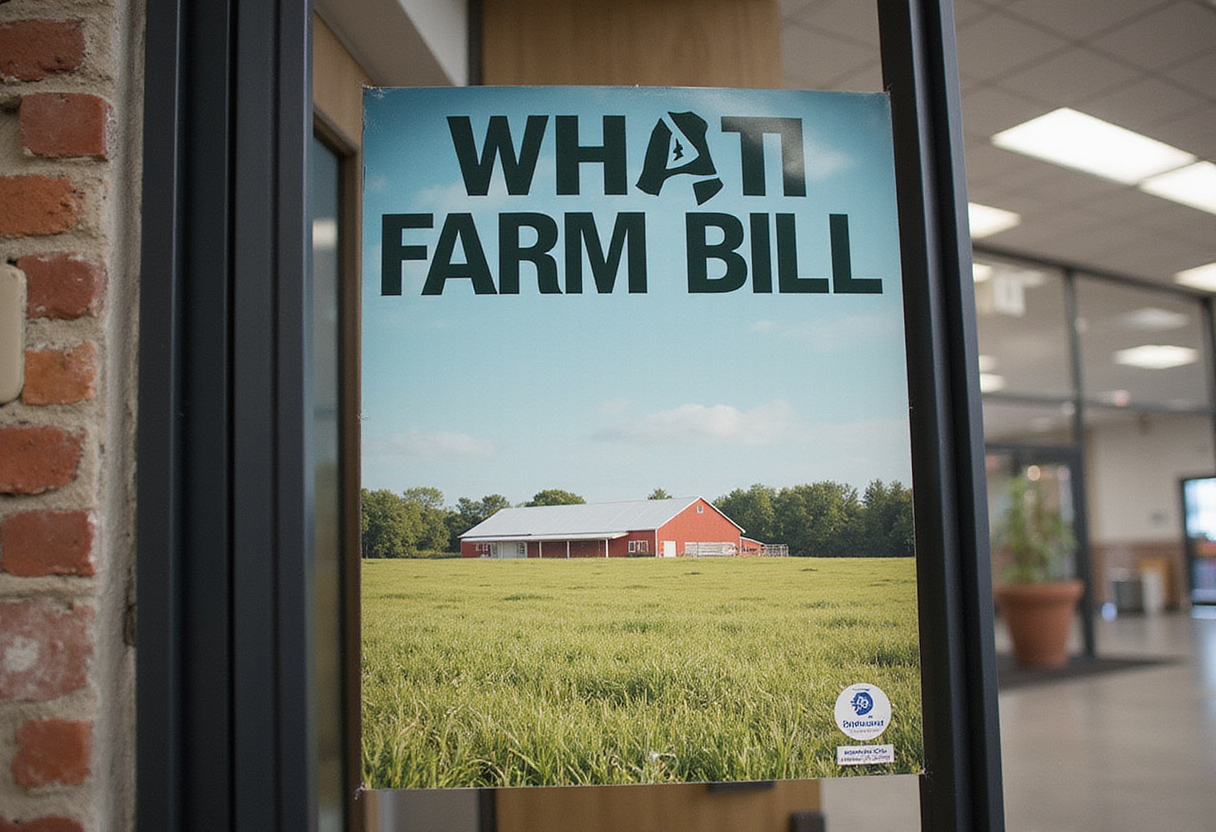
The Farm Bill has expired, and growers, lenders and commodity groups are now sorting out which programs continue, which stop, and which revert to older law.
The source material for this report consists of a headline only — "What the expiration of the Farm Bill means," published by weareiowa.com — without an accompanying article text. That limits what can be verified here. What follows is confined to the fact stated in that headline: the Farm Bill has lapsed.
Even that single fact carries weight for farm country. The Farm Bill is the omnibus legislation that sets the terms for commodity support, crop insurance, conservation programs and nutrition assistance. When it expires without a replacement or an extension, each of those titles faces a different clock.
Some programs keep running on previously appropriated funds. Others halt new enrollments. A few, under permanent-law provisions dating to the 1930s and 1940s, would eventually revert to outdated support formulas that Congress has repeatedly deferred — a prospect that has historically pushed lawmakers toward at least a short-term extension rather than allowing a full reversion.
For Iowa and other major row-crop states, the stakes concentrate in three areas. Commodity title support and reference prices, which underpin farm revenue safety nets, remain frozen at expiring-bill levels until lawmakers act. Conservation programs funded through the bill's conservation title face uncertainty over new contracts and pending applications. Nutrition assistance, the largest single share of the bill's spending, operates on a separate timeline that tightens the longer the lapse runs.
The practical near-term effect for most producers is limited. Programs already funded and enrolled continue to pay. The pain accumulates at the margins: dairy support mechanics, some conservation enrollment, and planning certainty for the next crop year's revenue guarantees.
Farm-state lawmakers have typically used expiration deadlines — September 30 of the year the bill lapses — as leverage to force either a new five-year bill or a stopgap extension. Iowa's delegation, like those of other Corn Belt states, has generally favored extending current law over a gap, arguing that even temporary uncertainty complicates lenders' calculations for operating credit and producers' input purchasing decisions.
Weareiowa.com framed its coverage around explaining these mechanics to Iowa readers. The underlying reporting, methodology and any figures it contains were not available in the material provided to Agribusiness Wire, so this dispatch does not reproduce specific numbers, program allocations or enrollment data from it.
What is verifiable from the headline alone: the bill has expired, and the interpretive question — what that means — is now the operative policy story for U.S. agriculture. The direction of travel in past lapses has been a retroactive extension or a new bill; whether that pattern holds this time depends on the congressional calendar.
via Google News: Farm bill and ag policy (Source)
More from Rebecca Stone
Show full bio
Market editor covering industry trends and analytics at Agribusiness Wire.
144 articles