Lot No. LOT-1517 · offered November 11, 2026
Commodity MarketsLot sheet
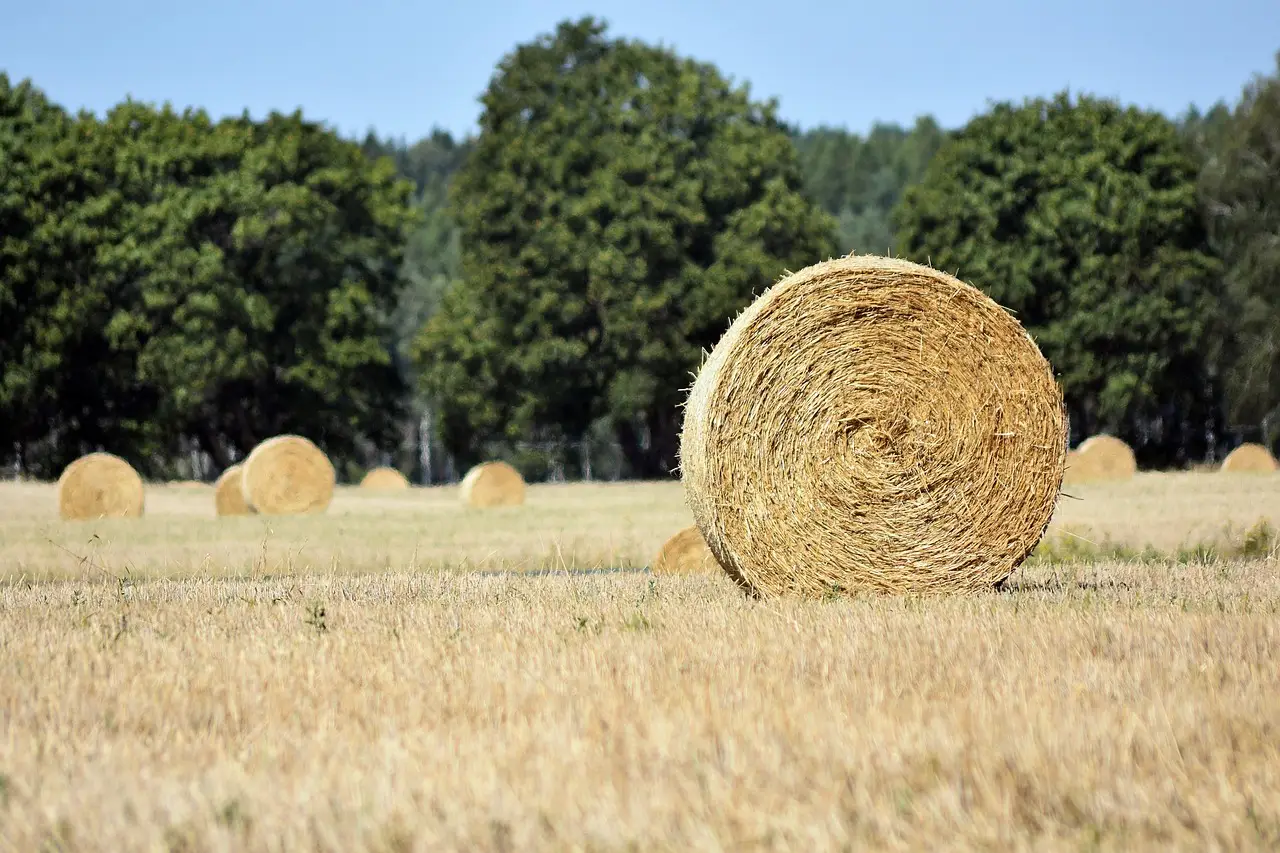
Drought and freight split hay markets as Southwest demand stays firm
USDA state reports show steady hay prices in several states, high Oklahoma demand, limited South Dakota supply and freight pressure affecting Wyoming and Montana buyers.
Market notes
- Nebraska's Nov. 5 report put corn harvest at 66% and soybeans at 84%, with hay sales mostly steady.
- Colorado's Nov. 5 report showed unchanged prices for all hay classes and demand rated good to very good.
- South Dakota reported severe western drought and little hay production in its Oct. 16 report.
- Montana's Oct. 30 report listed delivered Canadian hay offers of 160.00 to 200.00 in northern and central markets.
- Oklahoma and Texas scheduled their next hay reports for Nov. 13; Colorado's was due Nov. 19.
By Grace Kim
Nebraska's corn harvest had reached 66% and soybean harvest 84%, according to USDA's National Agricultural Statistics Service in the Nov. 5 Market News hay report; hay sales were mostly steady and demand moderate.
What do the reports measure?
USDA Market News Service hay reports cover the Central, Midwest, Southern and Western United States. They list reported transaction prices for alfalfa, grass hay and other forage by location, type, grade and bale size, giving producers and buyers a regional benchmark.
These are dated market snapshots, not forecasts of acreage, yield or farm margins. The summaries omit transaction counts, which limits how far “steady” or “firm” labels can be read.
State updates use different report dates and prior-report comparisons, so they describe local conditions rather than one synchronized national market.
Full market tables are available through USDA Market News hay reports.
Takeaway: Each update offers a dated local reference, not a synchronized national price series.
Where is demand strongest?
New Mexico's Oct. 23 report called the hay market firm against the prior report. Colorado's Nov. 5 USDA Market News report listed light trade activity, prices unchanged from the prior period for every hay class and demand rated “Good to Very Good all markets of hay.” Rain showers reached the southern half of Colorado, and the next report was due Nov. 19.
Oklahoma's Oct. 30 report showed little change and high demand. All types of hay were moving in preparation for fall and winter, although rain slowed movement. Texas reported good prices and good demand on Oct. 30. Oklahoma and Texas both scheduled their next reports for Nov. 13.
Takeaway: Southwestern demand remained firm, but Colorado's unchanged quotes showed that strong buyer interest had not yet produced broad price gains.
Where is drought tightening supply?
South Dakota's Oct. 16 report showed good to very good demand for all hay classes, strongest in the west, where severe drought produced little hay. Dry April and May weather limited grass growth, leaving grass-hay supplies limited. Drought also gripped the east, where some areas were very short of hay and made substantially less than normal, while other spots produced good alfalfa.
Missouri's Oct. 29 report described continued dryness in the southern half, with southwest and south-central areas still in D3 or D4 drought. Most of Missouri north of Interstate 70 was drought-free and in better shape. Hay movement and demand were moderate, especially in the south, where buyers were already feeding some hay; prices were steady to firm.
Missouri buyers can consult the Missouri Department of Agriculture hay directory and the University of Missouri Extension feed stuff finder.
Takeaway: Drought pressure was concentrated in western South Dakota and southern Missouri, while northern Missouri and some South Dakota alfalfa areas remained better supplied.
How are freight costs changing market access?
Wyoming's Oct. 29 report said all prices were steady with the prior report and demand was moderate. Some buyers turned back loads they had previously committed because higher diesel and freight charges made shipping hay halfway across the United States unaffordable.
The buyers favor western Wyoming high-elevation hay, put up without bleaching, while horse owners value the forage's color and quality. The report said these customers had bought western Wyoming hay for at least 10 years.
Montana's Oct. 30 report, compared with Oct. 16, showed hay selling generally steady, mostly moderate demand and mostly moderate supplies. Some producers continued third and even fourth cuttings. Fall rains improved pasture and range conditions and left ranchers with plentiful fall grass for cows, reducing hay demand as they kept cattle turned out longer.
Canadian hay was offered delivered into northern and central Montana at price quotes of 160.00 to 200.00, and sellers there also competed with hay from North Dakota moving across Highway 2. High costs to move hay from stack to ranch made prices highly local, leaving southern Montana at a strong premium to the north.
Hay bought earlier in the fall began moving south after the Fred Robinson Bridge near Hilger reopened, allowing forage to leave Montana's highline. The drought snapshot showed 19.19% of the state in moderate drought or worse, down 1.33 percentage points in two weeks. The severe-or-worse share was 11.36%, the extreme-or-worse share 4.93% and the exceptional-drought share 0%; all three were unchanged. Abnormally dry conditions covered 36.60%, down 3.24 points.
Takeaway: Freight was the clearest constraint on western hay access, while Canadian competition and reopened routes left a strong price gap between northern and southern Montana.
What will the next reports show?
Oklahoma and Texas were due to update their hay reports Nov. 13, and Colorado Nov. 19. Those releases will test whether fall rain, winter feeding needs and higher freight costs have shifted local availability, demand and prices.
via apps.mda.mo.gov (Original)
More from Grace Kim
Show full bio
Correspondent covering people, launches and day-to-day practice in Agribusiness coverage for industry professionals at Agribusiness Wire.
496 articles
Also in the yard
- USDA Market News Weekly Report Tracks Hay Prices Across High Plains
- August WASDE Report Pushes U.S. Grain Prices Higher
- Nebraska Corn Yield Jump Pulls Futures Lower in USDA October Print
- Soybean Harvest at 17%, Below Every Trade Estimate, USDA Says
- USDA Market News Rolls Out Weekly Grain Prices for High Plains